
The short answer
A layover is the gap between two flights on the same trip. You get off one plane, wait in an airport, then board the next. Some layovers last under an hour; others stretch overnight. That gap shapes your trip more than most travellers expect. It decides whether your bags follow you, whether you can leave the airport and how tired you are when the festival starts. This guide explains what a layover is in plain words, how it differs from a stopover and a connection, and how to time one so a festival trip starts the way you planned.
What a layover actually is
A layover is the wait at an airport between two connecting flights on the same booking. You land, leave the first plane, spend time in the terminal, then board your onward flight. The stop is not your destination, even when it runs all night.
Most layovers exist because airlines run hub-and-spoke networks. A trip from Australia to a festival in Europe might route through Singapore, Doha or Dubai, because no airline flies every pair of cities directly. Airlines funnel passengers through a few big airports so each plane leaves full.
Your stop at the hub is the side effect.
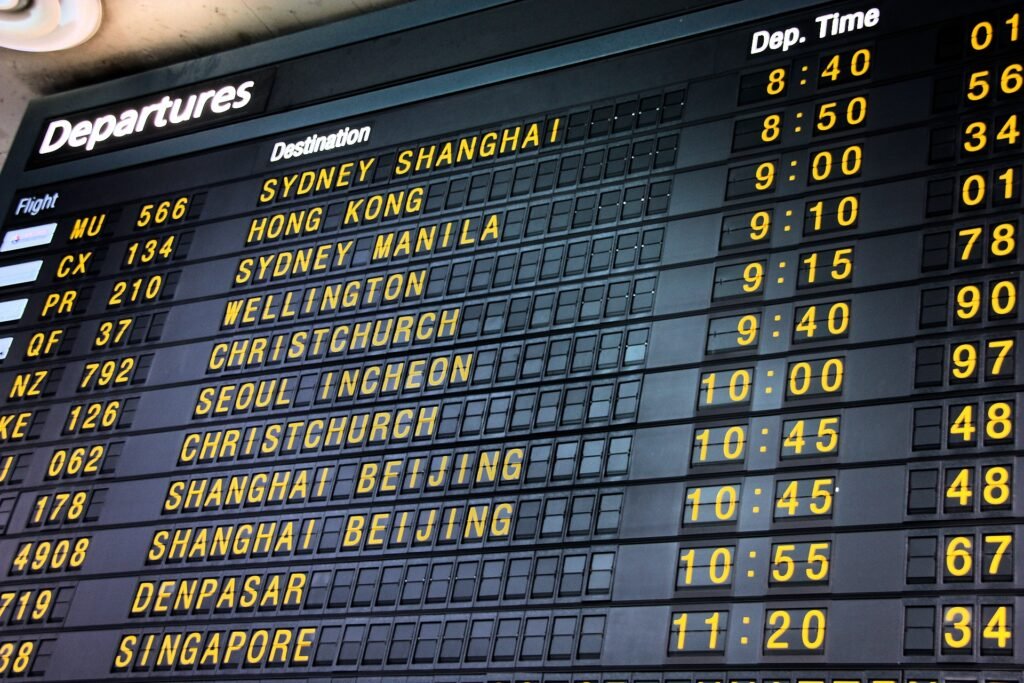
Booking.com’s layover guide puts a typical stop at one to several hours. Length is what separates a layover you barely notice from one that wrecks your first day. A short gap means you walk from one gate to the next.
A long one means time for a meal, a shower or a nap, if you set the stop up well.
If the words on your ticket still read like code, the Travel Glossary: A to Z of Travel Terms explains the rest of them.
Layover vs stopover vs connection
A connection is the change of planes itself. A layover is the wait at the airport between those two flights. A stopover is a longer pause, usually a day or more, and it often means leaving the airport and seeing somewhere new.
The three words get swapped constantly, and no single rulebook settles it. Travel-industry convention often draws the line at 24 hours for an international trip and under four hours for a domestic one, as this layover vs stopover guide sets out. Merriam-Webster does not clear it up either: it defines a layover as a stopover.
That is why your booking confirmation and the airline app may use the terms differently.
The practical difference is time and access:
| Term | What it means | Typical length, international | Leaving the airport |
|---|---|---|---|
| Connection | The change from one plane to the next | Minutes | No |
| Layover | A wait between two flights, spent at the airport | Under 24 hours | Rarely |
| Stopover | A deliberate, longer pause on a route | 24 hours or more | Usually yes |
If you want to add days rather than hours, read what a stopover is before you book. A layover keeps you at the airport; a stopover is the version where the city becomes part of the trip.
Minimum connection times and why they matter
A minimum connection time is the shortest gap an airline and airport will allow between two flights for a transfer to count as workable. IATA, the airline industry body, defines it as the shortest interval needed to move a passenger and their luggage from one flight to a connecting flight.
Booking systems will not sell a connection below that number, because the airline would be promising a transfer it cannot reliably deliver.
The number changes by airport, terminal and direction of travel. A domestic to domestic transfer at a small airport can run shorter than an international arrival that has to clear immigration, collect a bag and catch a terminal train. Airlines publish the times for each airport pair so one flight can be safely sold as connecting to the next.
That promise is the whole value of a single ticket. Miss a connection and the airline has to move you onto the next flight with seats, at no extra charge, because the connection was part of their itinerary. Miss it on two separate tickets and nobody owes you a seat.
Treat the minimum as a floor, not a target. It assumes the first flight lands on time, and flights do not always land on time. For a festival with a fixed start date, buy a buffer: two hours is a sensible floor for an international transfer, and three is safer again if you are changing terminals or clearing immigration at an unfamiliar airport.
Self-transfer risk and separate tickets
A self-transfer is a layover built from two separate tickets, so no airline is on the hook for the connection between them. If the first flight runs late, the second one leaves without you.
Booking engines resell this model because the fares often come out cheaper. The savings carry work with them. You collect your checked bag, recheck it for the next flight and pass through security again, because the two airlines are not talking to each other.
Blow the gap and that second ticket is usually worthless, and a replacement bought at the airport costs walk-up prices.

Bags are the sharpest edge of the risk. On one ticket, checked luggage is tagged through to the final destination and you do not touch it until you arrive. On separate tickets, the first airline has no reason to move your bag to the next flight, even when both flights leave from the same terminal.
If you take the risk anyway, put the self-transfer on a day with slack in it. The morning of a festival with a fixed start time is not that day. Travel insurance can cover a missed connection, but only when the policy says so in writing.
What you can and cannot do on a layover
On most layovers you can stay in the transit area, eat, shop, charge your phone and sit out the wait. What you cannot do depends on three things: your bags, your visa and the airport itself.
Bags first. If your suitcase was tagged through to your final destination, it stays with the airline and you do not see it until you land. Some countries, the United States included, require international arrivals to collect bags at their first point of entry, clear customs, and recheck them for the onward flight.
Separate tickets nearly always mean the same routine: bag in hand, then bag dropped again.
Leaving the airport depends on your right to enter the country. Some destinations allow visa-free transit for short stays; others want a transit visa even when you never leave the terminal building. Check the rules for the stopover country before you book, not at the gate.
Lounges are the best use of a long wait. A departure lounge pass buys you a real seat, power points, food and, at some airports, a shower. Some credit cards include access, and day passes can be bought at the door.

With four hours to kill, a lounge beats a row of plastic seats at the gate by a wide margin.
Overnight layovers and when a hotel is provided
A scheduled overnight layover is usually your cost to carry, not the airline’s. If you knowingly booked a ticket with a ten-hour stop from midnight to ten in the morning, the bed is your problem, and the airline will say so politely.
The clearest exception is European passenger law. If a delay or cancellation forces an overnight stay on a trip covered by EU rules, the airline must arrange hotel accommodation and transport between the airport and the hotel. The duty does not depend on the fare you bought.
For planned overnight stops, check what the airport offers before you book. Some large hubs have transit hotels inside the secure area, which means no immigration queue and no second pass through security. Others have sleep pods or paid rest zones.
A hotel outside the airport is often cheaper, but only if you have the visa to leave and the time to get back through the formalities.

Sleeping in the terminal is possible and free, and plenty of travellers do it. It is also the version of a layover that lands you at a festival running on no sleep. If the stop has to run overnight, price a transit hotel against the cost of losing your first day.
How to choose a longer layover on purpose
You can pick a longer layover deliberately, because flight search tools show the stop time for every itinerary. Some let you filter by how long you are willing to wait, which turns the layover into a choice rather than a side effect.
Longer stops pay off in three ways. A three-hour connection gives you time to walk, eat a proper meal and still reach the gate without sprinting. A long midday stop at a hub with a transit hotel or lounge turns a hard trip into a rest.
And a stop in a different city can break a fourteen-hour flight into two sane legs.
Two habits keep a layover from turning bad. Choose connections that land in daylight when you have the choice, because a night in a departure hall is nobody’s idea of rest. And when the trip ends at a festival with a set start, arrive a day early rather than lean on a tight connection to rescue the schedule.
Ready to build the whole trip around the festival date? Start with the International Festival Travel Planning Guide.
Frequently asked questions
Can you leave the airport during a layover?
Yes, if you have the right to enter the country and enough time to return. Immigration out and security back in can eat more than an hour at a busy airport, so a stop under three hours rarely leaves room for a worthwhile trip.
Stay airside unless the math clearly works.
Do you have to pick up your checked bag during a layover?
Usually no. On a single ticket, checked bags are tagged to the final destination and travel without you. The exceptions are separate tickets, where you collect and recheck the bag yourself, and countries such as the United States, where international arrivals collect bags at their first point of entry.
How long do you need between connecting flights?
At least the minimum connection time your airline sets for that airport, which appears on your booking. In practice, allow two hours for an international transfer and more if you change terminals, clear immigration or hold separate tickets.
The buffer absorbs the delays that a minimum cannot.
What happens if you miss your connecting flight?
On one ticket, the airline rebooks you onto the next flight with space at no extra charge. On separate tickets, you buy a new flight yourself, which is why trip insurance covering missed connections is worth reading before you need it.
Can you sleep at the airport during a layover?
Yes, and many travellers do, though comfort varies hugely from airport to airport. Quieter gates away from announcements help, and some airports rent rest zones or sleep pods.
For a full night, a transit hotel inside the terminal is usually money well spent.
Image credits
- Photo: Marek Ślusarczyk (Tupungato) Photo portfolio / Wikimedia Commons, CC BY 3.0. Source
- Photo: Jetstar Airways from Melbourne, Australia / Wikimedia Commons, CC BY-SA 2.0. Source
- Photo: Nicky Boogaard from Hardinxveld-Giessendam, Netherlands / Wikimedia Commons, CC BY 2.0. Source
- Photo: olekinderhook / Wikimedia Commons, CC BY 3.0. Source
Works Cited
Lupini, Caroline. “What Is a Layover? A Complete Guide: Here’s What to Expect.”
Booking.com, Booking.com B.V., 24 Nov. 2024, https://www.booking.com/guides/article/flights/what-is-a-layover-a-complete-guide-heres-what-to-expect.html.
“Layover.” Merriam-Webster.com Dictionary, Merriam-Webster, https://www.merriam-webster.com/dictionary/layover. Accessed 14 Sept. 2026.
“Station Standard Minimum Connecting Time(s) (MCT).” International Air Transport Association, https://www.iata.org/en/publications/manuals/station-standard-minimum-connecting-time-mct/. Accessed 14 Sept. 2026.
Yanvi, Sekar Arum. “Layover vs Stopover Flights? Here’s the Smart Traveler’s Guide.”
Villa Finder Magazine, Villa Finder, https://www.villa-finder.com/magazine/layover-vs-stopover-flights/. Accessed 14 Sept. 2026.