
The short answer
Festival season is the most reliable way to shape a trip around a country instead of a single city. The calendar runs all year, but the big events fall into clear seasonal windows, and each window changes what you pay for flights, where you can sleep and how you move between towns. This guide covers the major events by season, then the practical side: packed trains, accommodation booking windows, what a street food stall is actually like, and the etiquette that keeps visitors welcome. Use it to pick your season before you book anything.
What matsuri season means for trip planning
Matsuri season is not one month. Festivals run somewhere in Japan in every season, and the biggest cluster lands in summer, from June to August, when parades, fireworks and dance events pile up week after week. Spring, autumn and winter each hold their own headline events, and which one you pick changes your flight prices and hotel options more than any other decision.
Matsuri is Japanese for festival, and the word covers more ground than the English one. It takes in a neighbourhood shrine procession, a city-wide float parade, a dance competition and a fireworks night. Most matsuri grew around shrine rituals and the farming calendar: prayers for a good harvest, thanks afterward, and a procession at the centre of it all.
If the vocabulary is new to you, the Travel Glossary: A to Z of Travel Terms explains words like yatai, mikoshi and hanami before you meet them on the street.
Here is the shape of the year at a glance, so you can match a festival to the season you can actually travel in.
| Season | Months | Headline festivals | What it does to your trip |
|---|---|---|---|
| Spring | March to May | Plum and cherry blossom festivals, hanami parties | Domestic travel peaks; rooms near blossom spots sell out first |
| Summer | June to August | Gion Matsuri (Kyoto), Tenjin Matsuri (Osaka), Sumida River fireworks (Tokyo), Awa Odori (Tokushima) | Hottest and busiest season; flights and hotels at yearly highs |
| Autumn | September to November | Kishiwada Danjiri Matsuri (Osaka), Takayama’s autumn festival, sake festivals | Mild weather; a second wave of domestic travel |
| Winter | December to February | Sapporo Snow Festival (Hokkaido), New Year shrine visits | Cheapest window outside New Year and Snow Festival weeks |
Festival dates shift by a day or two each year, so confirm them on the official festival site before you lock in flights. Japan’s national tourism board publishes a month-by-month calendar of Festivals and Events you can use to cross-check your dates.
Summer matsuri: Gion Matsuri and the peak weeks
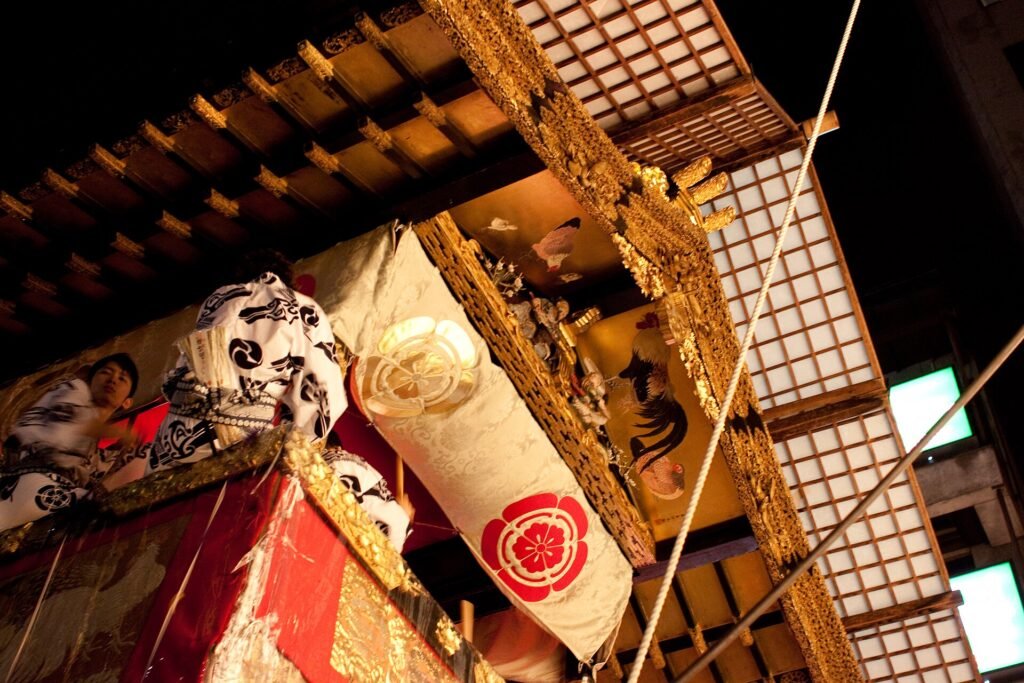
Summer is the peak of matsuri season, and Gion Matsuri in Kyoto is the biggest event on the calendar. It runs across July, with giant wooden floats assembled in the city centre and two main parade days in mid-month. Street viewing is free, and the processions pass through ordinary roads, so you do not need a ticket to see the best of it.
Gion Matsuri is one of three festivals traditionally counted as Japan’s greatest, alongside Osaka’s Tenjin Matsuri and Tokyo’s Kanda Matsuri. Osaka’s event, typically held on 24 and 25 July, adds a boat procession and a fireworks finale. Tokyo’s Sumida River fireworks, typically late July, draw some of the capital’s largest crowds of the year.
Two things decide how much you enjoy July: heat and timing. Kyoto runs hot and humid, so carry water and treat the middle of the day as rest time. The yoiyama evenings, the nights before each parade, are when the centre turns pedestrian and the floats sit lit in the streets, and they are the part locals turn out for.
Awa Odori and the August dance festival season
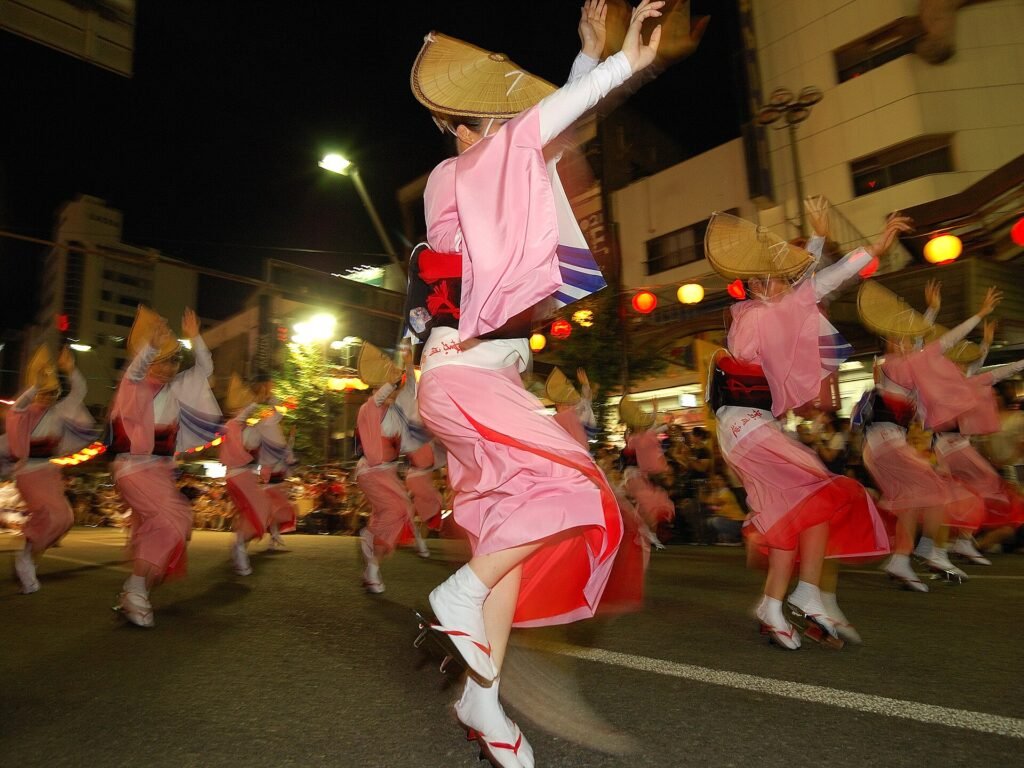
Awa Odori is Japan’s largest dance festival, held in Tokushima on Shikoku, typically from 12 to 15 August. Dance teams move through the streets in formation, and the festival’s chant sums up the spirit: dancers are fools and spectators are fools, so you may as well dance.
Rooms are the bottleneck here. Tokushima is a small city with limited hotel stock, and this is the busiest week of its year, so book as early as your dates allow or base yourself in a nearby city and take the train in.
Free dance zones let visitors join a niwaka group for a few blocks, which is the simplest way to take part rather than watch.
The same weeks bring Hokkaido’s Yosakoi Soran festival, and Tokyo repeats the Awa Odori format at Koenji, typically on the last weekend of August.
Winter matsuri: Sapporo Snow Festival and cold-season traditions
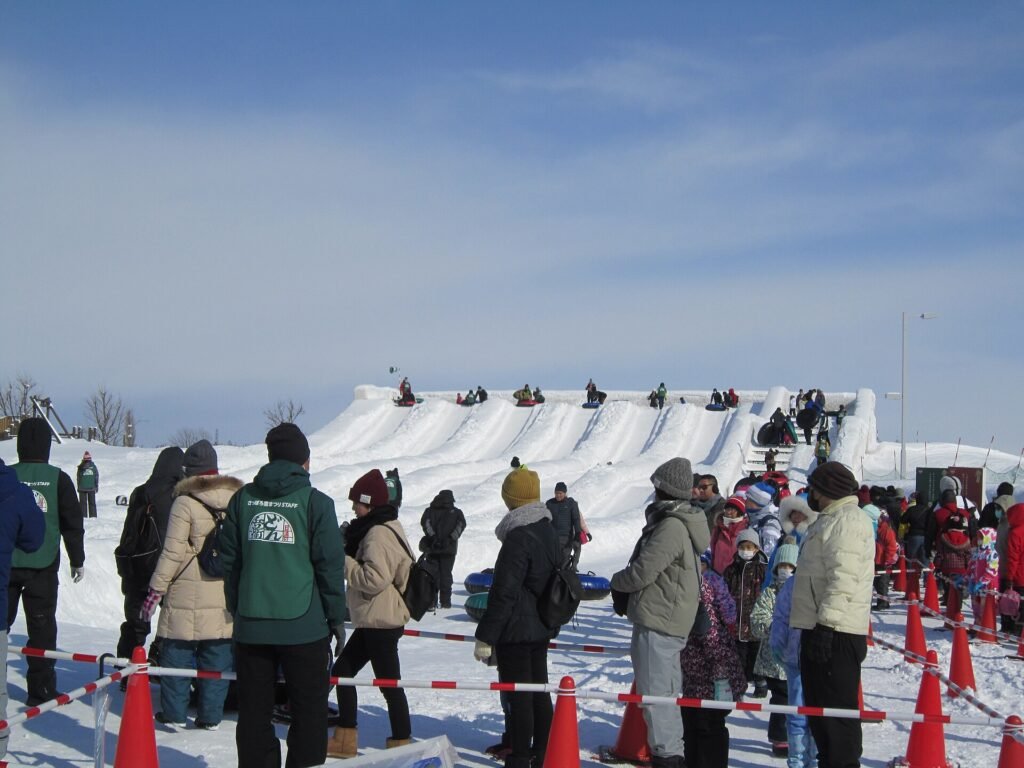
Winter matsuri trade scale for spectacle, and the Sapporo Snow Festival is the headline. It is typically held in early February, when teams build huge snow and ice sculptures in Odori Park and along Susukino’s main street. It costs nothing to walk the main sites; a few attractions inside the festival charge, so check the official site for what needs a ticket.
New Year is the season’s other fixed point. From 31 December into the first days of January, huge crowds make hatsumode, the year’s first shrine visit. The biggest city shrines are busiest just after midnight on 1 January, so go on 2 or 3 January, or pick a quiet neighbourhood shrine, if you want room to move.
Daylight in Hokkaido is short in winter, so plan outdoor sightseeing before mid-afternoon and build in indoor stops. Want Hokkaido without the cold? Sapporo’s summer beer festival fills the same park, typically from late July into mid-August.
Cherry blossom and autumn: the seasons that frame festival travel
Cherry blossom and autumn colour are not matsuri in the strict sense, but they set the demand around them, and for many visitors they decide the trip date.
The blossom front moves north through spring: Okinawa can open as early as January, the big cities of Honshu peak between late March and early April, and the wave reaches Tohoku and Hokkaido in late April and May. Hanami, the picnics under the trees, work like one long informal festival, and rooms near famous parks are the hardest to get all year.
Bloom dates move with the weather, so book flexible rates and follow the forecast rather than committing to one park. Autumn runs the other way, with colour moving south from the north, and the festival calendar stays busy. Kishiwada Danjiri Matsuri outside Osaka, typically in mid-September, sends four-tonne floats through the streets at a sprint with teams of pullers behind them.
It is a direct train ride from Kansai Airport, and the side streets off the main route give clearer views with smaller crowds.
Beyond the famous events, JapanTravel’s events calendar lists what is running across the country each month. Takayama’s autumn festival in the Japanese Alps, typically held in October, and sake festivals such as Saijo’s near Hiroshima round out the season.
Crowded trains and moving around during matsuri
Expect trains around major festivals to run at commuter-rush density, and plan around three pinch points: the early evening build-up, the minutes after a parade or fireworks show ends, and the last services of the night. Station staff manage flows and sometimes close specific exits, so follow the signs rather than your usual route through the station.
A few moves help. Load an IC card or phone wallet before the trip so you are not queueing at ticket machines. Reserve shinkansen seats early when you travel into a festival city, because unreserved cars fill on those days.
On the way out, walk one or two stations away from the event and board there; ten minutes on foot buys a calmer ride. Treat taxis as a last resort during parades, since roads on and around the route close to traffic.
Accommodation: booking windows for matsuri season
For the major festival weeks, book three to six months ahead at minimum, and treat six months as the floor for Gion Matsuri and the Sapporo Snow Festival. Japanese domestic travellers book these dates with real urgency, and the hotels closest to the action go first.
Chain hotels usually open bookings three to six months out, while family-run ryokan and properties a few minutes from a parade route can fill earlier, sometimes the week dates are announced. If your first choice is gone, widen the search rather than the budget: Osaka and Otsu sit a short train ride from central Kyoto, and Sapporo’s suburbs connect by subway.
Rates fall fast once you leave the postcode.
Two habits pay off. Hold a free-cancellation room as soon as your dates are firm, then adjust later as plans settle. If a festival or the blossom forecast fixes your dates, make accommodation your first booking, before flights.
We compare hotels, ryokan, hostels and rentals in Festival Accommodations Compared.
| Festival window | Booking rule of thumb | Alternative bases |
|---|---|---|
| Gion Matsuri (July) | 3 to 6 months out | Osaka or Otsu, a short train ride from Kyoto |
| Awa Odori (mid-August) | As soon as rooms open | Nearby Shikoku cities, with an evening train in |
| Sapporo Snow Festival (early February) | 6 months or more | Sapporo suburbs along the subway lines |
| Cherry blossom peak (late March to early April) | 6 months or more | Smaller cities with later blooms |
What a matsuri street food stall is actually like
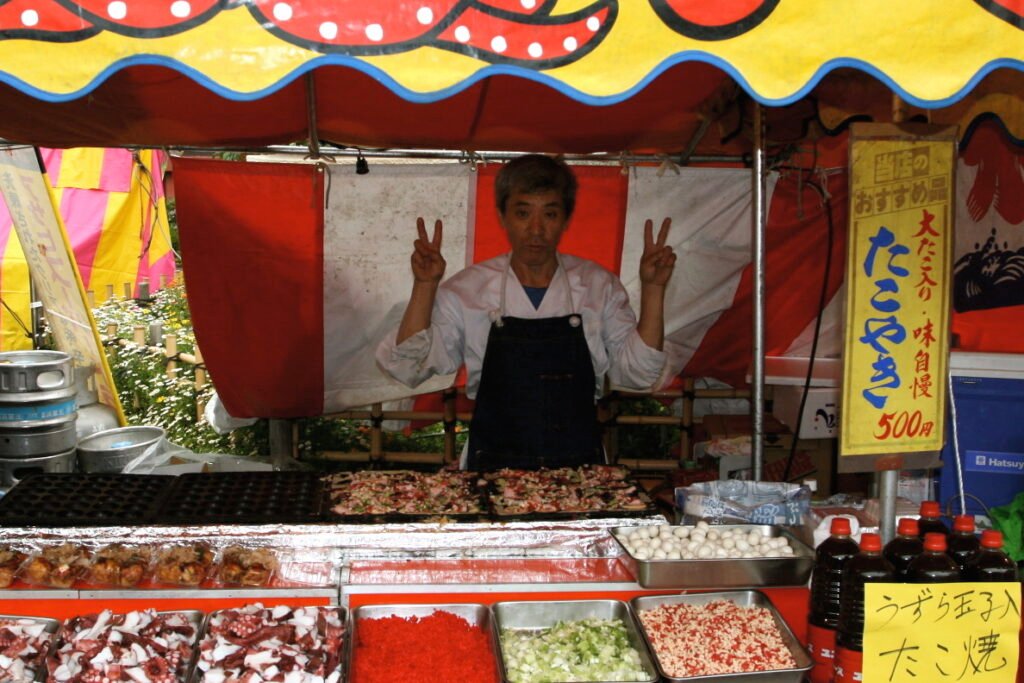
A yatai is a folding food stall that appears along the approach to a shrine or the edge of a parade route, usually from late afternoon until well after dark. The menu is deliberately short: takoyaki, yakisoba, karaage, grilled skewers, candy apples, chocolate bananas, shaved ice. The range runs wider than most first-timers expect, too.
As InsideJapan’s guide to Japanese festivals notes, even the tiniest local celebration brings a spread of stalls, from chocolate-covered bananas to octopus balls.
This is cash-first eating. Carry coins and small notes, accept that some stalls take IC cards or QR payments but many do not, and budget a few hundred yen per item rather than a full sit-down meal. Queues look long and move quickly, so pick a stall, order by pointing at what you want, and step aside.
The unwritten rules matter here. Eat standing near the stall instead of walking through the crowd with a skewer, take your rubbish with you because bins are scarce at big events, and keep food away from anyone in costume or procession gear.
Drinking in public is legal in Japan and festival streets are where you see it most, but a few cities restrict drinking in specific zones during large events, so watch for posted signs.
We break down what to eat and when across different event types in Festival Food Guide: Culinary Event Experiences.
Matsuri etiquette: the practical rules
The core etiquette at a matsuri is simple: the procession has right of way, shrines are working religious sites, and the people around you are keeping up a tradition rather than putting on a show. Everything else follows from those three ideas.
In practice, do not cut across a moving parade, even if you can see a gap. Do not touch floats, mikoshi or anyone wearing the festival’s gear. Stay out of roped areas, which exist for safety and for spectators who paid for a spot.
Photography is normal at public events, but ask before taking portraits, and check for signs at rituals, because some ceremonies are closed to cameras. If you need to stop, step to the side rather than standing still in the flow of the crowd.
A few more rules catch first-timers out. Tipping is not expected anywhere, so do not hand cash to performers. Bring a bag for your own rubbish.
Join in when a free dance zone invites you, because participation is welcome. And keep the drinking modest: alcohol is legal and common at summer festivals, but matsuri are family events first.
The cross-cultural version of these rules, written for visitors to any country, is in Festival Etiquette: Unwritten Rules to Follow.
Planning your matsuri trip in the right order
Work backwards from the festival date: festival, then city, then flights, then a bed, then the ground plan. Confirm exact dates on the official site first, because festivals shift by a day or two year to year, then choose the airport that suits the event: Kansai or Itami for Kyoto and Osaka, Chitose for Sapporo, Tokushima for Awa Odori.
Lock a free-cancellation room early, add train seats and any reserved viewing after that, and leave space in the plan for the evenings before the parades, which are often the best part of a festival week.
Ready to work out what a matsuri trip actually costs? Start with Travel Budget Planning: Tips & Tools.
Frequently asked questions
What is matsuri season?
There is no single season: a festival runs somewhere in Japan in every month of the year. The density peaks from June to August, when city parades, fireworks and dance events cluster together, so most festival trips are built around that summer window.
How far in advance should I book accommodation for a Japanese festival?
Treat three to six months as your minimum for the major events, and more for the tightest weeks. Cherry blossom peak and the Sapporo Snow Festival are the two windows where the good rooms go first, so hold a cancellable booking early and adjust later.
Do you need tickets for Japanese festivals?
No, the vast majority are free to attend because they take place on public streets and shrine grounds. The exceptions are reserved parade seating and a handful of ticketed attractions inside larger events, which the official festival site lists.
What should a first-timer eat at a matsuri?
Start with takoyaki and yakisoba, the staples that every stall does well, then follow the longest queue of locals. Order by pointing, pay with small cash, and eat standing near the stall so you are not carrying food through the crowd.
Are Japan’s summer festivals suitable for children?
Yes, matsuri are family events and the side streets stay manageable. Heat is the real constraint, so go in the early evening, carry water, and use trains or buses to skip the longest walks.
Image credits
- Photo: nekonomania / Wikimedia Commons, CC BY 2.0. Source
- Photo: Rosino / Wikimedia Commons, CC BY-SA 2.0. Source
- Photo: 禁樹なずな / Wikimedia Commons, CC BY-SA 4.0. Source
- Photo: Jim Epler / Wikimedia Commons, CC BY 2.0. Source
Works Cited
“Festivals and Events.” Japan Travel, Japan National Tourism Organization, www.japan.travel/en/see-and-do/festivals-and-events/. Accessed 14 Sept. 2026.
“Events in Japan: Festival Guide 2026.” JapanTravel, en.japantravel.com/events. Accessed 14 Sept. 2026.
“Festivals.” InsideJapan Tours, www.insidejapantours.com/us/experience-japan/exp-13/festivals/. Accessed 14 Sept. 2026.