
The short answer
Festival accommodation comes down to three real choices: a hotel room, a campsite pitch, or a rental shared with your group. Each one trades money against time, comfort and control. Hotels give you a bed and a lockable door, and cost the most per night. Camping costs the least and puts you inside the event, but you carry the gear and sleep around the weather. Rentals sit in the middle: more space and a kitchen, plus minimum stays and cleaning fees. The right answer depends on your group size, your nightly budget and how far you are willing to travel to the gates.
How Festival Accommodation Options Compare
No single option wins on everything: hotels win on comfort, on-site camping wins on cost and proximity, and rentals win for groups who need space. Rank the three by what you value most and the choice usually makes itself.
| Option | Cost pattern | Comfort | Getting to the gates | When to book | Best for |
|---|---|---|---|---|---|
| Hotel or motel | Highest nightly rate, unless a partner block applies | Private room, real bed, own bathroom | Shuttle, drive or walk | Before the lineup drops | Pairs, short trips, light sleepers |
| On-site camping | Lowest cost, sometimes free with a ticket | Basic and weather dependent | Usually walkable | With your ticket, or when camping passes release | Budget travellers staying all weekend |
| Rental or shared house | High total, lowest cost per head for big groups | Whole house, kitchen, parking | Drive or shuttle from town | Six months out or more | Groups of four or more, longer stays |
Two questions settle most of it. How many people are you booking for, and how much sleep do you need between sets? A pair who can handle a shared bathroom and six hours of sleep will spend the least by camping.
A group of six who want a kitchen and a washing machine should price rentals before hotels.
Festivals usually publish one lodging page that mixes all three categories, so treat that page as a starting list rather than a recommendation. Then price each option yourself, including the extras the listing page does not mention.
Hotel or Motel: The Most Predictable Festival Accommodation
A hotel is the most predictable choice: fixed nightly rate, a private bathroom, and a door you can lock. That is why it remains the default for anyone who does not want to camp.
Organisers often negotiate room blocks at nearby hotels, and those rates can beat public prices. The catch is in the fine print. Annapolis Baygrass publishes a partner room rate of $169 plus tax per night, with breakfast and parking included and the special Baygrass room rate available through 18 August 2026.
That same hotel was showing as sold out well before the festival, which is normal for a partner property on a shuttle route.
Book direct, too. Baygrass warns that third-party booking sites can add hidden fees or sell non-refundable rooms, so the partner link the festival publishes is usually the safest route to the quoted rate. Room blocks also come with strings.
Keystone’s summer festival lodging page, for example, ties its discount to a stay of two nights or more, which suits a full festival weekend but not a single-day trip.
Where you sleep and how you get in are one decision, not two. Partner hotels are usually chosen for their place on a shuttle loop rather than their room service. A cheap room 40 minutes out can cost more in rides and parking than a closer room costs in nightly rate, so compare routes and travel times before you commit.
Our guide to festival transportation options compared covers that trade-off.
One more warning: hotel prices near a festival site climb in the weeks after a lineup drops. If a hotel is your plan, book it before you book anything else.

Camping On Site: The Cheapest Festival Accommodation, and the Most Work
On-site camping is the cheapest way to sleep at a festival, and at some events it costs nothing beyond your ticket. Boom Festival states plainly that it is a camping event and that camping is free, and it asks ticket holders to stay on site for the whole run rather than commute in.
You can still bring your own tent or caravan, or pay for something already standing. Boom’s page lists a tipi camp, a cardboard village and a quieter camp with pre-pitched tents, plus a partnership with an equipment rental company, so you can order a tent before you travel and collect it at the festival.
That detail matters if you are flying: a pre-pitched tent often costs less than checking camping gear onto a plane.
Tiered camping is now standard at larger events. We Out Here Festival splits its offering into a boutique campsite, a live-in campsite for vans and vehicles, and pre-pitched tents, with those accommodation options released on 29 September 2026.
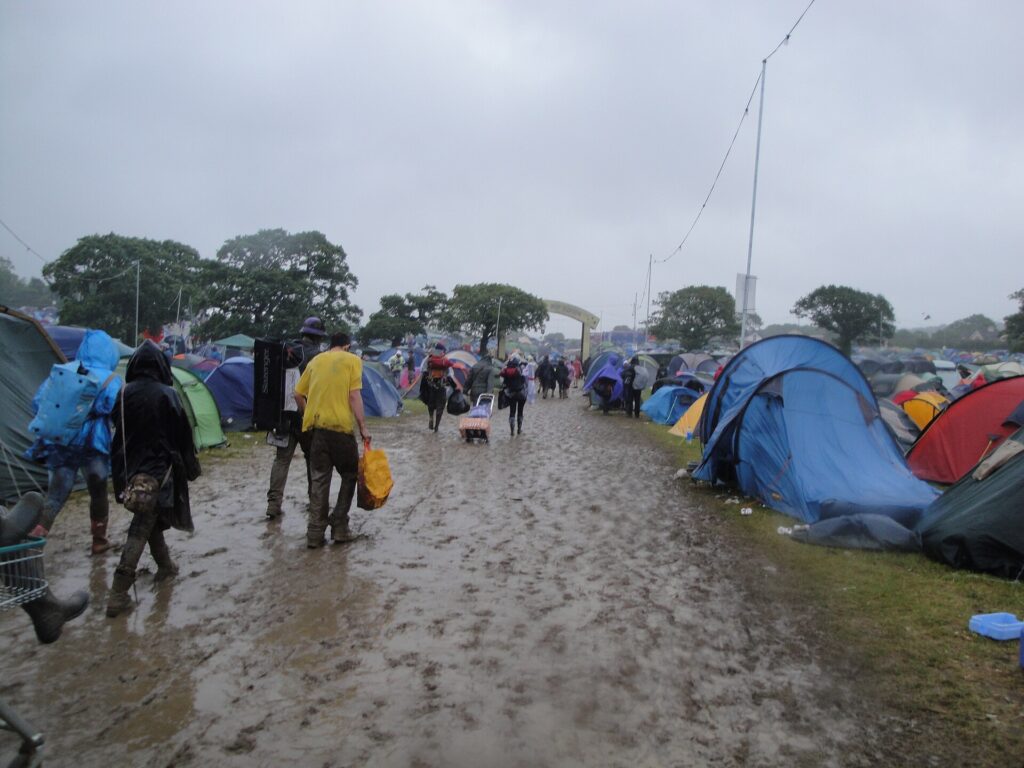
What camping asks of you in return is real. You will queue for showers, sleep through whatever the sky does, and carry everything you brought to the gate and back. Gear is the hidden cost: if you do not already own a tent, mat and sleeping bag, buying all three for one weekend can wipe out the money the pitch saved.
Rent or borrow before you assume camping is free. Our multi-day festival camping hacks cover the setup that makes a three-night stay workable.
Vacation Rentals and Shared Houses: Best Value for Groups
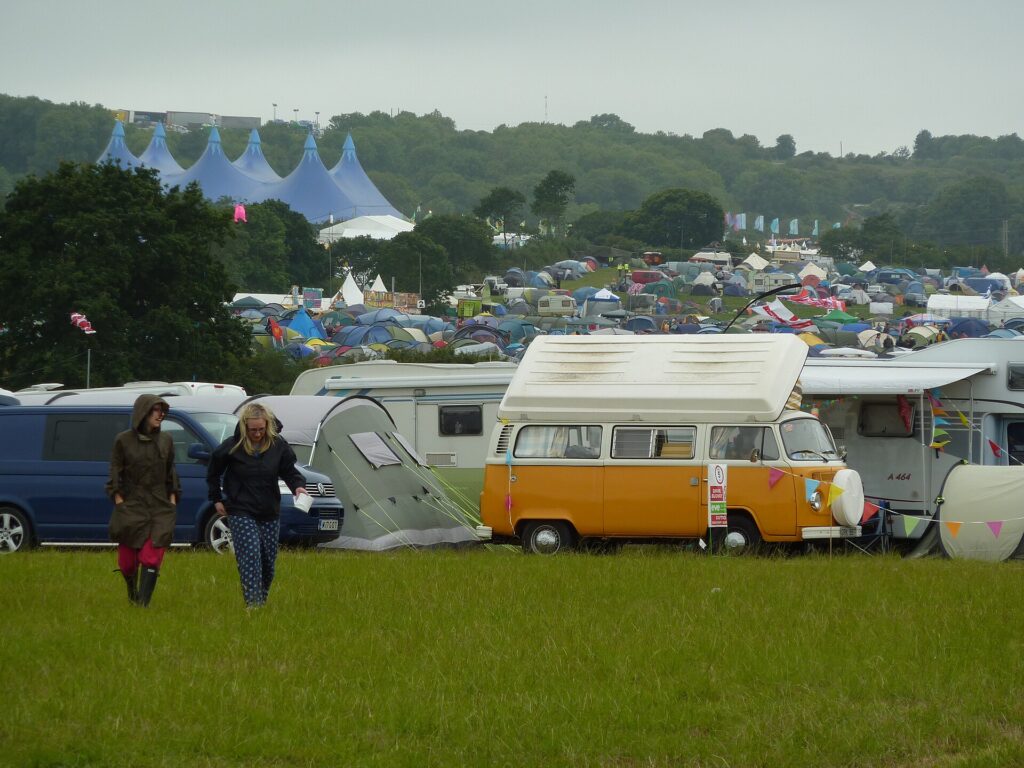
A rental is usually the cheapest option per person for groups of four or more, because a whole house splits more ways than hotel rooms do. Festival lodging pages market these as cabins, condos and vacation homes, and organisers push them at groups who want a shared living room between days.
The money case is simple arithmetic. Six people in a four-bedroom house split the total six ways, and a kitchen handles breakfast and late-night food. That kitchen is the biggest single saving available to most groups, because it turns three restaurant meals a day into one supermarket run.
If you have not met the term before, self-catering simply means a rental with cooking facilities, and it is the reason group trips cost less per head than hotel stays.

The catches are contractual. Rentals in festival towns carry minimum stays, often three nights in season, plus a cleaning fee charged once and a security deposit on top. Some hosts cap the number of guests, and quiet hours can be stricter than festival sleep patterns allow.
Distance is the second trap. Rentals cluster in the nearest town rather than beside the gates, which puts you on a shuttle or into paid parking every day. Add that to your per-head maths before you call it the cheap option.
What Festival Accommodation Really Costs Beyond the Room Rate
The nightly rate is only part of the bill: shuttles, parking, cleaning fees, minimum stays and gear decide what you actually pay. Festival lodging pages rarely add these up for you.
- Shuttle passes. Usually sold separately from both your ticket and your lodging, so a “close” hotel is not necessarily a cheap one.
- Booking channels. Partner rates are often honoured only through the link the festival publishes.
- Minimum stays and cleaning fees. Common on rentals during festival season, and charged whether you stay two nights or five.
- Gear. A tent, mat and sleeping bag bought for one weekend can cost more than the pitch you saved.
- Food. A stove or a kitchen cuts the daily food bill more than any other single choice.
- Parking. Some sites charge per vehicle per day, and that adds up across a long weekend.
None of this makes any option wrong. It means you should price the whole weekend rather than compare headline rates. Our breakdown of hidden festival costs walks through the line items people miss most often, from booking fees to gear they use once.
A practical rule: add a shuttle pass, one parking charge and one cleaning fee to whichever option you are considering, then compare the totals.
How to Choose Your Festival Accommodation
Answer four questions in order and the shortlist usually collapses to one option.
- How many people are sleeping in it? One or two, and a hotel or hostel bed is fine. Four or more, and a rental or on-site camping wins on cost per head.
- How do you want to reach the gates? Walking distance points to on-site camping or a hotel in the town centre. If you will drive, add parking costs and daily cut-off times first.
- What can you spend per night, all in? Include the shuttle, the parking and the fees. If the total breaks your budget, change the option, not your standards.
- How firm are your plans? Book the flexible rate if you can, because lineups, work leave and weather all move.
Travelling alone, a hostel bed or a shared pitch beats a hotel room on both cost and company. Camping is also the easiest place to meet people, and the hardest place to leave early.
The Short Answer on Festival Accommodation
Camp on site if cost matters most and a tent does not bother you. Book a hotel on the shuttle route if comfort matters most and you are travelling as a pair. Split a rental if you are a group of four or more and want a kitchen.
Whichever you pick, book before the lineup drops and price the whole trip, not the nightly rate.
Ready to price the weekend properly? Start with Travel Budget Planning: Tips & Tools.
Frequently asked questions
How far in advance should I book festival accommodation?
As early as the festival date allows, because hotel prices near the site climb in the weeks after a lineup drops and shuttle-route rooms go first. For rentals in festival towns, treat six months out as the working deadline.
Do festivals offer discounted hotel rates?
Many do, through partner room blocks at nearby hotels, and the rates can beat public prices. The catch is the terms: discounts are usually honoured only through the festival’s link, and blocks can sell out before the event, so book when you see them.
How much does festival accommodation cost?
It varies with the town and the option, so use published partner rates as a baseline: Annapolis Baygrass lists a partner hotel at $169 plus tax per night, breakfast and parking included. Then compare weekend totals rather than nightly rates, because shuttles and fees sit outside the room price.
Should I book a refundable rate for festival accommodation?
Yes when the price difference is small, because lineups, work leave and weather can all move before the weekend. A flexible booking also lets you switch to a room closer to a shuttle stop if one opens up.
Is camping at a festival free?
Sometimes. Boom Festival, for example, is a camping event with no pitch fee and asks ticket holders to stay on site, while other festivals sell camping as a separate pass alongside the ticket.
Check the festival’s own accommodation page rather than assuming either way.
Image credits
- Photo: Editor5807 / Wikimedia Commons, CC BY 3.0. Source
- Photo: JohnLEE Brothers / Wikimedia Commons, CC0. Source
- Photo: Nathan / Wikimedia Commons, CC BY-SA 2.0. Source
- Photo: Chongkian / Wikimedia Commons, CC BY-SA 4.0. Source
Works Cited
“Accommodation.” Boom Festival, Boom Festival, accessed 14 Sept. 2026, https://www.boomfestival.org/boom-guide/accommodation.
“Accommodation.” We Out Here Festival, We Out Here Festival, accessed 14 Sept. 2026, https://weoutherefestival.com/accommodation/.
“Keystone Summer Festival Lodging Packages.” Keystone Festivals, Keystone Resort, accessed 14 Sept. 2026, https://www.keystonefestivals.com/lodging/.
“Lodging.” Annapolis Baygrass Music Festival, Annapolis Baygrass Music Festival, accessed 14 Sept. 2026, https://baygrassfestival.com/lodging/.