
The short answer
Seven days in Bali is the sweet spot for a first trip: long enough for beaches, the central hill town and the big temples, short enough that traffic still decides your day if you ignore it. Start with a Bali itinerary 7 days long and then cut it back by a third, because every plan looks fine on a map and almost none survive contact with the roads. This one works from real drive times, moves you between bases once, and names the pairings to skip.
The 7-day route at a glance
This route spends two nights on the south coast, three in Ubud and two on the coast, which is the shortest sensible loop for a first trip. The island looks small on a map, but the road network funnels everything through the same few arteries, so distance matters less than direction.
The order below follows the coastline, then the hills, then back down again. It is the same shape used by most one-week plans for first-timers: south coast first, then the centre, then the beach towns north of the airport.
| Day | Base | Plan | Driving to allow for |
|---|---|---|---|
| 1 | South coast (Seminyak or Canggu) | Land, eat, sleep. Nothing that cannot be missed. | Airport to the coast: 45 to 90 minutes |
| 2 | South coast | Bukit beaches in the morning, Uluwatu Temple for sunset | 45 to 75 minutes each way |
| 3 | Ubud | Move inland before the worst of the traffic, then explore on foot | Coast to Ubud: 90 minutes to 2.5 hours |
| 4 | Ubud | Tegalalang, Tirta Empul and one waterfall | 20 to 45 minutes between stops |
| 5 | Ubud | Mount Batur sunrise trek, or a slow day in the valley | Trailhead: 60 to 90 minutes, leave around 2am |
| 6 | Canggu | Drive to the coast, then Tanah Lot for sunset | Ubud to Canggu: 90 minutes to 2 hours |
| 7 | Canggu | One last morning, then the airport with a buffer | Coast to the airport: 45 to 90 minutes |
Treat every figure in that table as a floor, not an average. The same drive can double in heavy rain or on a Saturday evening. If you have ever built a trip around fixed stage times, the discipline is the same one that makes Day-by-Day Festival Itinerary Planning work: travel is part of the schedule, not dead space between highlights.
Day 1: Land, stay south, keep it slow
Day one is a travel day, so book a bed close to the airport and do not start the sightseeing clock yet. A soft landing beats a heroic dash inland every time.
- Landing at Ngurah Rai, the south coast towns are 45 to 90 minutes away depending on the hour, and the Bukit peninsula is around 45 minutes.
- Eat near your hotel, walk the beach at sunset, then sleep. You will see the same coastline properly tomorrow, in daylight and in a better mood.
- Some one-week plans drive straight from the airport to Ubud and start there. That works if you land in the morning. After an evening arrival, it buys you a two-hour car ride with your eyes closed.
- Seminyak suits people who want restaurants and shops on foot. Canggu suits surfers, coffee drinkers and early risers.
Day 2: The Bukit beaches and Uluwatu Temple
Day two stays on the Bukit peninsula: a beach in the morning and Uluwatu Temple at sunset. Do not try to bolt Ubud onto this day, because the drive alone will eat four hours of it.
- Beaches, in rough order of effort: Padang Padang is small and photogenic, Bingin sits at the bottom of a long staircase, and Suluban Beach hides behind the surfers’ caves at Blue Point.
- Pura Luhur Uluwatu, the clifftop temple, opens all day, but the reason to come late is the Kecak dance performed at sunset with the ocean behind it. Sarong and sash are handed out at the entrance, so this is one temple you do not need to pack for.
- Allow 45 to 75 minutes each way from Seminyak or Canggu, and more on the way back when the whole clifftop leaves at once.
- Hold onto hats, sunglasses and phones near the cliffs. The resident monkeys are quick, and they are not shy.

Day 3: Move to Ubud and settle in
Day three is the move inland, so leave the coast early and spend the afternoon on foot in the centre of Ubud. The drive is short in kilometres and long in minutes, so time it around the traffic rather than the map.
- Budget 90 minutes to two and a half hours from the south coast. Leaving before 9am or after 1pm works; the middle of the day is the worst of it.
- Once you are checked in, the centre is walkable. Pura Taman Saraswati, the water temple with the lotus pond, sits just off Jalan Raya Ubud, and the art market is across the road from it.
- The Sacred Monkey Forest Sanctuary is a temple complex with a forest attached, not a zoo. Walk the paved loop if you want it, and keep snacks zipped away if you do not.
- For sleeping, walkability beats frills. Discover Your Ideal Ubud Stay Today weighs up the neighbourhoods, from the town centre to the rice-field edges.
- Finish with a Balinese massage to reset after two days of driving. Then eat early; day four starts before the tour buses do.
Day 4: Ubud’s temples, terraces and waterfalls
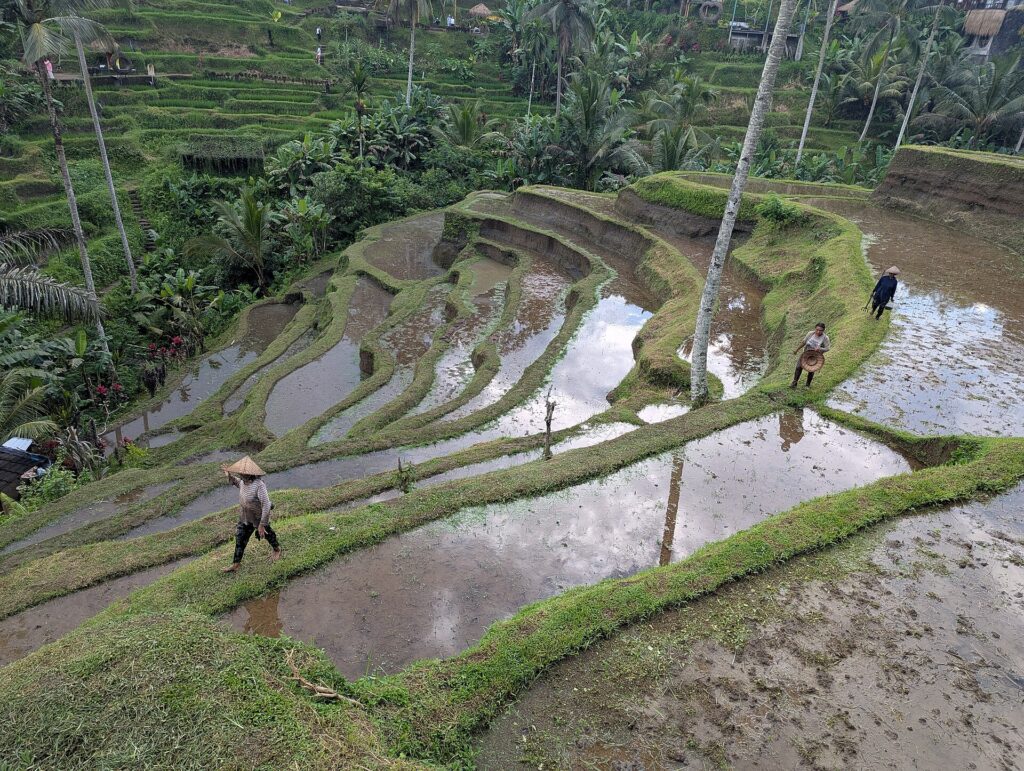
Day four is the temple loop, and it works best in one direction: north to Tegalalang, further north to Tirta Empul, then a waterfall on the way home. Every stop is 20 to 45 minutes from the last, which is why this day fits while so many others do not.
- Start at the Tegalalang rice terraces before 9am. The light is better, the buses have not arrived, and the walk down into the valley is cooler.
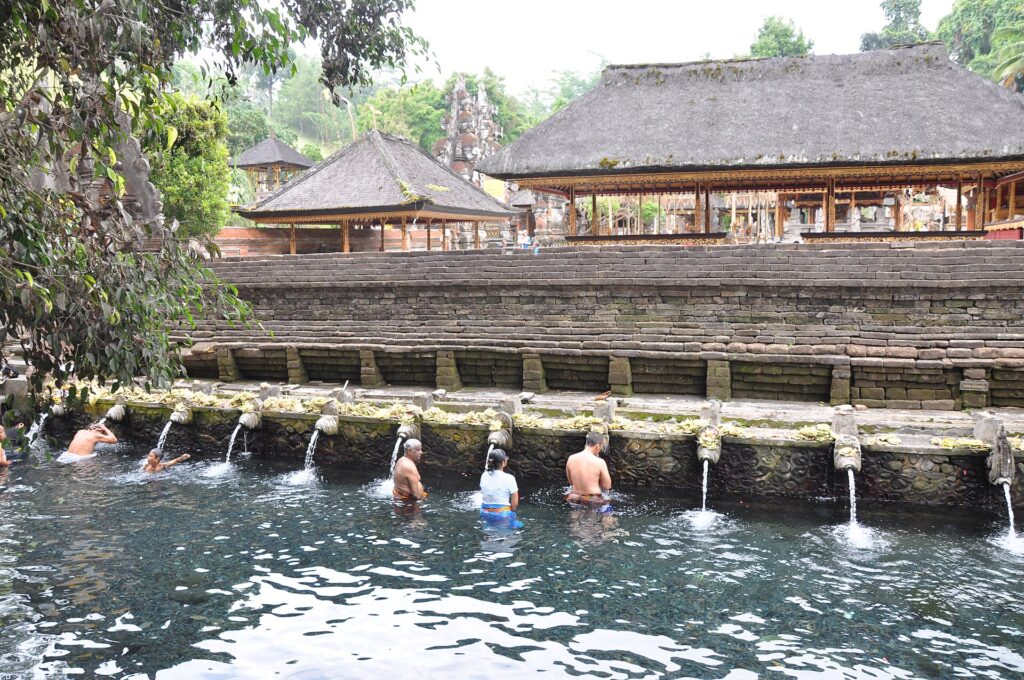
- Tirta Empul, at Tampaksiring, is a working water temple built around a holy spring. Visitors can join the melukat purification, but it takes two sarongs: the dry one included with your ticket, and a second bathing sarong rented by the pools.
- Pick one waterfall rather than three. Kanto Lampo is the easy one, a short climb down to a curtain of water. Cepung sits in a canyon and depends on the light to be worth the detour.
- Bring a change of clothes if you plan to go into the pools. You will be soaked, and the ride home is air-conditioned.
Day 5: Mount Batur sunrise or a slow Ubud day
Day five is a straight choice: climb a volcano in the dark, or stay in the valley and take your time. Book one or the other, because trying to do both is how people run out of energy by day six.
- The Mount Batur sunrise trek starts with a pickup around 2am and a 60 to 90 minute drive to the trailhead. The climb usually takes one and a half to two hours, and the payoff is sunrise over the caldera and Lake Batur.
- You are back in Ubud by late morning, tired in a good way, with the whole afternoon free for a spa and an early dinner.
- The slow option: walk the Campuhan Ridge at first light, look in at Goa Gajah, the carved cave temple east of town, and spend the afternoon in a coffee garden or a cooking class.
- Either way, keep the evening light. Day six is a driving day again.
What does not fit in a seven-day trip
Three pairings look sensible on a map and fail in practice: Uluwatu and Ubud in one day, a Nusa Penida day trip on top of a full Ubud stay, and the northern lakes as filler.
- Uluwatu to Ubud is two to two and a half hours by road, so a same-day pairing leaves you with about ninety minutes at each end once you count parking and walking. Pick one, or split them across two bases, which is what this plan does.
- Nusa Penida is a full commitment. The fast boats leave from Sanur, the day runs from dawn to dusk, and the trip replaces a day that Ubud would otherwise get. Some seven-day plans fold it in by cutting Ubud to one night; that is the trade you are making.
- North Bali, meaning Munduk, Lake Beratan and the Jatiluwih terraces, is two and a half to three hours each way from Ubud. As a full-day swap it works. As a quick add-on it does not.
- Besakih, the mother temple on the slope of Mount Agung, needs most of a day once you count the drive and the walk in. Save it for the next trip.
- The lesson underneath all of this: two points 30 kilometres apart can be two hours apart at 4pm. Build the day around the drive, and the drive stops ruining the day.
Day 6: Down to the coast and Tanah Lot
Day six moves from the hills to the coast, and Tanah Lot is the stop that anchors it: save the temple for the evening. The drive down is the price of the two nights that follow.
- Ubud to Canggu runs 90 minutes to two hours. Leave after breakfast and you will be checked in before lunch.
- Canggu is a beach town with a surf break, with Batu Bolong at one end and Echo Beach at the other, plus beach clubs that fill up on weekends.
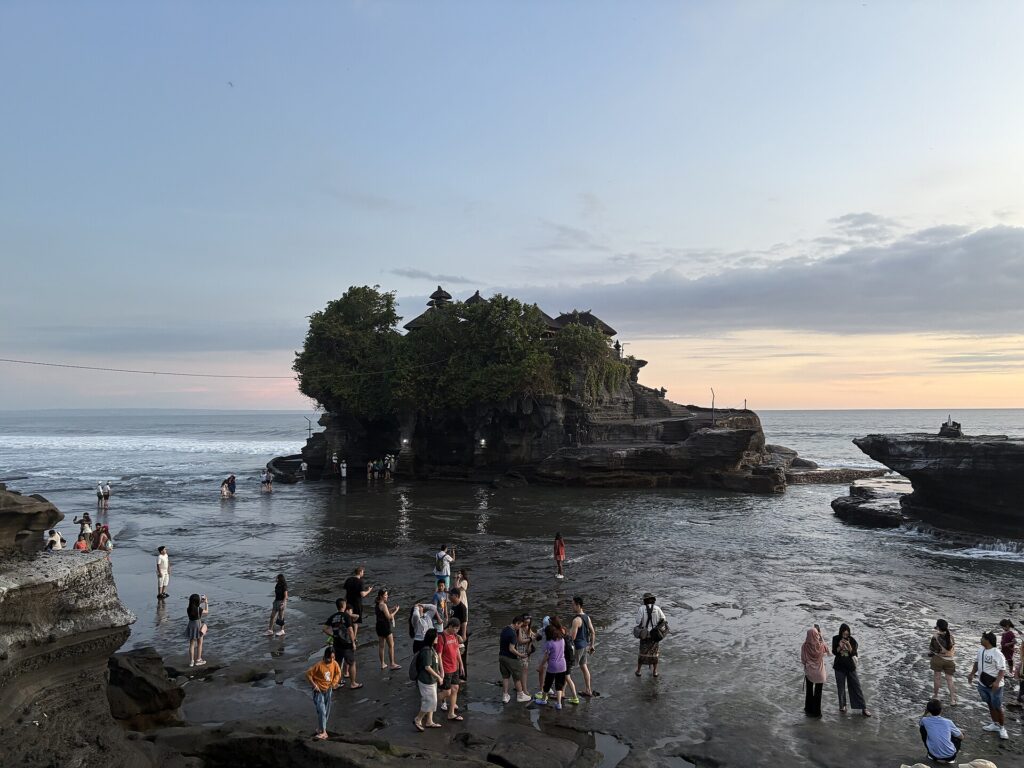
- Tanah Lot, or Pura Tanah Lot, sits on a rock outcrop 30 to 45 minutes further north. The rock is cut off at high tide, so time your visit to low water, and arrive an hour before sunset because everyone else has the same idea.
- The sarong rule applies here too, and sarongs are handed out at the gate. Wear shoes you can kick off, because the path to the rock gets wet.
- If you would rather not drive again, Canggu’s own sunset will do. Tanah Lot is simply the better photograph.
Day 7: One last morning, then the airport
Day seven is a buffer day, so keep the plan small and protect the flight. Everything scheduled on this day should be cancellable.
- A last swim, a long breakfast, or a spa slot if the flight leaves in the afternoon. Do not start a temple run you cannot finish.
- Allow 45 to 90 minutes from Canggu or Seminyak to the airport, and add a wide margin on top for check-in. This is the one drive you cannot rebook.
- If your flight leaves after dark, an early dinner on the coast beats an extra hour in the terminal.
Temple dress code and etiquette
Every temple on this route requires a sarong and a sash, for men, women and children alike, and the rule is enforced at the gate rather than suggested. The practical details are simple once you know them.
- The sarong, or kamben, wraps from the waist to at least the knees, and the sash, or selendang, ties over it at the waist. Shoulders and upper arms must be covered, which rules out singlets, strapless tops and swimwear as outerwear.
- Uluwatu, Tanah Lot and Tirta Empul all hand out a sarong and sash with your ticket. Smaller village temples usually do not, so carry your own lightweight cloth if you plan to stop at one.
- Wear shoes you can slip off without a fight. Some areas ask for bare feet, and wet stone steps are no place for laces.
- These are active places of worship, not photo sets. Do not stand in front of someone praying, do not point your feet at a shrine, and keep your voice low when a ceremony is running.
- The reasoning is worth knowing: the sarong and sash mark the sacred upper body from the ordinary lower body, so the outfit is a gesture of respect rather than a dress code invented for visitors. The same courtesies apply anywhere else you travel, and Religious Festivals: Respectful Visitor Guide covers them properly.
Where to base yourself and what it costs
Two bases do most of the work on this route: the south coast for the first two nights, then Ubud, then one coastal base to finish. Discover Bali’s Ideal Stays and Hidden Gems breaks the island down area by area if you want to compare before booking.
- If you would rather move less, drop the final coast nights and drive to the airport from Ubud. That means leaving before dawn for a morning flight, so weigh the trade honestly.
- Costs are dominated by three things: getting around, temple entries, and the visa. The table below covers the fixed items you can plan around.
| Item | What to budget | Notes |
|---|---|---|
| Visa on arrival (B1) | IDR 500,000 | 30 days, extendable once for a further 30 days |
| Tirta Empul entry, per adult | IDR 75,000 | Sarong and sash included; bathing sarong rented separately |
| Private driver, day rate | Quoted per car, not per person | Split it three ways and the per-person figure drops fast |
| Airport run | 45 to 90 minutes of driving | Add a wide buffer; this is the leg you cannot miss |
Those figures come from Indonesia’s immigration directorate and published temple guides, and gate fees do change, so confirm current pricing before you lock a budget.
Once the route is set, the biggest variable left is money. Turn the week into a real number with Travel Budget Planning: Tips & Tools before you book anything.
Frequently asked questions
Is 7 days enough for Bali?
Yes, if you accept that one week covers one loop rather than the whole island. This route fits two coast bases, three nights in Ubud and a full temple day without rushing.
Add two days if you also want Nusa Penida or the north.
Can you visit Uluwatu and Ubud on the same day?
No, and it is the most common first-timer mistake on this stretch of the island. With two to two and a half hours between them, a same-day attempt spends more time on the road than at either stop.
Give each one its own nights instead.
What should I pack for temple visits in Bali?
A lightweight sarong, a sash if you own one, and slip-on shoes. The big temples provide a sarong and sash with your ticket, but smaller shrines expect you to bring your own or pay a small cash rental.
How much is the visa on arrival for Bali?
IDR 500,000 for a 30-day stay, extendable once for another 30 days. Australians are eligible, and holders of the electronic visa can extend it online rather than at an immigration office.
Which temples are worth seeing if you can only manage two?
Make Uluwatu the first: the cliff setting and the sunset Kecak dance pair best with a beach day. Make Tanah Lot the second, because it slots neatly into the drive from Ubud down to the coast.
Image credits
- Photo: William Cho / Wikimedia Commons, CC BY-SA 2.0. Source
- Photo: Freddy eduardo / Wikimedia Commons, CC BY-SA 4.0. Source
- Photo: Jorge Láscar from Melbourne, Australia / Wikimedia Commons, CC BY 2.0. Source
- Photo: Chainwit. / Wikimedia Commons, CC BY 4.0. Source
Works Cited
“Sarong in Bali: What to Know Before You Visit a Temple.” Wayfar, wayfar.co/places/bali/sarong-in-bali-what-to-know-before-you-visit-a-temple. Accessed 14 Sept. 2026.
“Visa B1.” Direktorat Jenderal Imigrasi, imigrasi.go.id/wna/daftar-visa-indonesia/B1. Accessed 14 Sept. 2026.
“What to Do in Bali: A One-Week Itinerary For First-Timers.” Rachel Off Duty, racheloffduty.com/blog/what-to-do-bali-one-week-itinerary. Accessed 14 Sept. 2026.