
The short answer
Festival weather preparation is the work you do before you travel: reading the forecast for the site rather than your home city, packing for more than one season, and deciding in advance where you will shelter when the sky changes. Heat, rain and cold each ask for different gear and different behaviour on the day. None of it is expensive, and most of it packs small. This guide covers what to pack for each condition, what organisers usually handle, and what to do when a storm arrives in the middle of a set.

Start with the site forecast, not your home city
Your preparation should follow the forecast for the festival site itself, because the weather at a rural site can look nothing like the weather where you live. Some sites sit on floodplains, some in valleys that trap heat, and some on open coast where rain arrives early and fast.
Check the forecast in three passes. Two weeks out, look only at the trend, so you know what to buy or borrow. Two days out, read the daily high, the overnight low and the rain chance, then pack against those numbers.
On the travel day, read the hourly view and plan your arrival around the worst of it.
Read the event’s own channels as well. Many festivals post weather updates, stage changes and site notices on their app, and a schedule change will appear there before it appears anywhere else. Save an offline screenshot of the forecast and the site map before you travel, since rural phone signal tends to drop at the worst moment.
One term worth knowing before you book: a rain or shine policy means the event runs regardless of the weather. Refunds or exchanges for rain are uncommon, so the cost of bad weather usually lands on the ticket holder. If this is your first camping event, start with our guide to Weather Preparation for Outdoor Festivals before you build a kit.
Heat: how to prepare for a hot day on the field
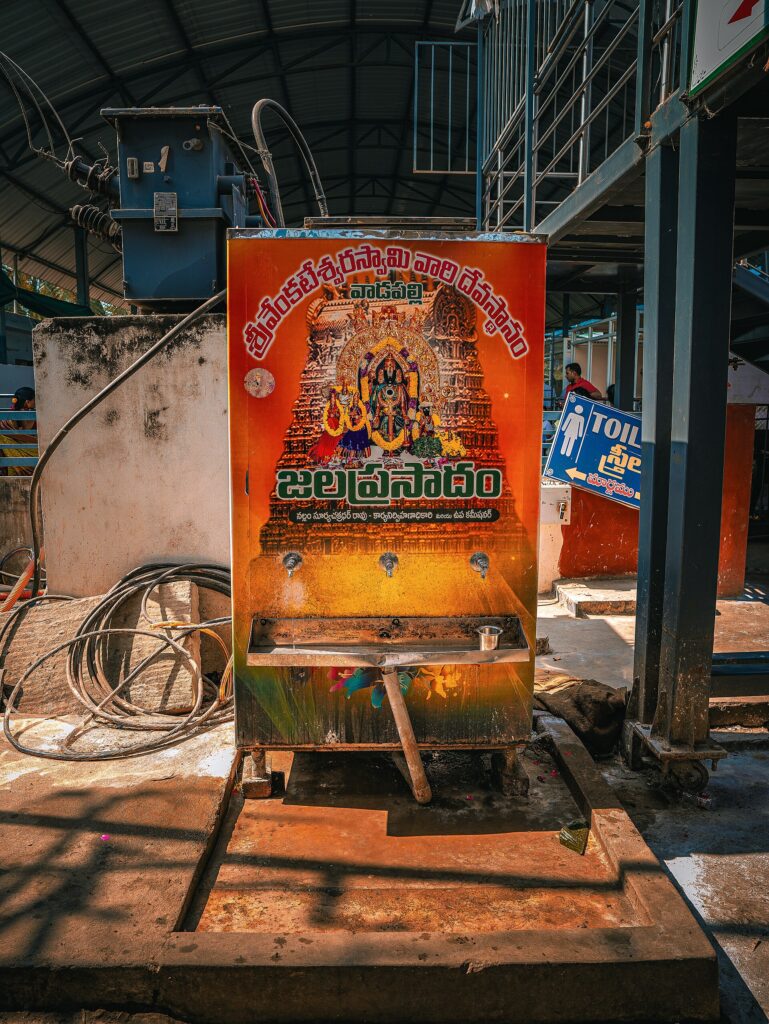
Heat is the easiest condition to underestimate, and the fix is unglamorous: water, shade and doing less in the middle of the day.
Carry a refillable bottle and top it up at every water point you pass. Drink steadily from the morning rather than waiting for thirst. If you are sweating for hours on end, plain water is not always enough, so add oral rehydration salts to replace the electrolytes you lose.
Alcohol speeds dehydration, so alternate a drink with water if you are having both.
Cover up more, not less. A wide-brimmed hat, sunglasses and a loose long-sleeve shirt beat bare skin across a full day in the sun. Reapply sunscreen every two hours, and sooner if you are sweating heavily.
Shade is finite at big sites, so claim a spot before the middle of the day.
Time your day around the worst heat. The hottest stretch runs from late morning into mid-afternoon. Use that window for shade, food and a sit-down, then save your energy for the evening sets.
Most sites have shaded areas and cooling spots, so find them on day one, before you need one.
Learn the warning signs of heat exhaustion: headache, dizziness, nausea, muscle cramps and heavy sweating. Move to shade, sip water, cool your neck and wrists, and tell someone how you feel. If a person stops sweating, becomes confused or collapses, treat it as an emergency and get medical help straight away.
Our guide to First Aid Essentials for Festival Attendance covers the small kit worth carrying for this and other problems.
Rain: stay dry at skin level, not on paper
For rain, the goal is staying dry at skin level rather than staying dry on paper. A poncho, waterproof footwear and a dry bag will keep you comfortable for hours longer than an umbrella, which is awkward in a crowd and useless in wind.
Pack a poncho or rain shell that fits over your daypack. Cheap packable ponchos work well at festivals because they cover everything and weigh almost nothing. Add waterproof boots with real grip, and put two spare pairs of socks in a dry bag.
Wet feet end more festival days early than rain itself.
Protect your electronics before the first drop falls. A dry bag or sealed plastic bag for your phone, power bank and cards costs very little and removes the main rain risk. If your phone is your ticket, keep it dry and keep a screenshot of the barcode as a backup.
Check what your ticket says about re-entry as well, because leaving the site to dry out and change clothes is allowed at some events and not at others.
Where you sleep matters as much as what you wear. Advice from the Met Office for festivalgoers is to pitch on higher ground when rain is forecast, so your tent is not sitting in the water that drains to the bottom of the site.
Face the tent into the breeze, and learn one landmark near your pitch, so finding your way back is easy in the dark.
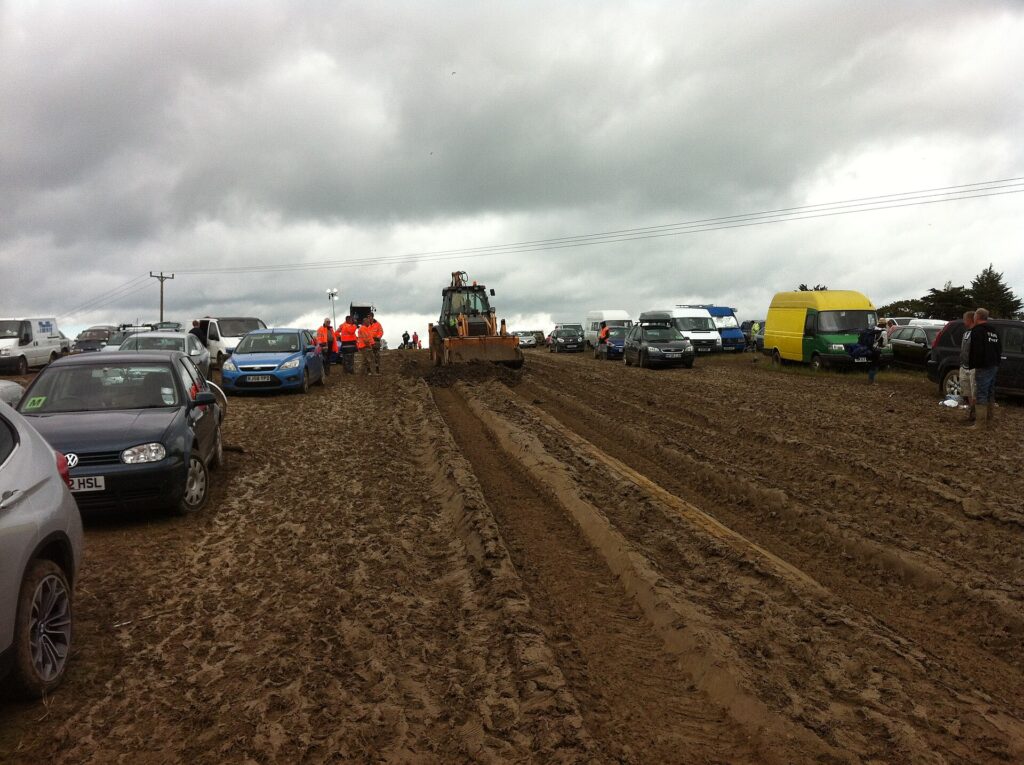
Mud is the part you cannot avoid. Move through it slowly, keep your laces tight, and expect to leave with wet clothes. If you are staying for several days, the Multi-Day Festival Camping Hacks guide covers keeping a camp liveable once the ground is churned up.
Cold: the night condition most people underplan
Cold is the condition most people underplan, because they pack for a hot afternoon and then stay out until 1am in a t-shirt. Treat the overnight low as a separate forecast with a separate list.
Inland and desert sites cool quickly after sunset, and even coastal festivals turn chilly once the sun drops. Pack a thermal base layer, a warm mid layer and a waterproof outer layer, then add a beanie, dry socks and a spare jumper for the walk back to camp. Add the extra layer before you feel cold, not after.
Your sleep system decides whether the next day works. Choose a sleeping bag rated for the overnight low rather than the daytime high, use a mat with an insulated base, and open a tent vent to keep condensation down.
Dry clothes are warmth, and wet clothes pull heat out of you, so change anything soaked before you sleep rather than hoping body heat will fix it.
Winter festivals in southern Australia are typically held in June and July, confirm on the official site, and they invert the packing problem: rain and cold first, sun second. Travelling in the shoulder season, meaning the quieter weeks either side of peak dates, is one way to trade heat risk for milder days and cheaper beds.
When the weather turns: storms, lightning and wind
A storm at a festival is a move-now problem, not a wait-and-see one. If you can hear thunder, you are already close enough to act.
Lightning is the immediate threat. Leave open ground, and stay away from isolated trees, tall poles, fences and water. A tent offers no protection from a strike.
Move to a hard-roofed building or a car if the site allows it, and wait at least 30 minutes after the last thunder before you head back out. Government guidance on outdoor event weather preparedness is written for organisers, but the same rules protect you.
Wind is the second threat, and it is about what is above you. Before you leave camp for the day, check your pegs and guy lines. When gusts pick up, move away from scaffolding, temporary structures, banners and trees.
If your tent poles lift off the ground or the fabric starts to tear, leave the tent and go somewhere solid.
Flash flooding can build within minutes on a site with poor drainage. Move uphill, and never walk or drive through moving water, because you cannot judge the depth. Stay clear of creek crossings and low paths that were dry earlier in the day.
Organisers may pause a stage or clear a section of the site during a storm. Follow staff instructions and the event app rather than guessing, and know your nearest shelter before you need it.
| Condition | Warning signs | Do this now | Packed for it |
|---|---|---|---|
| Extreme heat | Headache, dizziness, no shade at midday | Move to shade, sip water, cool your neck | Refillable bottle, hat, electrolytes |
| Heavy rain | Water pooling, churned ground | Waterproofs on early, move camp uphill | Poncho, gumboots, dry bag, spare socks |
| Thunderstorm | Thunder, dark sky, sudden gusts | Leave open ground for hard-roofed shelter | Screenshot of the site map, dry phone |
| High wind | Straining guy lines, flapping structures | Secure the tent, then move clear of it | Low-profile pitch, pegs packed down |
| Cold night | Temperature drop after sunset | Add a layer before you feel cold | Thermal base, beanie, rated sleeping bag |
What organisers handle, and what stays with you
Organisers usually cover the big safety systems at an outdoor festival, while your water, medication and decisions stay with you.
Expect water refill points, shaded rest areas, medical cover and weather updates through the event app. Safety planning at large events draws on industry guidance such as the work published by the Event Safety Alliance, and most event teams watch the radar in real time while the gates are open.
What stays yours: a full water bottle, your sun protection, your layers, your prescription medication and your awareness of the nearest exit. Keep medication out of direct heat and inside a dry bag. Save a screenshot of the medical tent location as soon as you arrive, and drop it in your group chat so everyone has it.
If you cannot find the event’s severe weather plan online, ask at an info point.
Read the event’s weather policy before you book transport or accommodation. Know what happens if a day is cancelled, whether tickets roll over, and how you would get home early. That single check is worth more than any extra gadget you could pack.
The ten-minute check before you zip the bag
Festival weather preparation really comes down to one habit: read the site forecast, then pack one bag that works for heat, rain and a cold night.
Do it in a single pass. Screenshot the hourly forecast, write your kit list against the table above, and put the poncho, the warm layer and the water bottle in the same place so nothing gets left behind. Agree a meeting point with your group for the moment a storm splits you up.
Then build the kit itself: the festival packing list turns heat, rain and cold into a single checklist you can work through in an evening.
Frequently asked questions
Does a festival get cancelled if it rains?
Usually not. Under a rain or shine policy the event runs regardless of the weather, and refunds or exchanges for rain are uncommon.
Read the event’s weather policy before you book transport, so you know where you stand if a day is cancelled.
Is it safe to stay in a tent during a thunderstorm?
No. A tent offers no protection from a lightning strike, so move to a hard-roofed building or a car if the site allows it. Wait at least 30 minutes after the last thunder before you head back out.
How do I keep my phone and power bank dry at a festival?
Keep them in a dry bag or a sealed plastic bag, along with your cards. Take a screenshot of your ticket barcode as well, so entry is covered if the phone fails.
Where should I pitch a tent when rain is forecast?
On higher ground, because rain drains to the bottom of the site and a low pitch can end up in the runoff. Face the tent into the breeze and learn one landmark near the pitch, so you can find it in the dark.
Do festivals run in winter in Australia?
Yes. Winter festivals in southern Australia are typically held in June and July, so confirm the dates on the official site before you book.
They flip the usual packing order: rain and cold gear first, sun protection second.
Image credits
- Photo: Shixart1985 / Wikimedia Commons, CC BY 2.0. Source
- Photo: Siddharthabandi / Wikimedia Commons, CC BY-SA 4.0. Source
- Photo: Stephen West / Wikimedia Commons, CC BY 2.0. Source
- Photo: Shixart1985 / Wikimedia Commons, CC BY 2.0. Source
Works Cited
- “Top 5 tips to survive a festival, whatever the weather.” Met Office, n.d., https://weather.metoffice.gov.uk/warnings-and-advice/seasonal-advice/travel/out-and-about/5-tips-to-survive-a-festival. Accessed 14 Sept. 2026.
- “Outdoor Event Weather Preparedness.” National Weather Service, National Oceanic and Atmospheric Administration, n.d., https://www.weather.gov/otx/Outdoor_Event_Weather_Preparedness. Accessed 14 Sept. 2026.
- Event Safety Alliance, n.d., https://eventsafetyalliance.org/. Accessed 14 Sept. 2026.