
The short answer
Three days is enough to see this city’s headline sights if you group each day by area instead of crossing town twice. The plan below gives each day one zone: the heritage core, then the temple caves with the skyline, then shopping and street food. It comes with realistic travel times, because traffic here can double a short hop. It also explains which major festival periods can fall during your trip, and how to bend the route when one of them does.
The 3-day Kuala Lumpur itinerary at a glance
This plan gives each day one zone, so you spend your time seeing things rather than sitting in traffic. Each day starts early, breaks indoors at midday and ends near food. The table shows the shape of the trip; the sections below fill in the times and transport.
| Day | Zone | Headline stops | Getting between them |
|---|---|---|---|
| Day 1 | Historic core | Merdeka Square, Central Market, Petaling Street, Kwai Chai Hong | LRT to Masjid Jamek or Pasar Seni, then on foot |
| Day 2 | North, then KLCC | Batu Caves, Petronas Towers, KLCC Park | KTM Komuter from KL Sentral, then LRT to KLCC |
| Day 3 | Bukit Bintang | Pavilion KL, Jalan Alor, Saloma Bridge | Monorail or MRT, plus short Grab hops |
Treat your arrival day as a bonus, not as day one. Most visitors land in the afternoon or evening, check in, eat near the hotel and start fresh the next morning. Three full days then cover the headline sights at an easy pace.
Three days will not cover everything. Day trips such as Putrajaya, the Royal Selangor pewter workshop and Thean Hou Temple each need extra time. If you can stretch the trip to four or five days, our ultimate Kuala Lumpur itinerary adds those stops.
One rule for the whole trip: do not cross the city twice in a day. Distance matters less than direction here, and backtracking is what turns a good day into a long one.
Day 1: Merdeka Square, Chinatown and the old city
Day 1 of this Kuala Lumpur itinerary stays on foot in the historic core, where Merdeka Square, Central Market and Chinatown sit within about two kilometres of each other. Start at Merdeka Square, also called Dataran Merdeka, at around 8:30am, when the light is good and the heat is mild.
The Sultan Abdul Samad Building faces the square, and this is where independence was celebrated in 1957.
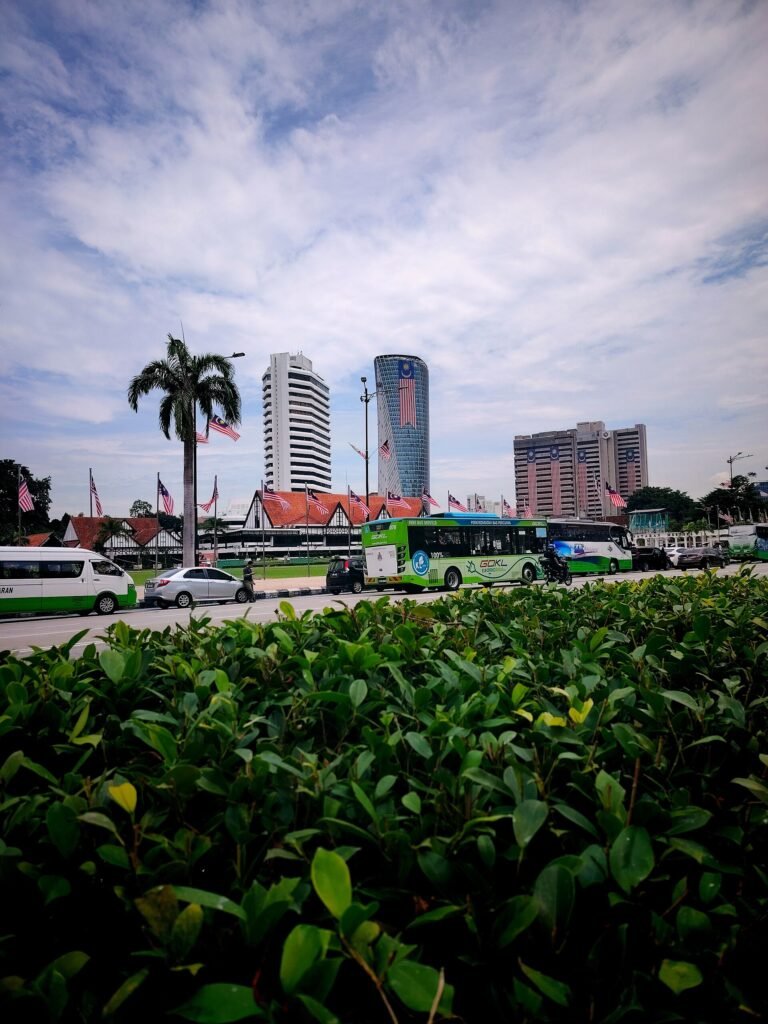
Walk north through Medan Pasar to Central Market, also known as Pasar Seni, which has its own LRT and MRT station. Use the market as your midday break: it is indoors, air conditioned and full of craft stalls. Chinatown is a five-minute walk from there.
Petaling Street is the main market drag, Kwai Chai Hong is a restored lane of murals just off it, and Sri Maha Mariamman Temple, one of the city’s oldest Hindu temples, sits at the edge of the district. If the heat wins, RexKL, an old cinema turned bookshop and event space, is two minutes away.
If your day one falls on a Thursday or a Sunday, free guided city walks cover this route in the morning; in recent schedules those are the only two days they run. Join one, then repeat the walk at your own pace after lunch. Either way, expect about four kilometres of walking, with two long breaks built in.
Evening: Jalan Alor, the food street off Bukit Bintang, is 10 to 15 minutes away by Grab. If you would rather stay in Chinatown, the Petaling Street night market runs into the evening and the hawker stalls along it do the same.
Day 2: Batu Caves in the morning, Petronas Towers at night
Day 2 runs north to Batu Caves early, then returns to KLCC for the Petronas Towers and the evening fountain show. Take the KTM Komuter train from KL Sentral; the ride takes roughly half an hour and leaves you a short walk from the steps. Go early.
The climb is easier in the cool of the morning, the caves are quieter, and the monkeys are less interested in your breakfast. Cover your shoulders and knees, carry water, and if you are unsure about temple etiquette, the site’s Religious Festivals: Respectful Visitor Guide covers the basics.
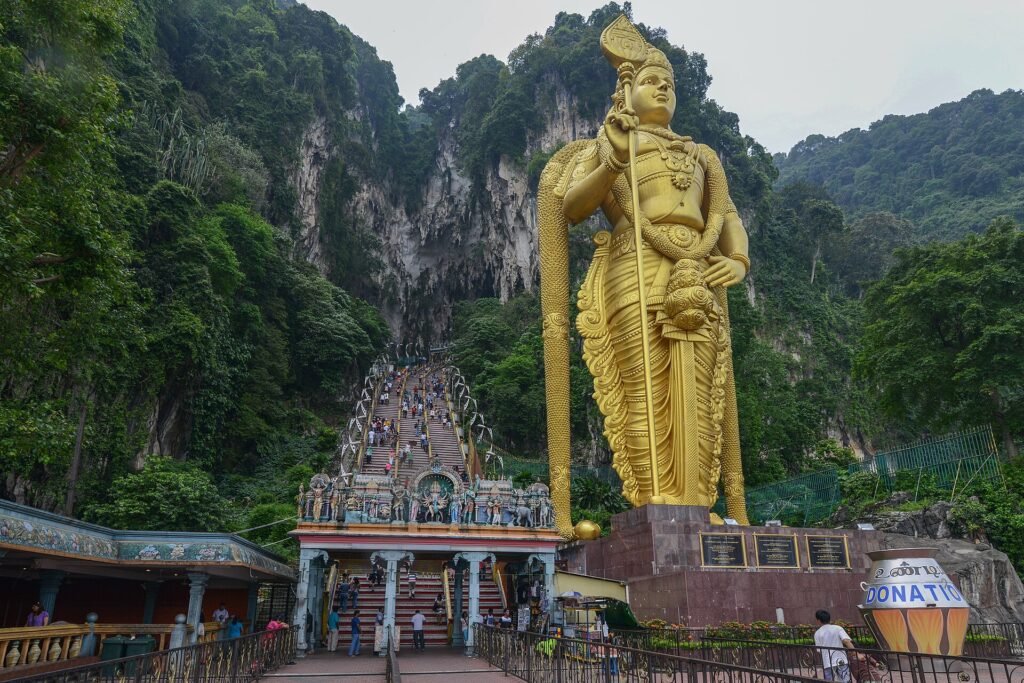
Budget two to three hours at the caves including the climb, then take the train back. Travelling with children? The afternoon is a good slot for Aquaria KLCC, the aquarium at the base of the towers.
Book Petronas Towers tickets before you fly. The Skybridge and observation deck sell out, particularly for sunset slots, so check the official Petronas Twin Towers site for current hours, prices and availability. The towers were the tallest buildings in the world from 1998 to 2004, and the sunset slots are the ones worth planning around.
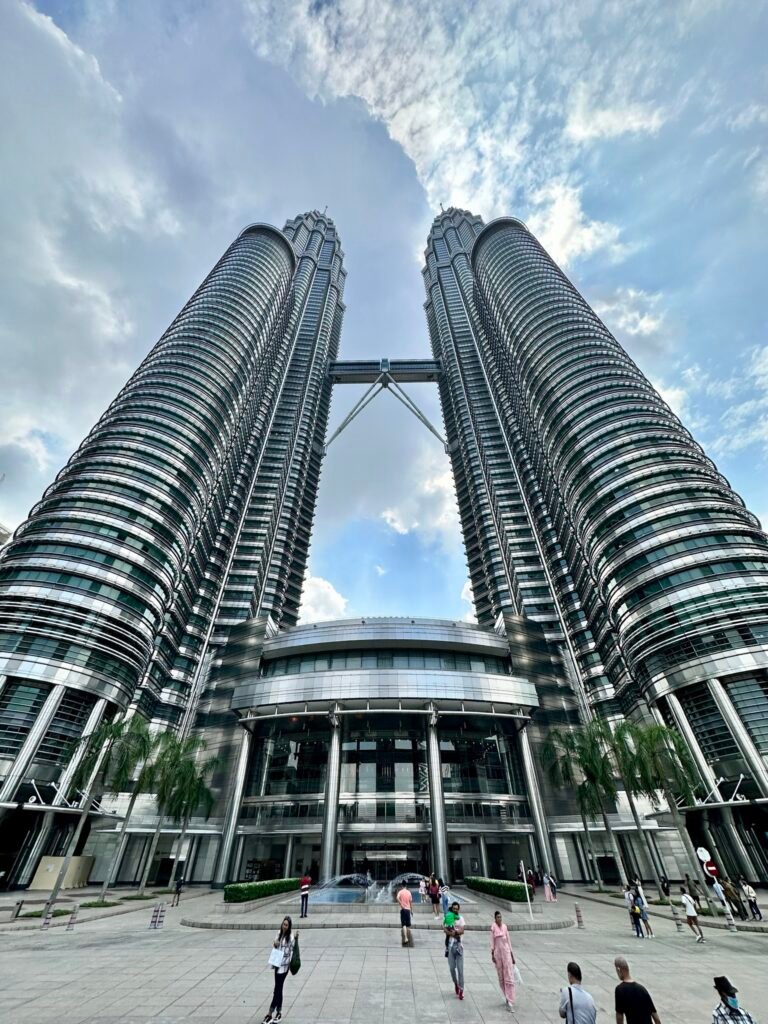
Under the towers, KLCC Park is where the Lake Symphony fountain shows usually run in the evening; check the times locally when you arrive. Dinner is easy at Suria KLCC, the mall in the complex, or in the streets off Jalan Ampang. Saloma Bridge, the pedestrian bridge that frames the towers, is the classic night photo and a five-minute walk from the park.
Day 3: Bukit Bintang, Pavilion and the food streets
Day 3 is the shopping and eating loop around Bukit Bintang, with one morning viewpoint or temple and a long dinner on Jalan Alor. Pick one morning option, not both: the KL Tower with the KL Forest Eco Park canopy walk beside it, or Thean Hou Temple, the tiered Chinese temple south of the centre that stays calm in the mornings.
Late morning, head to Pavilion KL at the top of Bukit Bintang and have lunch in the food hall there. The afternoon is for the malls and the walkways between them, which keep you out of the sun. If you are travelling with children, MinNature Malaysia, a miniature world of Malaysian landmarks, is a good indoor stop.
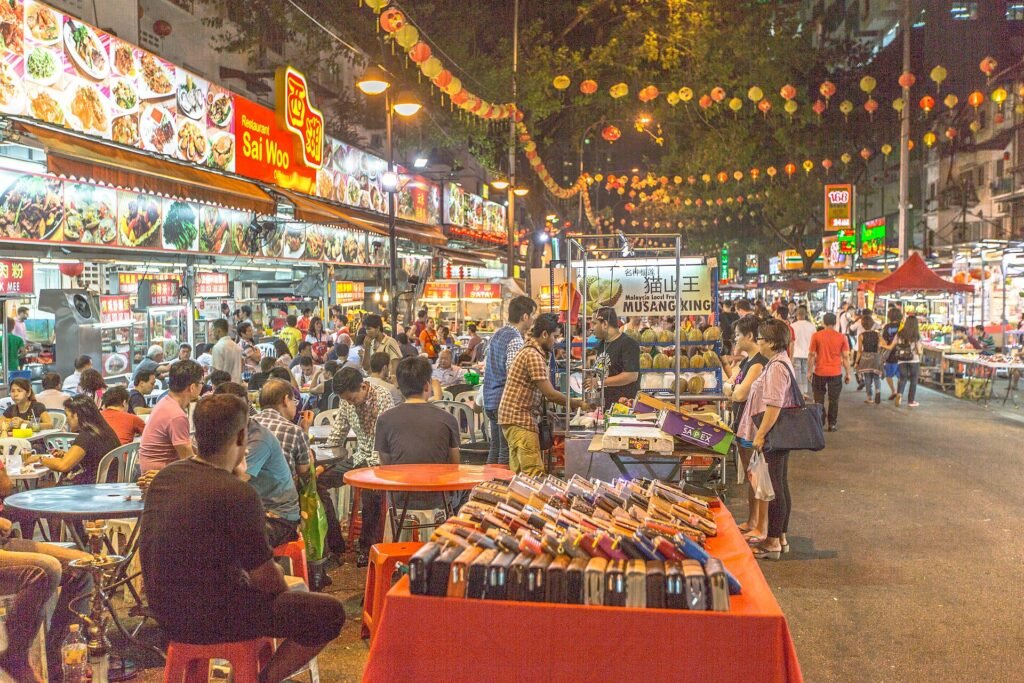
By late afternoon, Jalan Alor starts to set up, and by 7pm it is fully alive: grilled skewers, noodle stalls, seafood tanks and fresh fruit. Eat your way down one side and back up the other, and finish with durian if you want the full experience. If you have energy left, the rooftop bars along Bukit Bintang look straight at the lit towers.
Festivals in Kuala Lumpur: what can land during your trip
Malaysia’s main festival periods are Thaipusam, Chinese New Year, Hari Raya Aidilfitri and Deepavali, and no fixed three-day route can coincide with all of them. Each one changes the city in a different way, and most dates shift each year, so confirm the current dates on the Tourism Malaysia site before you book flights.
Thaipusam (typically late January or early February) is the one that rewrites this itinerary. Batu Caves becomes the centre of a huge pilgrimage: roads close, trains run packed and the steps fill from before dawn. If you want the spectacle, give it a full day and book accommodation early.
If you do not, keep Batu Caves on a normal morning and swap in Thean Hou Temple on festival day.
Chinese New Year (typically late January or February) fills Chinatown in the week before, when the market stalls peak. Expect lantern displays, busy restaurants and some family-run shops closed for the first day or two of the holiday.
Hari Raya Aidilfitri ends the fasting month of Ramadan and follows the Islamic calendar, so it shifts about 11 days earlier every year. The weeks before are the food story: evening bazaars across the city sell cheap, excellent dishes. On the holiday itself, KL goes quiet as residents travel home to family, and mall sales follow in the days after.
Deepavali (typically October or November) is the easiest to slot in. Brickfields, the city’s Little India, sits one stop from KL Sentral, and the district decorates with lamps and arches in the weeks around the festival. An evening there for lights and food pairs with day one or day three.
Merdeka Day, 31 August, is the fixed one: the date never moves, and the main parade centres on Merdeka Square. If you are planning years ahead, this is the festival you can lock in.
The honest version: these festivals fall in different months, and one of them moves every year, so a fixed three-day window cannot catch them all and often catches none. Pick the one you actually want, confirm the date from the official source, then bend the route around it.
Move the cave day toward or away from Thaipusam, add a Brickfields evening for Deepavali, and keep the rest flexible. The approach in Day-by-Day Festival Itinerary Planning is the same one: anchor each day to a booked event, then fill the gaps. Festival weeks also fill hotels early and lift prices, so book ahead of your usual lead time.
Getting around Kuala Lumpur: realistic travel times
Use the rail network for fixed hops and Grab for everything else, and add padding to every car estimate: in KL, traffic can turn 15 minutes into 45. The lines you will actually use are easy to remember. The Kelana Jaya LRT line runs through KL Sentral, Masjid Jamek and KLCC.
The MRT Kajang line stops at Pasar Seni and Bukit Bintang. The monorail links KL Sentral with Bukit Bintang, and the KTM Komuter is your train to the caves.
Fares are low, a few ringgit per ride, and trains run from early morning until around midnight. Pay with a Touch ‘n Go card from any station counter, or with a single-journey token.
Grab is the default for anything cross-town, especially in the heat. A hop that looks like ten minutes on the map takes 15 to 25 minutes in normal traffic, and longer when it rains, which it often does in the afternoons. Prices are low by Australian standards, and booking in the app avoids the meter arguments that can come with street taxis.
From the airport, the KLIA Ekspres train is the reliable choice: nonstop from KLIA to KL Sentral in about 30 minutes. A Grab at peak hour can take an hour or more. From KL Sentral, the LRT or a short Grab finishes the trip.
Peak hours, roughly 7:30am to 9:30am and 5pm to 8pm on weekdays, fill both roads and trains, so push anything cross-town outside those windows when you can.
Walking is underrated in the old city and overrated everywhere else. Merdeka Square to Chinatown is a comfortable 20-minute walk, and a covered, elevated walkway links KLCC with the Bukit Bintang malls. If this stop is part of a longer trip, check what counts as a stopover before you book: the Travel Glossary: A to Z of Travel Terms defines it in one line.
Where to stay for this itinerary
Base yourself on the rail corridor and the trip runs itself. Bukit Bintang and KLCC are the easiest bases: Jalan Alor, Pavilion and the towers are walkable, and rail covers the rest.
Chinatown suits people who put food first; rooms are small and the streets are loud, but the eating is excellent and small historic places such as Tian Jing Hotel sit inside the market area.
Chow Kit is cheaper again and has strong local food with a rougher feel after dark; The Chow Kit is the known boutique option there. KL Sentral is functional rather than charming, which makes it ideal for a one-night stopover between flights and dull for a three-day base.
Avoid staying far out to save a few dollars on the room. Subang and Putrajaya look cheap on hotel sites, but the Grab fares and lost hours cancel the saving. During festival weeks, book earlier than you normally would; the good places go first.
Practical tips: heat, dress and money
Three habits keep a Kuala Lumpur trip comfortable: start early, break indoors at midday and carry cash for food stalls.
- Heat: be at your first stop by 8:30am, and treat 11am to 4pm as indoor time. Malls, museums and markets are the plan for those hours.
- Rain: afternoon downpours are normal in most months, so a compact umbrella earns its luggage space.
- Dress: temples and mosques want shoulders and knees covered, and shoes come off at the shrine. Many mosques lend robes and scarves at the entrance.
- Money: malls take cards and phones; hawker stalls mostly want cash or a QR e-wallet. Keep some ringgit and top up at mall ATMs.
- Connectivity: buy a local SIM or eSIM at the airport, because Grab and maps run on data.
The bottom line
Three days in Kuala Lumpur works when each day owns one zone: the historic core, the caves and the towers, then Bukit Bintang’s food streets. Keep the plan flexible around festival dates, because the big four fall in different months and one moves every year. If a festival is the reason for the trip, build the trip around the festival rather than around three days.
Ready to work out what the whole trip costs? Start with the travel budget planning tips and tools.
Frequently asked questions
Is 3 days enough to see Kuala Lumpur?
Three full days cover the headline sights without rushing: the heritage core, the caves and the towers, then the Bukit Bintang food district. If you want day trips as well, add a night or two, because each one costs most of a day.
How do you get to Batu Caves from central Kuala Lumpur?
Take the KTM Komuter train from KL Sentral. The ride takes roughly half an hour, tickets come from machines at the station, and the train drops you a short walk from the steps.
Is Kuala Lumpur walkable?
Parts of it are. Merdeka Square, Central Market and Chinatown sit within a 20-minute walk of each other, and a covered walkway links the KLCC and Bukit Bintang malls.
Between districts, use rail or Grab.
What should I wear when visiting temples in Kuala Lumpur?
Cover your shoulders and knees, and expect to remove your shoes at the entrance. Many mosques lend robes and scarves at the door, so you do not need to buy anything special.
Can you visit Batu Caves during Thaipusam?
Yes, but it is a completely different day: packed trains from early morning, closed roads and very large crowds on the steps. Travellers who want a calm climb usually visit on a normal weekday instead.
Image credits
- Photo: Ana Muzi / Wikimedia Commons, CC BY-SA 4.0. Source
- Photo: Jorge Láscar from Melbourne, Australia / Wikimedia Commons, CC BY 2.0. Source
- Photo: IQRemix / Wikimedia Commons, CC BY-SA 2.0. Source
- Photo: Slyronit / Wikimedia Commons, CC BY-SA 4.0. Source
Works Cited
Keretapi Tanah Melayu Berhad. “KTM Komuter.” KTMB, www.ktmb.com.my.
Accessed 14 Sept. 2026.
PETRONAS. “Petronas Twin Towers.” Petronas Twin Towers, www.petronastwintowers.com.my.
Accessed 14 Sept. 2026.
Tourism Malaysia. Malaysia.Travel, www.malaysia.travel. Accessed 14 Sept. 2026.