
The short answer
Bali runs on two seasons, not four. One delivers dry, sunny days and steady sea breezes. The other delivers heavy rain that usually clears inside an hour or two. Temperatures sit in a narrow band all year, so the real decisions are crowds, room prices and which coast you base yourself on. The month you pick decides how much rain you meet and how much you pay. This guide works through the year one month at a time and tells you when to book.
How Bali’s year splits into two seasons
Bali has a dry season from roughly April to October and a wet season from November to March, and that split matters more than temperature. The monsoon drives it, so the edges shift a little from year to year.
Average highs sit between 30 and 34 degrees Celsius, and nights rarely drop below 23. What changes is rain and humidity. The wet season months carry most of the annual total: the monthly average tops 340 mm in January and sits near 275 mm in December and February.
July averages about 55 mm and August about 25 mm, which is why August bookings disappear first.
Humidity is the part most people underestimate. From December to March it sits high enough that walking a rice terrace at midday feels harder than the temperature suggests. June to September is drier and breezier, and that combination is why the middle of the year is the busiest window on the island.
Guides draw the season lines in slightly different places. The wet season is sometimes listed as November to March and sometimes as November to April, because April is a transition month: rainfall falls away sharply but the odd afternoon shower still turns up. November is the mirror image on the way back in.
Where you base yourself changes the forecast
Bali’s weather is not uniform: the south coast and the Bukit Peninsula are the driest parts of the island, while Ubud and the central hills are the wettest. The mountain spine across the middle of the island splits the weather.
Moist air moves in off the ocean, hits those slopes, rises, cools and drops rain on the way up, which is why Bali’s microclimates do not match each other. The same day can be grey and damp in Ubud and clear on the coast.
The north coast around Lovina, Singaraja and Pemuteran sits in a partial rain shadow, and the east coast around Sanur, Amed and Candidasa also runs drier than the centre.
A peer-reviewed rainfall study puts the gap in annual terms: about 1,761 mm a year on the northern side of the island against 2,025 mm on the southern side, based on Indonesian meteorological records from 1984 to 2009. That is roughly a 15 percent difference, and it is enough to change where you sleep.
That matters for trip planning in two ways. In the wet season, a base on the east or north coast buys you better odds of a dry afternoon than a base in the south. In the dry season the difference is smaller, though the hills around Ubud still catch afternoon cloud when the coast stays clear.
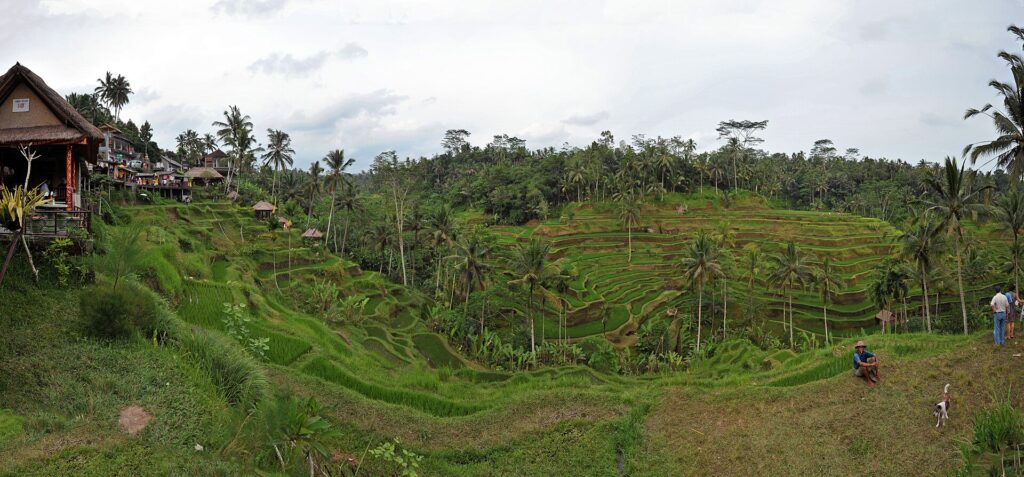
If the hills are your plan, Discover Your Ideal Ubud Stay Today covers where to sleep and what you trade off.
Bali month by month: rain, crowds and prices
The month you pick decides how much rain you meet, how busy the island gets and what a room costs. The table below sets those three things against each other, month by month.
| Month | Avg high / low (C) | Rain (mm) | Crowds | Room prices |
|---|---|---|---|---|
| January | 33 / 24 | 345 | Low | Lowest |
| February | 33 / 24 | 274 | Low | Lowest |
| March | 34 / 24 | 234 | Low, then busy around Nyepi | Low |
| April | 34 / 25 | 88 | Shoulder | Moderate |
| May | 33 / 24 | 93 | Shoulder | Moderate |
| June | 31 / 24 | 53 | Shoulder, busy late in the month | Moderate to high |
| July | 30 / 23 | 55 | Peak | Peak |
| August | 30 / 23 | 25 | Peak | Peak |
| September | 31 / 23 | 47 | Shoulder | Moderate to high |
| October | 34 / 24 | 63 | Shoulder | Moderate |
| November | 33 / 24 | 179 | Low | Low |
| December | 33 / 24 | 276 | Low early, peak from Christmas | High late |
Rainfall and temperature figures are monthly averages published by U.S. News Travel from National Climatic Data Center records, converted from inches and Fahrenheit and rounded. Crowd and price bands follow the seasonal pattern: demand lifts through the middle of the year, when school holidays overlap, then spikes again in the last week of December.
Two useful reads from the table. First, the deepest dry window is late July through August, and it is also the most expensive. Second, the shoulder months, April to June and September to October, deliver most of that weather for less money.
April to June: dry season before the crowds
April, May and June give you dry-season weather before the crush and the peak prices arrive, which makes this the best value window of the year. April is the pivot month: average rainfall drops from about 234 mm in March to 88 mm, the rice fields are at their greenest, and humidity starts to ease.
May is a near repeat, with about 93 mm on the same figures. That number is slightly higher than April’s, which surprises people, but the rain arrives as short afternoon showers rather than the multi-hour soakings of January. Days sit near 33 degrees Celsius, with nights around 24.
June is the pick of the three for most travellers. Rainfall drops to about 53 mm, the trade winds build, and the west-coast surf starts to fire at Uluwatu and Padang Padang. Highs ease to about 31 degrees.
Room rates stay reasonable until the final week, when the mid-year school holidays begin and prices climb.
One practical note: this window books out earlier than the rainfall numbers suggest. Festival Accommodations Compared explains how to weigh a resort against a guesthouse or a villa once your dates are fixed.
July and August: peak season and peak prices
July and August are the driest months of the year and the most expensive, with August the driest of all at about 25 mm. The trade winds keep the air moving, daytime highs sit near 30 degrees Celsius, and the coast delivers the reliable sun that put Bali on the map.
Peak season pricing follows the weather. This is when flights from Australia and Europe are fullest and when resort rates hit their annual high, so book three to four months ahead if your dates are fixed.
The crowds are real. Uluwatu at sunset, the rice terraces at Tegalalang and the Ubud markets all run at capacity through these two months. If you want the dry weather without the worst of it, aim for the last week of August or the first days of September, when the school holidays end and the weather holds.
What you get for the money is the best beach and hiking conditions of the year. Diving and snorkelling windows are at their most reliable, temple days rarely get rained out, and the trails on Batur and Agung are dry underfoot.
September and October: the second shoulder
September and October are dry enough to pass for peak season with far fewer people, which makes them the best months for a first trip. September brings about 47 mm of rain and October about 63 mm, both a long way under the wet-season months.
The best of it lands in the first half of September. The dry-season pattern holds, the crowds thin as the school holidays end, and room rates fall back from their August peak. You get August skies at shoulder prices.
See the pattern in the table again: August at 25 mm is still the driest month, but September at 47 mm is not far behind, and September is quiet.
October is warmer, with highs back around 34 degrees Celsius, and the humidity climbs through the final two weeks. Rain returns as brief afternoon showers rather than all-day weather. By the last week of the month, the wet season is announcing itself.
November to March: the wet season, honestly
November to March is the wet season, and it is wetter, cheaper and quieter than the rest of the year, with rain that tends to fall in short heavy bursts rather than all day. November is the soft entry: about 179 mm, humidity rising, rates at their lowest of the year.
December splits in two. Book early in the month and you get low-season prices with building afternoon rain. From Christmas the island fills and rates jump, because the holiday week is the second peak of the year after August.
January and February are the wettest months on the figures, at about 345 mm and 274 mm. Expect high humidity, deep green rice fields and waterfalls running hard. Rooms cost the least of the year, which makes this the cheapest window for a long stay.
March eases, at about 234 mm, with rain arriving later in the day and clearing faster. It is also the month when Nyepi usually falls, so check the date before you book flights.
The daily pattern matters more than the monthly totals. Mornings are usually the best window, cloud builds after lunch, and rain passes by evening. If you are set on travelling in the wet season, base yourself east or north, where the rain shadow delivers longer dry spells, and keep one indoor plan per day.
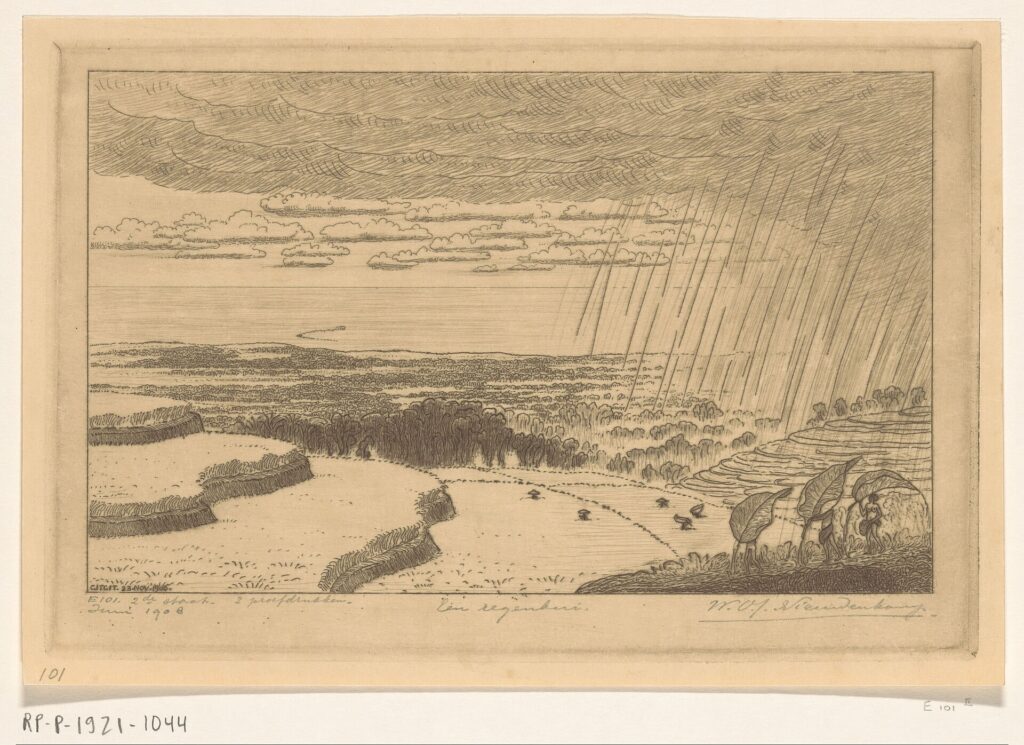
Packing for a wet forecast is its own skill. Weather Preparation for Outdoor Festivals covers how to keep a rainy day from ruining a plan.
Nyepi: the one day the island stops
Nyepi, the Balinese Day of Silence, falls on 9 March 2027, and the island shuts down for 24 hours: no flights, no traffic, no leaving your hotel. Indonesia’s public holiday calendar lists the next one on 26 March 2028.
The airport closes for the full day, mobile data services are switched off, and residents stay indoors with lights out after dark. The night before, 8 March in 2027, is the Ogoh-ogoh parade, when giant effigies are carried through the streets. Hotels keep operating, but pools, music and noise are restricted.
If your dates overlap, plan around it: move flights a day either side, confirm your hotel’s rules, and treat it as a quiet day rather than a lost one. Religious Festivals: Respectful Visitor Guide covers the etiquette for days like this.

One more festival note: the Bali Arts Festival is typically held from mid-June into mid-July, overlapping the busy school holiday window. Confirm dates on the official site before you build a trip around it.
How to choose your month
Match the month to what you value most, because Bali rarely hands you dry weather, low prices and empty beaches at the same time.
- Driest weather, whatever it costs: late July and August.
- Best balance of weather and price: late April to June, and September.
- Lowest room rates: January and February, with daily rain.
- Dry afternoons inside the wet season: base on the east or north coast, not the south.
If your dates are already locked, work backwards instead. Pick the two or three things you will not compromise on, then choose the coast that delivers them.
Ready to price the whole trip? Start with the Travel Budget Planning: Tips & Tools and build the numbers around your month.
Frequently asked questions
What is the best time to visit Bali overall?
For most travellers it is the two shoulder windows: late April to June and September. You get dry-season weather for most of the day and pay well under the July and August peak.
If your trip is short and the weather is the priority, take August.
When is peak season in Bali?
Peak season is July and August, plus the week from Christmas into early January. Flights and room rates hit their annual high in those windows, so book three to four months ahead.
June and the first half of December are noticeably calmer.
Is the wet season a bad time to visit Bali?
No, as long as you plan for it. Rain usually arrives as a heavy afternoon burst and clears within an hour or two, mornings are often clear, and rooms cost the least of the year.
Base on the east or north coast for better odds.
What is the cheapest month to visit Bali?
January and February are usually the cheapest, with March close behind as the rain eases. Rates are lowest because the wet season keeps demand down.
The one exception is the Christmas and New Year week, which is priced as peak.
Does it rain all day in Bali during the wet season?
Rarely. Rain tends to build through the afternoon and pass, so mornings stay usable for rice terraces and waterfalls.
January and February bring the heaviest and most frequent downpours.
Image credits
- Photo: chensiyuan / Wikimedia Commons, CC BY-SA 4.0. Source
- Photo: John Robert McPherson / Wikimedia Commons, CC BY-SA 4.0. Source
- Photo: Rijksmuseum / Wikimedia Commons, CC0. Source
- Photo: MagdaLena7 / Wikimedia Commons, CC BY-SA 4.0. Source
Works Cited
“Bali Microclimates: How Weather Changes Across The Island.” Monsoon Bali, monsoonbali.com/bali-microclimates/. Accessed 14 Sept. 2026.
“Bali Hindu New Year 2027 and 2028.” PublicHolidays.co.id, publicholidays.co.id/bali-hindu-new-year/. Accessed 14 Sept. 2026.
“Best Times To Visit Bali.” U.S. News Travel, U.S. News & World Report, travel.usnews.com/Bali_Indonesia/When_To_Visit/.
Accessed 14 Sept. 2026.
“Validation of Satellite Daily Rainfall Estimates in Complex Terrain of Bali Island, Indonesia.” Theoretical and Applied Climatology, Springer, 2017, link.springer.com/article/10.1007/s00704-017-2290-7.