
The short answer
Two weeks is enough for three regions of one country if you let the festival calendar set the order. This route does exactly that: it starts where the flights land, moves north for the events that need booking, and finishes on a coast where a missed date costs you nothing. You get a day-by-day structure, realistic travel times between legs, and clear notes on which dates would force a reroute. Book the headline event first. The rest of the trip follows.
Why festival dates should set your route
A fixed route cannot catch every Thai festival, so pick the one event you refuse to miss and build the whole trip around it. The standard plan runs Bangkok, the north, then a coast, and that order works for half the year.
The rest of the time, three things move: prices, transport availability, and the one city you need to be in on a specific night.
Thai festivals run on lunar calendars or fixed national holidays, not on your leave dates. Songkran is locked to mid-April. Loi Krathong follows a full moon that usually lands in November.
That single fact decides your travel window more than any flight deal.
So the first job is a calendar check. Find out what falls inside your dates before you book anything. If nothing lands in your window, you have freedom, and the dry months are the safe default.
The April window: Songkran
Songkran is the Thai New Year water festival, held 13 to 15 April as a national holiday, and it is the biggest reason to visit Thailand in April. The water play started as a blessing: pouring water over Buddha images and elders’ hands to wash away the old year. Today the blessing comes with buckets, hoses and water guns.
Bangkok’s Khao San Road and Silom fill with water fights. Chiang Mai is the other big one, where the moat around the Old City becomes the main stage and celebrations stretch past the official dates. If you are in the country on 13 April, you are part of it, planned or not.
Four practical effects shape any itinerary that lands on these dates:
- Transport sells out first. Domestic flights and sleeper train berths for 11 to 16 April go early, because the whole country travels home.
- Some shops and restaurants close or cut their hours.
- City traffic thins out, which is a rare bonus in Bangkok.
- Road safety campaigns run across the holiday week. It is not the time to ride a scooter for the first time.

If April is your window, route north first and coast second. To see how the water ritual compares elsewhere, Water Festivals Around the World is a good companion read.
The November window: Loi Krathong and Yi Peng
Loi Krathong falls on the full moon night of the twelfth lunar month, typically in November; in Chiang Mai it overlaps with Yi Peng, the Lanna lantern festival. On Loi Krathong, small boats made from banana leaves, flowers and candles are floated on rivers and canals to carry away bad luck. Yi Peng adds thousands of sky lanterns, a northern tradition.
Chiang Mai and Sukhothai host the set pieces. In Chiang Mai, lantern releases happen at ticketed events in designated venues, and city rules restrict casual launches for aviation safety. Confirm the current rules and the exact full moon date on official sources before you book.
November also opens the dry, cool season, which makes it peak season. Hotel rates on the festival nights climb steeply, and the best places sell out months ahead. That is the trade-off: reliable weather, festival crowds and peak prices in the same week.

For route building, the November window changes little. Only the middle night matters: be in the north on the full moon night, with the islands on either side of it.
Other festivals worth building around
Four regional events can carry a two-week trip if their dates fall inside your window: Phi Ta Khon, Bun Bang Fai, the Vegetarian Festival and the Full Moon Party.
- Phi Ta Khon (Dan Sai, Loei province): masked processions tied to a local legend, typically held in June or July, confirm on the official site. Dates are announced only a few months ahead, and the town sits a full day of travel from Bangkok or Chiang Mai, so treat it as a destination, not a stop.
- Bun Bang Fai (rocket festival): villages across Isan fire homemade rockets to ask for rain, typically held in May, confirm on the official site. Dates shift by village, so it only works if the northeast is already on your route.
- Vegetarian Festival (Phuket): nine days of street processions, typically held in October, confirm on the official site. If October is your window, it flips the Andaman leg to the front of the trip.
- Full Moon Party (Haad Rin, Koh Phangan): held monthly, near every full moon. This is the easiest festival to plan around, because the date is known a year ahead.
A two-week trip catches one headline event comfortably. Two only if they share a week or a region, and Songkran and the lantern festivals sit seven months apart. The honest read: one big event, one clear route.
The route at a glance
Here is the default 14-day order when the calendar is clear, plus what changes when a festival lands inside your window. Thailand’s coastline runs about 2,000 miles, split between the Gulf of Thailand and the Andaman Sea, so pick your sea before you book, as Condé Nast Traveler notes.
| Days | Base | Getting there | Festival watch |
|---|---|---|---|
| 1 to 3 | Bangkok | Land at Suvarnabhumi or Don Mueang, take the rail link | Songkran, 13 to 15 April |
| 4 to 7 | Chiang Mai | 1 hour 10 minute flight, or a 12 to 13 hour sleeper train | Yi Peng and Loi Krathong, November full moon |
| 8 to 10 | Krabi and Railay | Fly via Bangkok, plan half a day door to door | Vegetarian Festival in Phuket, October |
| 11 to 12 | Koh Phi Phi or Koh Lanta | 1.5 to 2 hour ferry from Krabi | None. This is the flex leg |
| 13 to 14 | Gulf island or Bangkok | Ferry or flight, connecting through Bangkok | Full Moon Party, monthly |
Every leg except the first is reversible. Keep the middle of the trip fixed and swap the ends when a festival asks you to.
Days 1 to 3: Bangkok
Three nights in Bangkok is enough to see the big sights, eat properly and reset your body clock before the pace changes. Stay near a BTS Skytrain or MRT station so you can skip the worst of the traffic. The Airport Rail Link runs from Suvarnabhumi to the city centre in about 30 minutes.
Day 1 is a landing day: check in, take a river ferry at sunset, eat street food near your hotel. Day 2 belongs to the Grand Palace and Wat Pho, starting at opening time before the heat and the tour groups. Wat Arun is one ferry hop across the river.
Cover shoulders and knees. Day 3: if your dates hit a weekend, Chatuchak market; if not, Ayutthaya by train, about an hour and a half each way, or a cooking class and the Jim Thompson House.
If your visit lands on Songkran, keep 13 to 15 April loose. The temples stay open, the roads belong to water play, and a dry bag for your phone matters more than any plan.
Days 4 to 7: Chiang Mai and the north
Four days is the right shape for the north: two in the Old City, one for a day trip, one spare. Fly from Bangkok in about 1 hour 10 minutes, or take the overnight sleeper train, roughly 12 to 13 hours on the rails, which saves a hotel night if you sleep well on trains.
The Old City is walkable. Wat Phra Singh, Wat Chedi Luang, and the Sunday Walking Street if your dates line up with a weekend. Set one day aside for Doi Suthep, the mountain temple above the city, and one half day for a cooking class or an ethical elephant sanctuary.
Book sanctuaries direct so you can check how the animals are handled.
Chiang Rai makes a long day: about three hours each way by road, with the White Temple as the draw. Stay overnight there if you would rather slow down.
If your window includes the November full moon, this leg is the anchor of the whole trip. Book Chiang Mai accommodation before anything else, because festival-week rooms sell out months ahead and rates jump.
Days 8 to 11: the Andaman coast
The Andaman coast is the beach half of the trip, and Krabi is the best base because every other stop connects through it. Fly south from Chiang Mai, usually via Bangkok, and treat it as half a day of travel. From Bangkok, Krabi is about 1 hour 20 minutes direct.
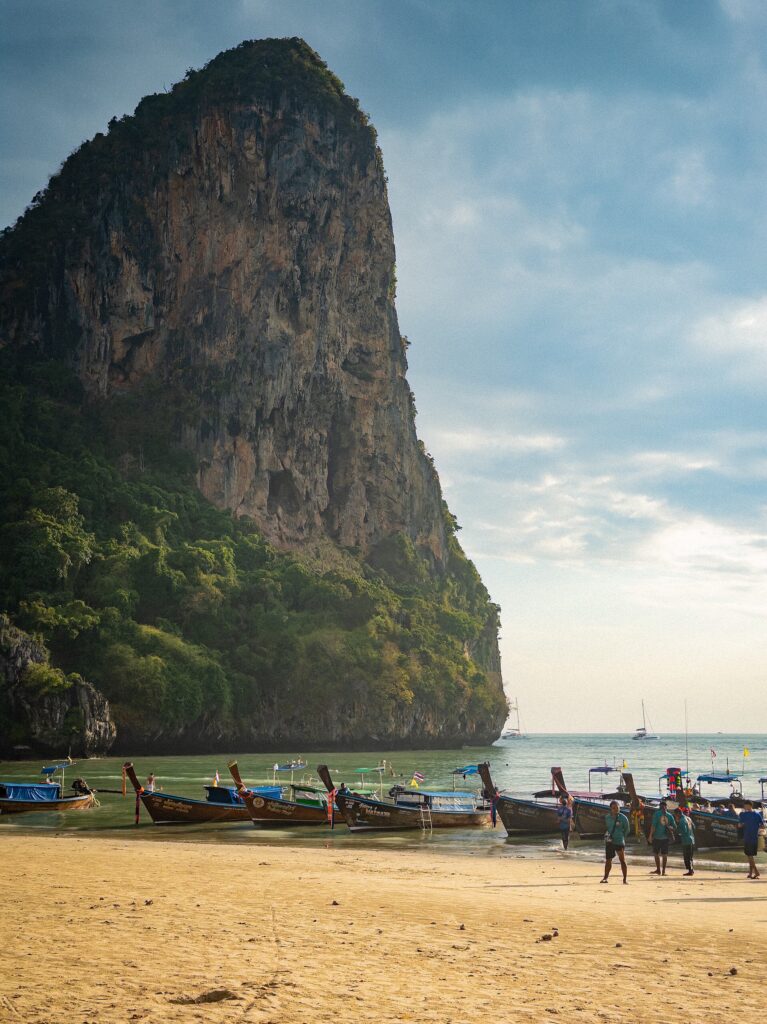
Base yourself in Ao Nang; Railay Beach is 15 minutes away by longtail boat.
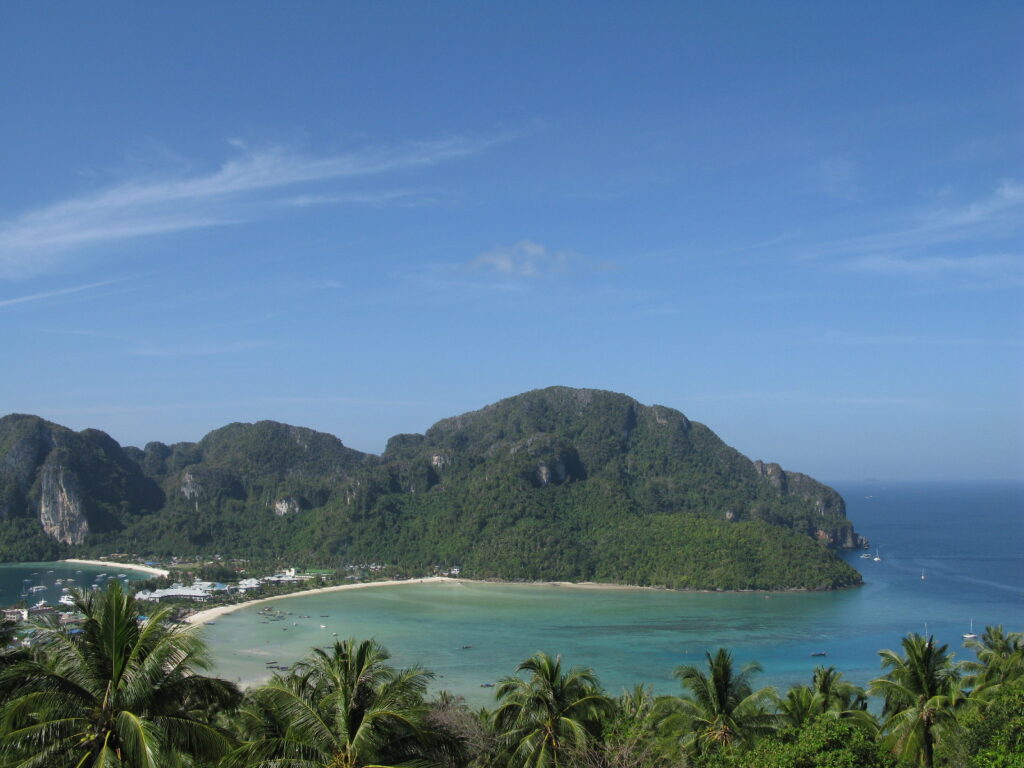
Choose one island, not three. Koh Phi Phi is the famous one: about 1.5 to 2 hours by ferry from Krabi, busy with day-trippers by day and calmer at night. If you are weighing the crowds against a quieter island, Koh Phi Phi: Worth a Visit lays out the trade-off.
Koh Lanta is the slower option, roughly 2.5 to 3 hours by road and car ferry, and the better pick for families.
If your trip falls in October, flip this leg. Base in Phuket Town for the Vegetarian Festival processions, then finish on the beaches when the nine days are done.
Days 12 to 14: the Gulf, or a soft landing
The last three days should avoid internal flights where possible, so pick one Gulf island or return to Bangkok early. Koh Phangan is a 30 to 45 minute ferry from Koh Samui, and Samui has direct flights from Bangkok of about 1 hour 20 minutes.
If the Full Moon Party falls inside your window, this leg moves to match the date, and everything else shifts around it.
If you are going for the beaches rather than the party, Discover Koh Phangan: Beyond the Party covers the quieter side of the island.
If the timing does not work, skip the Gulf. A slow finish in Krabi or Koh Lanta followed by a direct flight to Bangkok is the lower-stress ending. However you finish, leave a four-hour buffer between a domestic arrival and your international departure.
When a festival forces a reroute
A festival forces a reroute when the event night sits in the middle of your window and the region around it fills up; the fix is to flip the order of your legs or drop one. Three worked examples:
- You land on 10 to 12 April (Songkran). The default order breaks. Chiang Mai rooms for the festival are gone and flights into the north are full. Fly straight north on arrival day, do Songkran in Chiang Mai, then take the islands after 16 April, when the coast gets quieter.
- Your November window has the full moon in week two. Go south first and north second. The lantern night is fixed, so build backwards from it. Island high season is starting, so book both ends early.
- Your dates contain a Full Moon Party. Count backwards from the party date. If it lands on day 12 or 13 of your trip, put Koh Phangan last and cut Krabi to two nights. If it lands on day 5, it does not fit a north-first route; skip it and stay on the Andaman.
If your dates straddle two events, Day-by-Day Festival Itinerary Planning shows how to structure the swaps without losing travel days. And accept one limit early: no fixed 14-day route catches every festival, so decide which one matters most, then protect that night.
The booking order that keeps the trip on track
Book in this order: international flights, the festival night’s accommodation, domestic transport, then everything else. The festival night is the scarcest item in any two-week trip, and in Songkran week or on the November full moon it sets the price of the whole leg. Domestic flights in Thailand are short and frequent, so cost is rarely the problem; timing is.
Leave a buffer day before the flight home.
Costs swing with the season more than with your itinerary. The festival weeks and the November to February peak are the expensive ones, so lock those in first and let the flex leg absorb the rest. When you are ready to work out what the whole trip costs, start with Travel Budget Planning: Tips & Tools.
Frequently asked questions
Is 2 weeks enough for Thailand?
Yes, for three areas: a city, the north and one coast. You will change base every three or four nights, so pick one island rather than island-hopping.
With extra days, add Khao Sok National Park between the coasts.
Do flights sell out during Songkran?
Yes, transport is the first thing to go. Domestic flights and sleeper train berths into the north for 12 and 13 April sell out weeks ahead, and fares climb as seats thin.
Book as soon as the schedule opens.
Where is the best place to be for Loi Krathong?
Chiang Mai and Sukhothai are the two set pieces. Sukhothai’s historical park hosts ticketed celebrations among the ruins, while Chiang Mai pairs river floats with Yi Peng lantern events at approved venues.
Both book out early.
What is the best month for a two-week Thailand trip?
November to February has the driest, most reliable weather, and November adds the lantern festivals. April brings Songkran and heat.
If you accept some rain, June and September are cheaper and quieter.
Can you catch two festivals in two weeks?
Only if they share a week or a region, which the headline events do not. Songkran runs in April and the lantern festivals sit in November.
Pick the one you would most regret missing and route the whole trip around it.
Image credits
- Photo: Nnthurber / Wikimedia Commons, CC BY-SA 4.0. Source
- Photo: CEphoto, Uwe Aranas / Wikimedia Commons, CC BY-SA 4.0. Source
- Photo: DEBA PRASAD ROY / Wikimedia Commons, CC0. Source
- Photo: Caitriana Nicholson from 北京 ~ Beijing, 中国 ~ China / Wikimedia Commons, CC BY-SA 2.0. Source
Works Cited
“Loi Krathong.” Wikipedia, Wikimedia Foundation, https://en.wikipedia.org/wiki/Loi_Krathong. Accessed 14 Sept. 2026.
“Songkran.” Wikipedia, Wikimedia Foundation, https://en.wikipedia.org/wiki/Songkran. Accessed 14 Sept. 2026.
“The Ultimate Two-Week Itinerary for Thailand.” Condé Nast Traveler, Condé Nast, https://www.cntraveler.com/story/the-ultimate-two-week-itinerary-for-thailand. Accessed 14 Sept. 2026.