
The short answer
The best place to spend the Festival of Lights depends on what you want from the trip: a river city lit end to end, a palace city with markets open late, or a smaller town where the celebrations stay local. This guide compares the main destinations in the country where the festival began, then looks at celebrations in communities overseas. It covers timing, crowds, costs, where to stay, and how far ahead to book.
When Diwali falls, and why the date moves every year
Diwali follows the Hindu lunar calendar, so the date moves each year. It lands on the new moon (Amavasya) of the month of Kartik, which places the festival in October or November, as Accor’s guide to Diwali in India sets out. GetYourGuide dates the 2026 festival from 6 to 10 November, with the main night falling on 8 November.
Confirm the exact dates on the official site for whichever city you choose, because regional calendars can differ by a day.
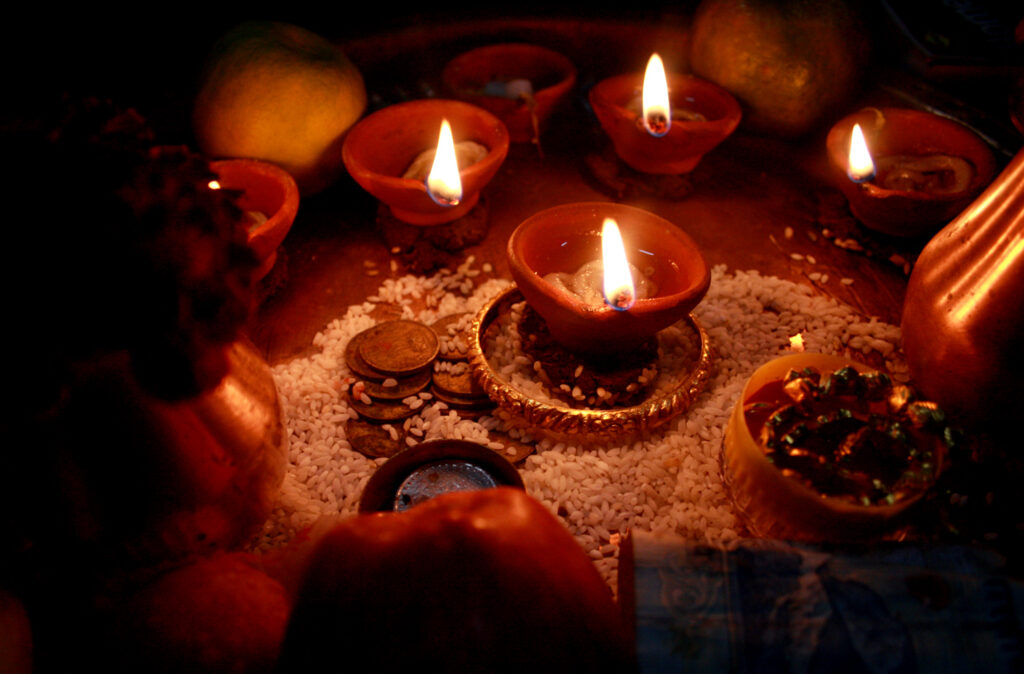
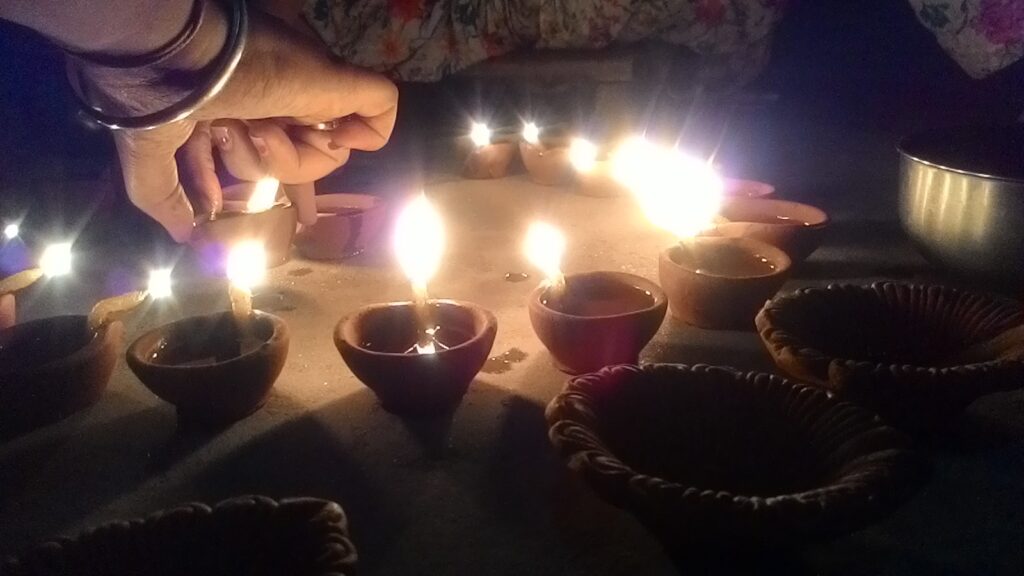
The main night is the one most travellers plan the whole trip around. That is when households light rows of clay oil lamps, set off fireworks, and hold Lakshmi Puja, the prayer to the goddess of prosperity. The name Diwali comes from the Sanskrit Deepavali: a row (avali) of lights (deep).
Diwali is a Hindu festival at its root, and it is also observed by Jains, Sikhs, and Buddhists. In Amritsar, Sikhs mark the same period as Bandi Chhor Divas. That overlap is why a Diwali trip can look like very different things depending on where you land: temple ritual in one city, market nights in another, and a family festival in a smaller town.
One planning note before you look at destinations. The festival sets the travel calendar for the whole country. Domestic flights and trains fill early, and hotel rates in the most popular cities climb hardest in the two weeks before the main night.
The five days, and what each one looks like
The festival runs for five days, and each day has its own focus. Responsible Travel breaks the five days of Diwali down from Dhanteras through to Bhau-Beej. The main night is day three, so if you only have a week, arrive two days before it and leave two days after.
Dhanteras. The first day. Households buy something new for the home, often metal, utensils, or jewellery, and the shops stay open late. It is the biggest shopping night of the year in most Indian cities.
Naraka Chaturdasi. The second day, also called Choti Diwali. Homes finish their cleaning and decoration, doorways get rangoli, and sweets get boxed up for visits.
Diwali and Lakshmi Puja. The main night. Lamps on every ledge, fireworks from dusk, and family meals after the evening prayer. This is the night to be somewhere you can walk.
Diwali Padva. The fourth day, which starts the new year in some regions. Couples and close family visit each other, and business owners open new account books.
Bhau-Beej. The fifth day, for brothers and sisters. Many travellers use it as a travel day, because roads clear and prices ease.
Where to go in India: how the main destinations compare
There is no single best place for Diwali. The right city depends on whether you want scale, ritual, or something quieter. The table below compares the destinations most travellers shortlist, and the sections after it take each one in turn.
| Destination | Best for | Crowd level on the main night | Signature scene |
|---|---|---|---|
| Varanasi | Ritual and riverfront | High | Lamps lining the ghats, then Dev Deepavali about two weeks later |
| Jaipur | Markets and city lights | High | The old city lit up, shops open past midnight |
| Udaipur | A calmer festival | Moderate | Lamps along the lake edge and palace views |
| Amritsar | Sikh tradition | High | The Golden Temple lit and open to all |
| Delhi | Scale and convenience | Very high | Fireworks across a whole city |
| Goa and Mumbai | Beach and city mix | Moderate to high | Coastal parties and neighbourhood displays |
Use the table as a filter, not a ranking. Crowds and prices move together, so the busiest destinations are also the ones where a room booked late costs the most.
Varanasi: the ritual heart of the festival
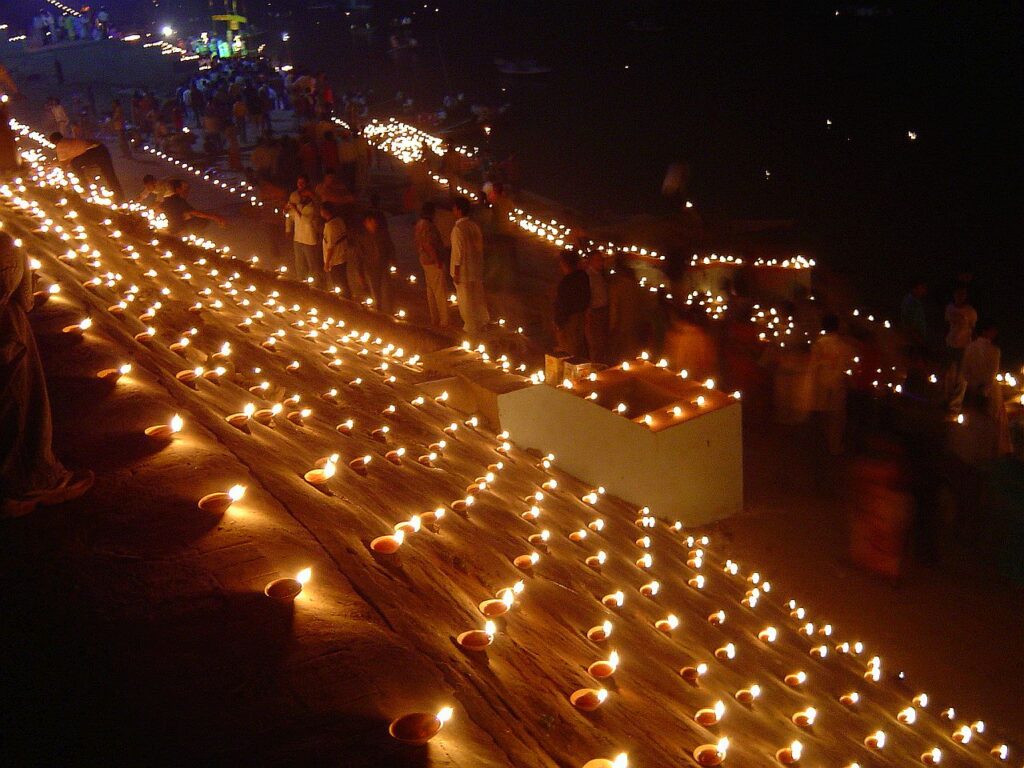
Varanasi is the most immersive Diwali destination in India, and the most demanding one. The city sits on the Ganges, and the main night lines the ghats with lamps: the stone steps that run down to the water become a wall of small flames.
Book a room within walking distance of the river, because the lanes near the ghats are closed to most traffic after dark.
Two weeks later, the same riverfront hosts Dev Deepavali, when the ghats are lit again for Kartik Purnima. If your dates are flexible, that second night is worth extending the trip for. It draws fewer international visitors than the main night.
Practical notes: reach the ghats before sunset, keep an eye on your footing where the steps are wet, and expect crowds on the bridges over the Ganges. Boat seats sell out for the main night, so agree a price before you step in.
Jaipur: markets, forts, and a city that lights up early
Jaipur is the easiest Diwali destination for a first trip to India, mostly because the logistics are simple. The walled old city is compact, the airport is close, and the main train line from Delhi runs often. Start with the bazaars: Johari Bazaar for jewellery and Bapu Bazaar for textiles, both of which stay open late through Dhanteras.
The city lights up from the second day onward. Buildings across the old city are outlined in lights, and the view from the hills at Nahargarh Fort gives you the whole grid at once.
Plan your days around the heat and the crowds. Mornings are for sights, afternoons for rest, and evenings for the markets. Amber Fort, about 11 km from the centre of town, is a half-day trip that fits easily between festival nights.
If you are still sorting out flights, visas and travel insurance, work through the International Festival Travel Planning Guide before you commit to dates.
Udaipur: a calmer festival on the water
Udaipur suits travellers who want the festival without the crush. The old city wraps around Lake Pichola, so the main night reads as reflections: lamps on the water, lights along the ghats, and fireworks that stay small enough to watch from a rooftop.
Crowds here are lighter than in Jaipur or Varanasi, and the city is small enough to cross on foot in half an hour. That makes it a good choice for couples, older travellers, and anyone building a Rajasthan itinerary that also takes in Jodhpur or Pushkar.
Accommodation around the lake sells out first, and the best-value rooms sit a few streets back from the water rather than on it. Compare what you get for the money before you book, using Festival Accommodations Compared.
Amritsar: Bandi Chhor Divas at the Golden Temple
Amritsar is the destination to pick if you want the Sikh side of the season. On the same night as Diwali, the city marks Bandi Chhor Divas, and the Golden Temple stays lit and open through the night. Anyone can enter, of any faith or none.
Cover your head, remove your shoes, and leave alcohol and tobacco outside.
The community kitchen serves free meals to everyone who comes, which is part of why the atmosphere stays calm despite the numbers. Arrive in the early evening, walk the perimeter, and stay for the light on the water around the shrine.
Getting there is straightforward: direct flights from Delhi take about an hour, and the train from Delhi is an overnight run. Many visitors pair Amritsar with the Wagah border ceremony, which runs in the late afternoon, and with the older streets around Jallianwala Bagh.
If Diwali itself is your main reason for the trip, Amritsar works best as a two-night stop rather than a single day.
Diwali outside India: where diaspora communities celebrate
You do not need an Indian visa to spend Diwali somewhere the festival is done well. Cities with large Indian communities run their own versions, and a few are worth planning a trip around. The trade-off is scale: nothing outside India matches the main night in Varanasi or Jaipur.
London. Celebrations spread across the city. Wembley and Southall host the largest street events, and central London usually holds a public gathering in the days around the main night. Late October and early November weather is cold and dark, which makes the lights work harder.
Singapore. The light-up along Serangoon Road in Little India runs for weeks rather than days, so your dates have room in them. Deepavali is a public holiday in Singapore, and the district is easy to reach by MRT, which makes it a simple add-on to a longer Southeast Asia trip.
Kathmandu, Nepal. In Nepal the festival is called Tihar, and it runs across five days with a different focus on each one, including days that honour dogs and cows. Kathmandu pairs easily with a trek, though the high altitude is the part people underestimate.
New York. The metro area marks Diwali with a public celebration in lower Manhattan and community events across New Jersey, home to one of the largest Indian populations in the United States.
Closer to home. Australia’s Indian communities hold Diwali gatherings in Sydney and Melbourne, usually on the weekend nearest the main date. They are smaller and easier to walk into as a first festival trip, and a good way to test whether the festival suits you before committing to a long-haul flight.
What the trip costs, and how far ahead to book
Diwali sits inside peak travel season, so every line of your budget carries a festival premium. Two things push prices at the same time: overseas visitors booking months out, and domestic travel peaking as families head home. If you are travelling from Australia, the long-haul leg is the biggest single cost, and it is the one worth locking in first.
Anchor the whole plan on the main night and count backwards. Book the flights first, then the room, then the transport between cities. Indian Railways opens its booking window well ahead of departure, and the popular overnight routes sell out before the flights do.
Work the numbers before you pick a destination, because two cities can differ by hundreds of dollars once accommodation and internal transport are added.
| To book | How far ahead | What drives the price |
|---|---|---|
| Long-haul flights | 4 to 6 months | Peak season demand on routes into Delhi and Mumbai |
| Hotels near the main sights | 3 to 4 months | Limited rooms within walking distance of the action |
| Trains and internal flights | As soon as sales open | Fixed capacity on the busiest routes |
| Guides, boats, and tours | 2 to 4 weeks | Small operators fill on the main nights |
Budget travel is still possible. Smaller cities and towns celebrate just as fully, and a room there can cost a fraction of one in Jaipur or Varanasi on the main night. For the full cost picture, see Travel Budget Planning: Tips & Tools.
Etiquette: how to be a visitor, not a spectator
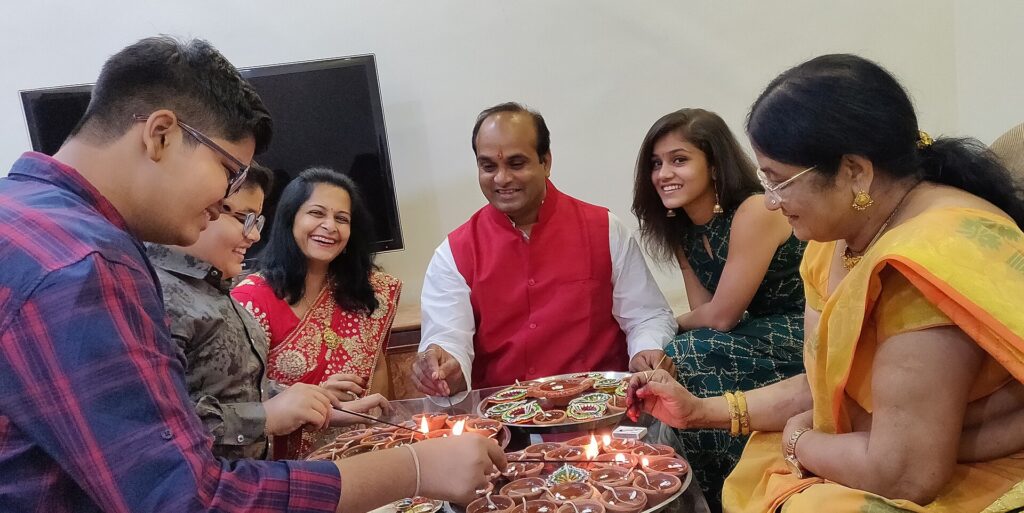
Diwali is a family festival, not a show, and the expectations are easy to meet. Ask before you photograph people, especially inside temples and at front doors. Dress modestly at religious sites, take your shoes off where everyone else does, and accept sweets when they are offered.
Three practical points. First, fireworks run late into the night for several days, so pack earplugs if you sleep lightly. Second, smoke from firecrackers can hang over the larger cities for a day or two after the main night, which matters if you have asthma.
Third, not every temple is open to visitors of all faiths, and a closed door is not a slight.
Travelling well through a religious festival is mostly about small choices. The Religious Festivals: Respectful Visitor Guide covers the wider rules, including what to wear and when to keep your camera down.
One more thing worth knowing: if a family invites you in, bring sweets rather than alcohol, and leave before the household starts its own celebrations.
Building an itinerary around the main night
Build the trip around the main night itself, keep two nights free on either side of it, and limit yourself to two or three cities. Diwali is not a single-day event, and trying to see four cities in the five days means spending most of it in transit.
A workable first route for most travellers: fly into Delhi, take the train to Jaipur for Dhanteras and the main night, then finish in Varanasi or Amritsar. The Delhi to Jaipur train takes about three hours, and internal flights between the big cities take about an hour. Both fill early, so book with the accommodation.
Varanasi needs the most time of the four cities. Its lanes are slow, the ghats are spread along the river, and the best moments happen early in the morning or after dark. Give it two nights at least.
Whichever cities you pick, plan the days loosely and leave room for the evenings, which are when Diwali actually happens. Ready to map it out? Start with the Day-by-Day Festival Itinerary Planning.
Frequently asked questions
What is the best place to celebrate Diwali in India?
It depends on what you want. Jaipur is the easiest for a first trip, Varanasi gives you the strongest sense of ritual, and Udaipur keeps the crowds manageable.
Amritsar offers a different festival on the same night.
Is Diwali a good time to travel to India?
Yes, if you plan around the peak. Flights, hotels and trains are at their most expensive and fill months out.
The payoff is a country at its most active, and smaller towns that cost far less than the headline cities.
How long does Diwali last?
Five days, though the buildup starts about a week earlier. In Varanasi, Dev Deepavali follows around two weeks after the main night.
Allow ten days if you want the whole arc rather than just the main evening.
What should I wear for Diwali?
Neat, comfortable clothes are fine. Many locals wear traditional dress, and a loose cotton kurta is the simplest way to fit in and stay cool.
Wear shoes you can slip off easily for temple visits.
Where can I celebrate Diwali outside India?
London, Singapore, Kathmandu and New York all run large public celebrations, and Sydney and Melbourne hold community events near the main date. Singapore’s light-up runs for weeks, which gives you the most flexibility on dates.
Image credits
- Photo: Benoy / Wikimedia Commons, CC BY-SA 3.0. Source
- Photo: Sumita Roy Dutta / Wikimedia Commons, CC BY-SA 4.0. Source
- Photo: Himani goyal / Wikimedia Commons, CC BY-SA 4.0. Source
- Photo: Arnav / Wikimedia Commons, CC BY-SA 4.0. Source
Works Cited
Accor. “Guide to Diwali in India for First-Time Visitors.” Accor, Accor Group, 7 July 2026, https://all.accor.com/a/en/limitless/thematics/travel-tips-guides/diwali-in-india.html.
Messer, James. “Diwali 2026 Guide: Where to Celebrate the Festival of Lights This Year.” GetYourGuide, GetYourGuide, 30 Aug. 2026, https://www.getyourguide.com/explorer/travel-inspiration/diwali-festival-guide/.
“Diwali Festival in India.” Responsible Travel, Responsible Vacation, https://www.responsiblevacation.com/vacations/festivals/travel-guide/diwali.