
The short answer
Day of the Dead is Mexico’s two-day holiday for remembering family members who have died, and it is one of the easiest major cultural events to build a whole trip around. This guide covers when the holiday happens, what actually takes place, where to base yourself, what the trip costs, and how to join in without getting the etiquette wrong. If you like slow travel, family food and events that happen in real neighbourhoods rather than arenas, this one belongs on your list.
When is the Day of the Dead held?
Day of the Dead is held 1 and 2 November, with regional variation: some communities start on 31 October, and public programs in the big cities can run for a week or more either side. The dates line up with the Catholic calendar, where 1 November is All Saints’ Day and 2 November is All Souls’ Day.
Many families set the first day aside for children, Día de los Angelitos, and the second for adults, Día de los Difuntos. The rhythm matters more than any single event. You are planning around a fixed national holiday period, not a ticketed show with one start time.
In 2026, the holiday falls on 1 and 2 November. Mexico City’s program of parades, altars and performances usually runs through the last week of October and the first week of November, so arrive before the end of October if you want the full public side of it.
| Key dates | What happens | What it means for your plan |
|---|---|---|
| 1 November | First of the two main days, often framed as Día de los Angelitos, for children | Land two or three days earlier to settle in |
| 2 November | Día de los Difuntos, for adults, and the date listed for the holiday | Peak crowds at cemeteries and city events |
| Late October to early November | Mexico City program: parades, altars and performances | Book accommodation and internal travel early |
| 1 and 2 November 2026 | Next edition of the holiday | Shortlist cities and set fare alerts now |
What actually happens over the two days?
Families build an ofrenda at home, visit the cemetery, and share food, drink and stories with the people they have lost. The ofrenda is a working household altar rather than a display piece: photographs, candles, marigolds, papel picado and the favourite food and drink of the person being remembered. Children are represented too, with toys and sweets.
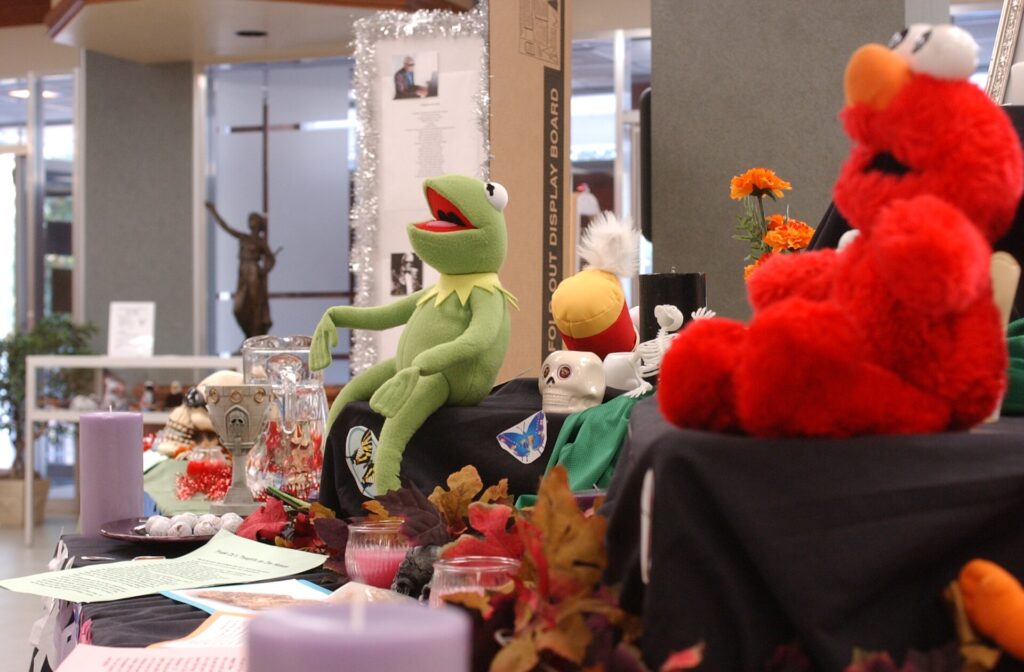
On the public side, plazas, museums and markets fill with altars and installations, and cities stage parades, dances and performances through the season. Street markets sell marigolds, sugar skulls and pan de muerto from late October into the first days of November.
The tone is not mournful. Mexicans describe the holiday as a reunion: the dead are welcomed back for a meal, remembered out loud, and sent off again.
Where does the tradition come from?
Today’s holiday blends ancestor rituals that predate the Spanish conquest with the Catholic All Souls’ Day that colonisers brought to Mexico from the early 1500s. Before the conquest, the Mexica, the people often called the Aztecs, remembered their dead over two month-long observances held in summer, one for children and one for adults.
When the Spanish arrived, the observance moved toward the start of November and absorbed Christian prayer and saints’ days over the following centuries. The result is a holiday that is religious and playful at the same time: prayer and remembrance on one side, food, humour and art on the other.
It is observed nationwide rather than in one region, and each state keeps its own version of the two days. That variation is the reason two travellers can describe completely different holidays from the same country.
What do the symbols mean?
Calaveras, marigolds and La Catrina all carry meaning, and almost none of it is frightening. A calavera is a skull; the sugar versions are gifts, often carrying a name, and calaveras literarias are short satirical poems written for the season about friends and public figures.
Cempasúchil, the orange marigold, is the flower of the holiday. Its colour and scent are used to mark the way to the altar, and petals are laid in paths from the street to the ofrenda. Paper banners called papel picado add colour overhead, and candles carry the light the dead are said to follow home.
La Catrina is the well-dressed skeleton you will see on murals, costumes and in face paint. She began as a satirical figure and became the holiday’s best-known image.
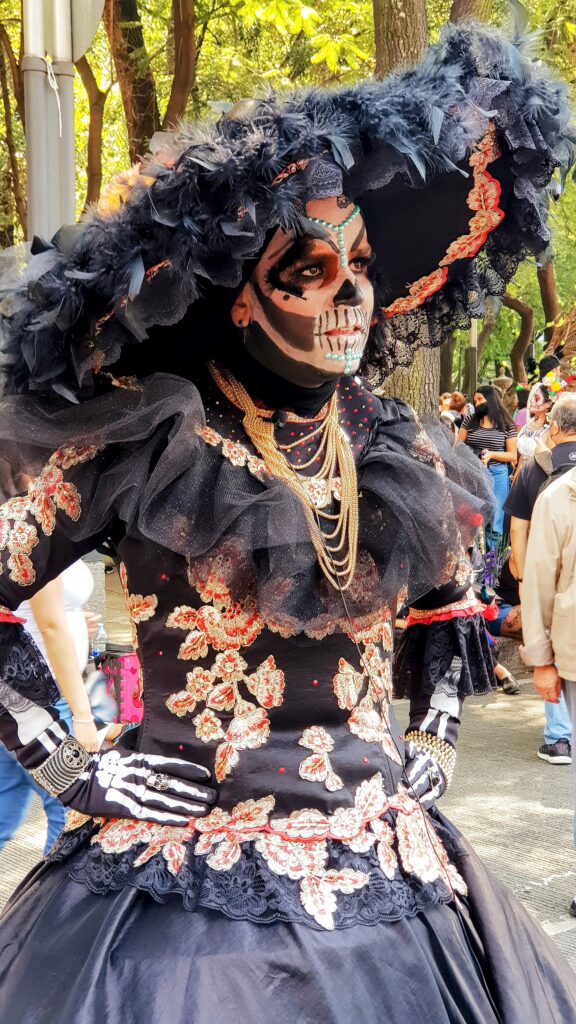
None of this is Halloween. Halloween runs on fright and fantasy; Day of the Dead runs on memory and reunion. If you turn up at a cemetery in a horror costume with fake blood, you have misread the event entirely.
Where should you experience it?
Mexico City runs the biggest public program and is the easiest base for a first trip. Museums and public spaces there fill with altars and installations, and the city also holds Catrina parades, stages performances such as La Llorona in front of the lake, hosts a coffee, chocolate and pan de muerto festival, and sees heavy cemetery traffic in districts including Azcapotzalco.
Outside the capital, the holiday is a family event first. Some states, including Oaxaca and Michoacán, are widely associated with the strongest local traditions, but the version you get depends on the town: a cemetery vigil in one place, house-to-house visiting in another, a fair in a third.
Small towns rarely publish English schedules, so confirm dates and public access locally before you build a route around one.
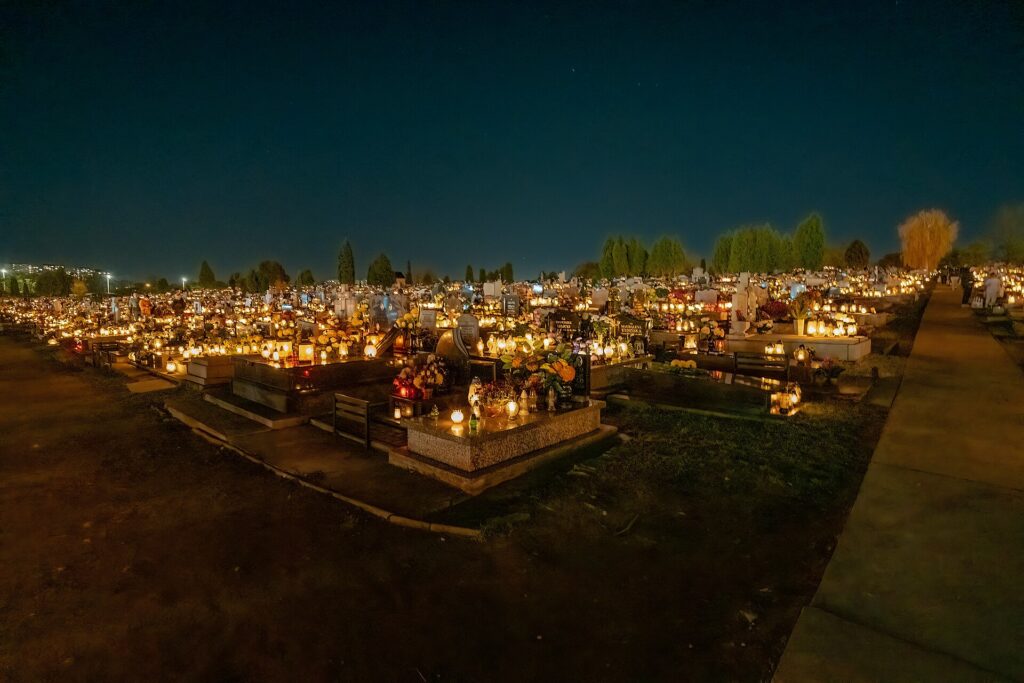
Anchor the trip to one specific event and let the rest follow. Keep a full day loose. The best parts are rarely on a printed program.
What does the trip cost?
There is no single ticket price for Day of the Dead. You are budgeting for flights, accommodation, food, local transport and any ticketed performances or tours, with accommodation the line item that moves most around 1 and 2 November.
Entry rules vary by event, from public street parades to ticketed performances and organised cemetery visits, so check the current year’s listings as they are published. Municipal programs are usually announced in the weeks before the holiday.
Because the date is fixed, demand is concentrated. Book accommodation first, then lock in transport between cities, then leave room in the wallet for food and markets, which is where most travellers overspend. Start with a festival budget breakdown before you commit to flights, and carry some cash in pesos for markets and small towns where card machines are unreliable.
How do you get there from Australia?
Every route from Australia involves at least one connection, typically through North America, so compare one-stop and two-stop options on total door-to-door time rather than headline fare alone.
Fly into Mexico City for the biggest public program, or into a regional hub if you are heading straight to a smaller town. Either way, arrive two or three days before 1 November. The holiday itself is not the time to be solving logistics.
The capital sits at altitude, so treat your first day as a rest day. Domestic flights and long-distance buses around the holiday sell out early, so book those legs as soon as your main dates are firm.
Where should you stay?
Stay within walking distance, or one short ride, of the events you actually plan to attend, and book early. Room supply tightens quickly for 1 and 2 November, especially in the cities with big public programs.
In Mexico City, choose a neighbourhood with good metro access and a sensible ride home after evening events; our guide to safe stays in Mexico City breaks the options down by area.
In smaller towns, family-run hotels and guesthouses put you close to the cemetery and the plaza, which is where you will want to be after dark. Check cancellation terms before you pay, because local plans often firm up late.
How do you visit respectfully?
Treat the holiday as a family remembrance that visitors are allowed to share, not a show staged for tourists. Ask before photographing anyone, especially at a cemetery, and expect some families to decline.
The practical rules locals appreciate are simple. Keep your voice down in cemeteries, switch off your flash, never touch or move items on an ofrenda, and do not step into a private home altar unless you are invited. Follow any signage about photography or opening hours, and leave when a family clearly wants privacy.
Parades and museum installations are the easy public entry point. Face paint is fine at a parade; it is not appropriate at a graveside. If this is your first religious or cultural festival abroad, read up on cultural festival etiquette before you go, because the same basics apply here.
What do the festival words mean?
A handful of Spanish words carry most of the holiday, and learning them makes the trip friendlier fast.
- Ofrenda: the altar of offerings a family builds at home, with public versions in plazas and museums.
- Cempasúchil: the orange marigold, the signature flower of the season.
- Calavera: skull. Sugar calaveras are gifts, and calaveras literarias are satirical poems for the season.
- Catrina: the elegant skeleton figure, everywhere in costumes, murals and face paint.
- Pan de muerto: the sweet bread baked for the holiday, usually eaten with coffee or hot chocolate.
The travel glossary covers the rest of the trip vocabulary you will meet on the ground, from layovers to luggage allowances.
How many days do you need for the trip?
A week is a sensible minimum: two or three days to settle in before 1 November, the two main days themselves, and a buffer afterwards. Travel through the holiday period is slow, and the days either side are busy for domestic transport.
If you are coming from Australia, the flight time argues for a longer stay. Ten days lets you pair the holiday with one region properly instead of racing between cities.
Build the trip around the two fixed days, then add the rest of Mexico around them. The holiday rewards travellers who stay put for it.
The bottom line for planning
Day of the Dead works as a trip because the dates are fixed and the traditions are local: you know when to go, and the rest depends on which town you choose. Book the big pieces early, plan the days loosely, and treat cemeteries and altars the way you would want strangers to treat your own family’s graves.
Ready to build the trip day by day? Start with day-by-day festival itinerary planning and slot the two days into a route that matches your leave.
Frequently asked questions
Is Day of the Dead the same as Halloween?
No. They share a date window and little else. Halloween runs on fright and fantasy, while Day of the Dead is a remembrance holiday about welcoming family back for a visit.
What is an ofrenda?
An ofrenda is the altar a family builds for someone who has died, usually at home and sometimes in a public space. If you are invited to contribute, bring flowers, fruit or a favourite snack of the person being remembered, and never move what is already there.
Is Day of the Dead celebrated outside Mexico?
Yes. Communities of Mexican heritage observe it in the United States, Europe and parts of Asia and Oceania, and some cities run their own public altars and parades.
If you cannot travel in November, a local Mexican cultural centre is the closest thing to being there.
Do you need tickets for Day of the Dead events?
It depends on the event. Street parades and public altars are often open to anyone, while organised tours, staged performances and some cemetery events are ticketed.
Check the current year’s program before you commit.
How far ahead should you book a Day of the Dead trip?
As early as your dates are firm. Accommodation around 1 and 2 November is the tightest part of the trip, and domestic flights and buses sell out for the days either side, so lock those in before you plan anything else.
Image credits
- Photo: carmichaellibrary / Wikimedia Commons, CC BY 2.0. Source
- Photo: Rose04zr / Wikimedia Commons, CC BY-SA 4.0. Source
- Photo: Krzysztof Popławski / Wikimedia Commons, CC BY 4.0. Source
Works Cited
“Day of the Dead.” Wikipedia, Wikimedia Foundation, https://en.wikipedia.org/wiki/Day_of_the_Dead. Accessed 14 Sept. 2026.
Mano a Mano. “Day of the Dead.” MexCulture, Mano a Mano, https://www.manoamano.nyc/about-the-day-of-the-dead.
Accessed 14 Sept. 2026.
Castañeda Martínez, Cesar. “Day of the Dead Celebration in Mexico: Origin and Activities.” NH Hotels Travel Guides, NH Hotel Group, https://www.nh-hotels.com/en/travel-guides/mexico-city/day-of-the-dead.
Accessed 14 Sept. 2026.