
The short answer
Day of the Dead in Oaxaca is the version most travellers picture: families filling cemeteries with candles and marigolds, altars on every street, and parades rolling through the centre for several nights. Oaxaca treats the occasion as a family event first and a visitor experience second, which is exactly why it is worth the trip. This guide covers what happens on each day, how the comparsas and cemetery vigils work, what to book and how far ahead, what it all costs, and the etiquette that keeps you welcome.
What the Oaxaca version of Day of the Dead actually looks like
Oaxaca runs the largest traditional Day of the Dead celebration in Mexico, and most of what you will see is a family ritual rather than a show.
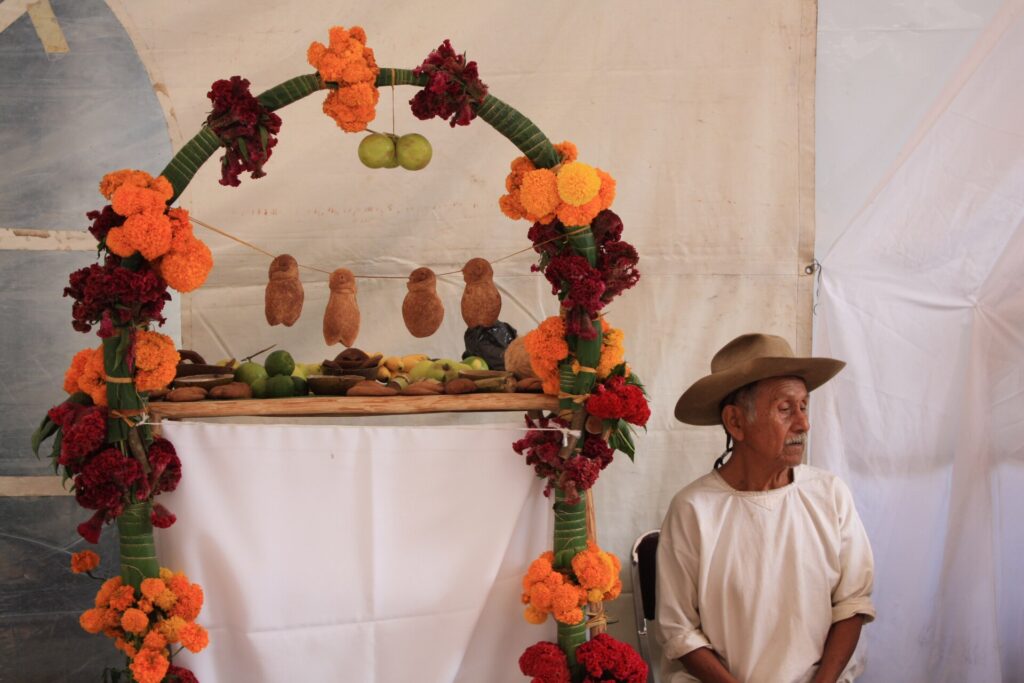
The core is the ofrenda: a home altar for people who have died, holding their photograph, candles, cempasúchil marigolds, pan de muerto, fruit, and small offerings of food and drink. Thousands of families build one each year. On the biggest nights, those families move to the cemeteries and keep vigil at decorated graves.
Around that sits the city’s street season. Comparsas (neighbourhood parades) thread through the centre most nights. Markets sell cempasúchil marigolds by the armful, and bakeries turn out pan de muerto.
Public altars appear in squares, museums, and public buildings, many of them built by schools and community groups.
Oaxaca’s historic centre is a UNESCO World Heritage site, and during the festival the city behaves like one large open-air venue. The thing to understand before you book anything: none of this exists for visitors. You are watching a living tradition, not a performance staged for tourists.
That is why etiquette matters here, and why watching from a crowded doorway is the trip you have if you skip planning.
When Day of the Dead happens in Oaxaca
Oaxaca’s Day of the Dead season runs from late October into the second week of November, and the two fixed days at its centre are 1 and 2 November.
The national holiday is Día de Muertos: All Saints’ Day on 1 November and All Souls’ Day on 2 November. Oaxaca stretches it in both directions. Recent schedules have put the season’s biggest comparsa, the Mega Muerteada, on 29 October, with cemetery vigils starting on 31 October and events continuing until the final muerteada in San Agustín Etla in mid November.
Here is the shape of a recent season, based on the detailed Oaxaca schedule published by Where Sidewalks End:
| Date | What happens | Where to plan for it |
|---|---|---|
| 29 October | Mega Muerteada, the largest comparsa of the season | City centre, late evening |
| 31 October | All Saints’ Eve; families begin cemetery vigils | Neighbourhoods and cemeteries |
| 1 November | All Saints’ Day; Desfile de Chinas and the Jalatlaco comparsa | Centro and Jalatlaco |
| 2 November | All Souls’ Day; the main family day at the cemeteries | Cemeteries across the valley |
| 12 November | Final muerteada in San Agustín Etla | San Agustín Etla |
Event days shift from year to year, so confirm the current program with the official Oaxaca tourism site before you build a trip around one specific parade. The parts you actually need to book are rooms and tours. Almost every street event is open to anyone standing there.
The comparsas and muerteadas: what the parades are like
A comparsa is a neighbourhood street parade, and in Oaxaca it works less like a procession and more like a party that keeps moving: a brass band, dancers in costume, giant papier-mache figures, and thousands of people walking with them.
The biggest is the Mega Muerteada on 29 October, which effectively opens the season. Out in the valley towns, a muerteada is rowdier still: groups move from house to house through the night, and San Agustín Etla’s final muerteada in mid November closes the season.
Practical notes:
- Nothing is ticketed. There is no barrier and nothing to buy.
- Parades start late, often after 9pm, and some run past 2am. Pace yourself across the week.
- Walk with the flow and keep the middle of the street clear for dancers and musicians.
- Wear comfortable shoes. Cobblestones plus crowds plus late nights add up.
You do not need a guide for the parades. You need stamina: the best of the season happens after midnight, and the comparsas are the part of Day of the Dead in Oaxaca that no ticket can sell you.
Visiting the cemeteries during the vigils
Many Oaxaca cemeteries welcome respectful visitors during the vigils, but the rules are set locally and change from year to year, so plan around a guide or an organised visit rather than turning up alone.
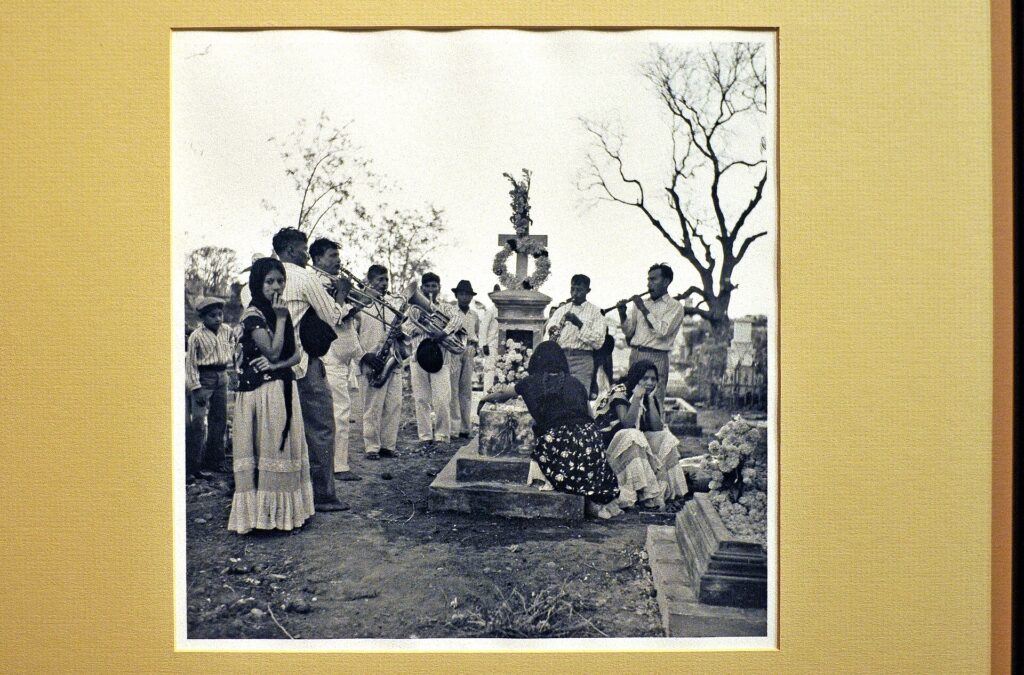
The vigils run from the evening of 31 October through 2 November, with the biggest crowds on the night of 1 November. Families decorate graves with marigolds, candles, food, and drink, then stay for hours, often until dawn. You are walking through a working ceremony, not a light show.
What helps on the night:
- Join a small group or hire a local guide. Transport to the valley cemeteries is the hard part, and a guide handles the access rules for you.
- No flash photography, no drones, no tripods planted in walkways, and ask before photographing anyone.
- Never touch or move an offering, and do not step across graves, even when the path looks clear.
- Bring cash. Roadside vendors run late, and card machines are rare.
Treat it exactly as you would any religious festival: the respectful visitor guide for religious festivals covers the universal ground rules, and every one of them applies at a graveside.
Altars, markets, and the daytime side of the festival
The daytime side of the festival is about markets, food, and the altars and exhibitions that open themselves to the public.
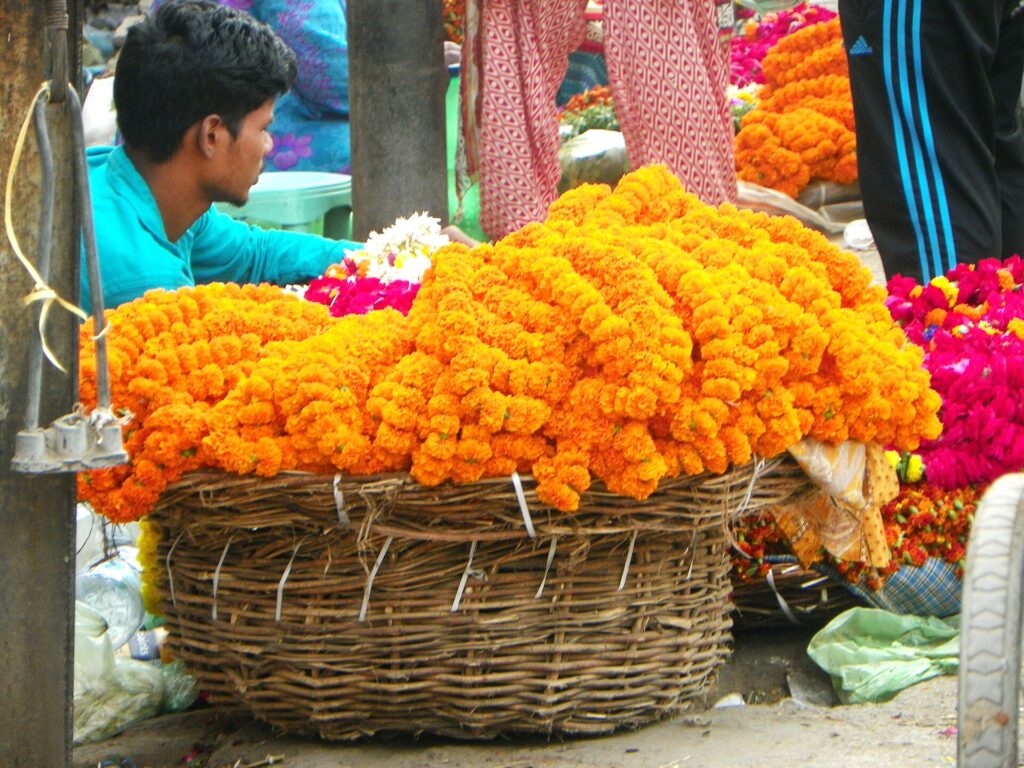
Start with the markets. From late October they fill with cempasúchil marigolds, pan de muerto, and the ingredients for mole, the sauce Oaxaca is known for. The marigolds you see on every altar are grown on farms around the city, and small-group trips often build their itineraries around a farm visit, local weavers, potters, and mezcal distillers (Discover Corps runs six-day programs along these lines).
Eat properly while you are here, because Oaxaca’s food culture is a reason to come outside the festival too: mole, tamales, tlayudas, and mezcal. Keep the mezcal for the evening, though. Treat the daytime as your recovery window, because the nights are long and the calendar does not leave much room for sleep.
What to book for Day of the Dead in Oaxaca, and when
Book the room first, and book it as early as you can. Accommodation is the bottleneck of this trip, not the parades.
Central hotels, small boutique places, and apartments sell out for the festival window months ahead, and rates sit at their yearly peak. Where Sidewalks End’s guide puts it plainly: plan your Day of the Dead trip as far in advance as possible. Once your room is locked, build the rest of the plan around two big nights, the comparsas and the cemetery vigils.
The booking order that works:
- Accommodation, as soon as your dates are fixed. Central is worth the premium, because everything you want to see is walkable from there.
- Flights. Oaxaca has its own airport, with connections through Mexico City for most long-haul routes from Australia.
- Cemetery tours and transport for 31 October and 1 November, which sell out ahead of the season.
- Meals for 1 November, if you want a proper table rather than street food.
If you are weighing up hotels against apartments and home-stays, Festival accommodations compared breaks down the trade-offs for event travel, and the International Festival Travel Planning Guide covers the order of operations from flights to insurance.
What Day of the Dead in Oaxaca costs
Watching the festival is free. The money goes on getting there, sleeping there, and joining organised visits.
Nothing at street level is ticketed: the comparsas, the public altars, and the daytime markets cost you only what you spend at stalls. The paid parts are flights, accommodation, and tours. For scale, guided trips are the expensive end: National Geographic Journeys runs a seven-day Day of the Dead trip from US$2,599 per person, with groups capped at 16 travellers (National Geographic).
Independent travellers can cover the same window for far less, but rooms shrink the gap, because festival week is peak rate and there is no low season to hide in.
Two money rules for this trip:
- Book accommodation before anything else, and hold a buffer for taxis, late-night food, and cemetery transport.
- Carry pesos in cash for the cemetery nights. Small vendors and rural stalls rarely take cards.
Etiquette: how to watch without getting in the way
Treat the vigils like a church service, because that is what they are, and treat the parades like a neighbour’s family party that has spilled into the street.
The rules are short. Ask before photographing people, especially at gravesides and altars, and put the camera down entirely once you are inside a cemetery. No flash at night, and no drones anywhere near a vigil.
Never touch offerings, and do not cross graves even when the path looks clear. Keep your voice down around families who are praying, and step aside rather than standing your ground in the middle of a lane.
One more thing: buy something. Bread from a stall, a coffee, a bunch of marigolds. Small purchases are the easiest way to take part.
For the rules that apply at every cultural and religious event, cultural festival etiquette around the world is a good companion read.
If you only have three nights
Three nights is enough to see the core of it, if you base yourself in the centre and pre-book transport for the two big evenings.
- Night 1, 30 or 31 October: arrive, walk the centre, find your first comparsa.
- Night 2, 31 October or 1 November: the cemetery vigil, with a guide. This is the one night to book ahead.
- Day 3, 1 or 2 November: markets and marigolds in the morning, public altars in the afternoon, comparsas again at night.
- Morning 4: the last cemetery visits happen early on 2 November, before families go home to rest.
If you have longer, add the valley towns. The muerteadas in San Agustín Etla and the villages around the city are where the tradition feels most local, and they sit an easy drive from the centre.
Make the dates the first decision
The dates are the one genuinely fixed part of this trip, so start there: aim for 30 October to 3 November, and build everything else on top.
Most mistakes on this trip come from treating it like a city break and improvising. The travellers who get the most out of Day of the Dead in Oaxaca decide early, book early, and then spend the festival walking, eating, and watching rather than queueing. Before you lock anything in, work out what the whole trip will cost: start with the festival budget breakdown.
Frequently asked questions
Do you need tickets for Day of the Dead in Oaxaca?
No. The comparsas, cemetery vigils, and public altars are free to attend, and you pay only for organised tours, transport, and whatever you eat and drink. A small number of indoor events and guided cemetery visits are ticketed, but nothing at street level is.
Which dates matter most?
1 and 2 November are the core days: All Saints’ Day and All Souls’ Day, when families gather at graves and home altars. Oaxaca’s season opens earlier, with recent schedules putting the biggest comparsa on 29 October, and valley events running into mid November.
Are the cemeteries open to visitors?
Many are, under local rules that change from year to year, and some restrict entry or photography after dark. The simplest route is a small-group visit or a local guide, especially for town cemeteries outside the city where transport is half the challenge.
Is it OK to paint your face or dress up?
Yes, within reason. Skeleton makeup and flowers are common among locals and visitors during the comparsas, and joining in reads as respect when it is done well.
At the cemeteries, keep it simple; the night belongs to the families.
How do you get around during the festival?
The centre is walkable, and most comparsas and public altars sit inside it. For the cemetery nights and the valley towns, pre-book transport or join a small group, because the distances are short but the roads are busy and late-night options thin out quickly.
Image credits
- Photo: Linkogecko / Wikimedia Commons, CC BY-SA 4.0. Source
- Photo: LBM1948 / Wikimedia Commons, CC BY-SA 4.0. Source
- Photo: juggadery / Wikimedia Commons, CC BY-SA 2.0. Source
Works Cited
Where Sidewalks End. “Oaxaca Day of the Dead: Dia de los Muertos.” Where Sidewalks End, www.wheresidewalksend.com/oaxaca-day-of-the-dead-dia-de-los-muertos/.
National Geographic. “Journeys: Mexico’s Day of the Dead in Oaxaca.” National Geographic Expeditions, www.nationalgeographic.com/expeditions/destinations/north-america/journeys/day-of-the-dead-mexico-tour/.
Discover Corps. “Oaxaca Day of the Dead Festival.” Discover Corps, discovercorps.com/festival/oaxaca-day-of-the-dead-festival/.