
The short answer
Festival transportation is the part of the trip that decides how your day runs: how you reach the gate, how you get home after the last set, and what that costs. The realistic options are a train, a bus, your own car, or an event shuttle, and each one trades money against time, flexibility, and queuing. This comparison sets them side by side, explains the terms you will meet on a ticket page, and shows how to choose before passes sell out.
What Festival Transportation Covers
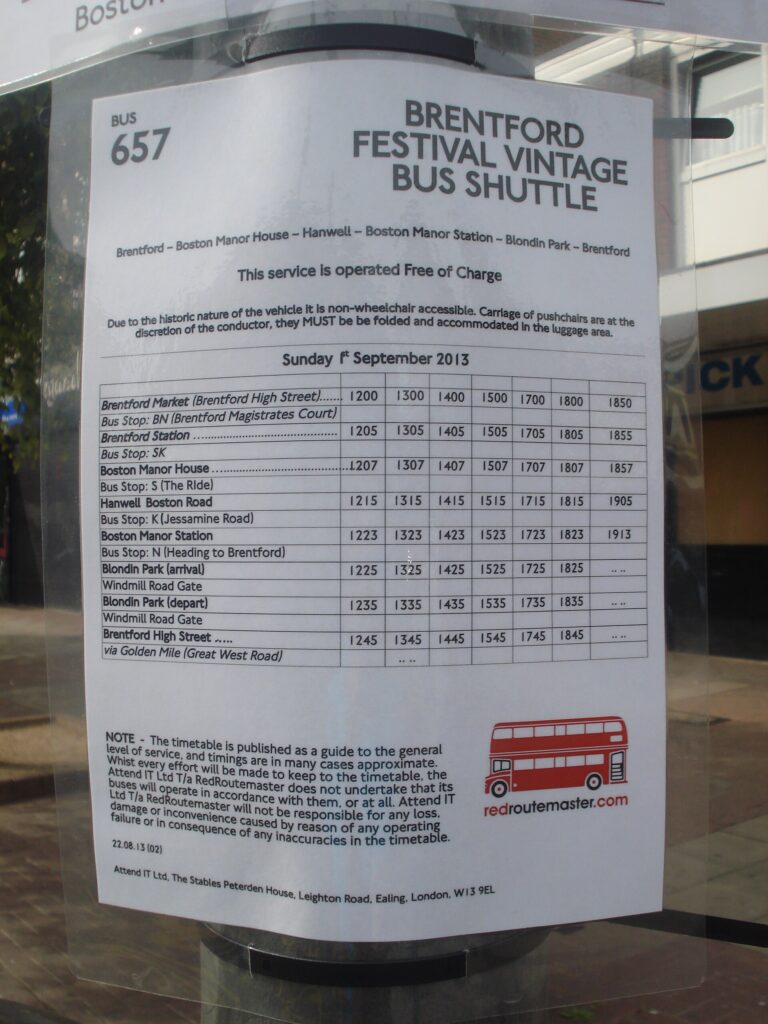
Festival transportation means every way in and out of the site, and the wording on a ticket page shows which options the organisers have actually arranged.
A shuttle pass buys a seat on a loop service that runs between a car park or town centre and the gate. A park and ride works the same way, except you drive to the far end of the route and leave the car there.
A drop-off zone is where taxis, rideshares and lifts from friends are allowed to stop, and it is rarely the main gate. The last service is the final bus or train out of the area, and it usually leaves earlier than people expect.
Those words decide what you can book, so read them before you pay. The Travel Glossary: A to Z of Travel Terms has plain definitions if a ticket page uses a term you have not met before.
Train, Bus, Car and Shuttle at a Glance
Each mode wins in a different situation, so the right answer starts with where you are sleeping and how many people are travelling with you.
| Mode | Best for | Cost shape | Biggest risk | When to lock it in |
|---|---|---|---|---|
| Train | Venues near a station, city festivals | Per person, sometimes folded into the event ticket | Last service leaves before the headline act ends | When event tickets go on sale |
| Bus and coach | Groups, remote sites, city-to-region runs | Per vehicle for charters, per person on scheduled routes | Departure times follow the group, not you | Before the event weekend, not during it |
| Car | Camping festivals, heavy gear, no rail link | Parking fee per car, plus fuel and tolls | Parking fills early and cars get towed after a set hour | When you buy the festival ticket |
| Shuttle and park and ride | Venues with closed roads and little parking | Per person for a pass, per car for the lot | Queues at peak arrival and exit times | With your festival pass, for the bundle discount |
The gaps between those rows are where trips go wrong. A cheap train ticket stops being cheap when the last service leaves before the encore, and a free parking space stops being free when the walk to the gate takes longer than the set you came for.
Train: Fastest When the Venue Sits on a Line
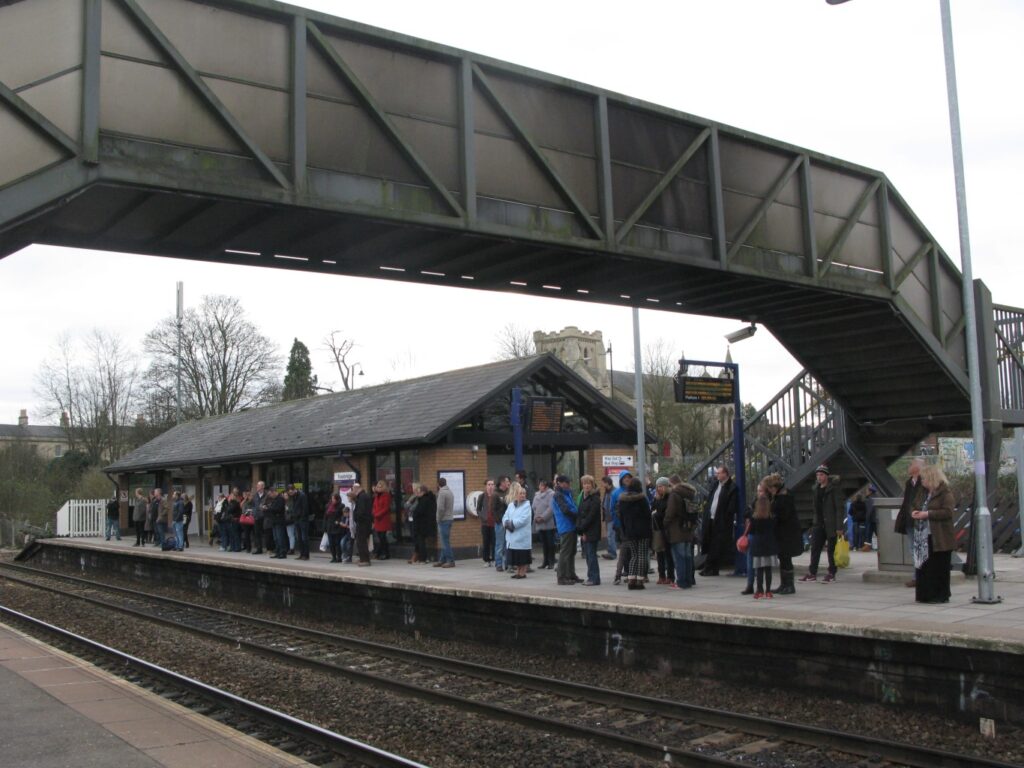
Trains are the fastest way in when a station or a dedicated event platform sits within walking distance of the gate, and public transport agencies add capacity for festival dates.
Transport for NSW put on more than 4,600 extra services across trains, buses, metro, ferries and light rail for Vivid Sydney 2026, which ran from 22 May to 13 June. Extra buses alone numbered more than 2,600, with around 600 additional metro services and more than 360 extra trains.
That volume is the signal to look for: when a city treats a festival as a major event, the timetable bends around it.
Extra capacity is not the same as free travel. The same agency reminded Vivid visitors that transport was not free for the festival and that an Opal card or contactless payment was needed for every trip, so budget the fares even on a dedicated event line.
Crowd control changes the plan at the busiest times. Trains did not drop passengers at Circular Quay between 6 pm and 11 pm on Saturday nights during Vivid, and the crowd walked from Wynyard, Martin Place or St James instead. A station a few blocks away from the obvious one is often the quicker exit after a headline set.
Check the last service, and the one before it, before you commit to a train. The return trip sets your night, not the lineup.
Bus and Coach: Cheapest Per Person Once You Split It
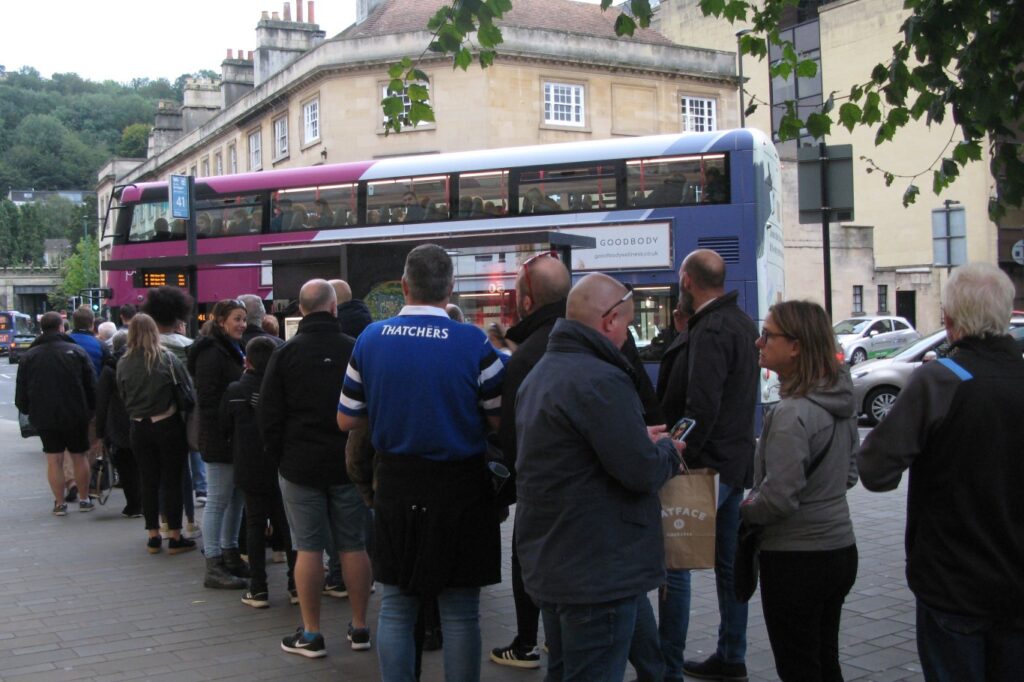
A scheduled bus is usually the cheapest ticket of the four, and a charter coach is the cheapest way to move a group, because one vehicle is divided across everyone on board.
Charter coaches are priced per vehicle rather than per person, which is the whole point of them for groups. Operators plan the route in advance, staff the loading point, and hold the departure until the group is aboard. A full-size coach carries a whole group in one vehicle, and smaller vans cover parties that would leave half a coach empty.
The trap is the timetable, not the price. Road closures reroute buses with little notice. During Vivid Sydney, buses that normally served Circular Quay started and finished their trips at Martin Place from 6 pm on Fridays and 5 pm on weekends.
Your stop can move several blocks, so check the event notice from the operator in the week before you travel.
The return leg is where group travel either works or fails. Confirm the exact pickup point and time before you board, because a coach leaves when the driver decides, not when your group is finally ready.
Car: Best for Camping Festivals, Worst for City Gates
Driving is the right choice when you are carrying camping gear to a site with no rail link, and the wrong choice when the venue closes streets and runs out of parking.
Parking rules get enforced hard at large events. The Coachella FAQ states that there is no overnight parking without a car camping or camping companion parking pass, that cars left in day parking or preferred parking are towed after 2 am, and that the rideshare lot closes at 3 am.
Those three rules decide how late you can stay and how you get back to your bed.
Stagecoach, the country music festival held on the same grounds, publishes a similar structure: free day parking on a first-come basis, a festival wristband required for every vehicle occupant entering the lots, no overnight or RV parking in day parking, no tailgating, and lots open from midday until 2 am.
Its busiest arrival window was 4 pm to 7 pm on Friday and Saturday, so arriving ahead of the rush beats sitting in a line of brake lights.
Camping festivals change the maths again, because the car is also your storage unit for the weekend. If you are packing for several days on site, the Multi-Day Festival Camping Hacks guide covers how to fit a car, a tent pitch and a group without a second trip.
One rule applies to any group that drives: someone in the car has to stay sober for the trip home. If nobody wants that job, the shuttle or the train is cheaper than the alternative.

Shuttle and Park and Ride: The Middle Path
An event shuttle sits between public transport and driving: you park outside the traffic zone, pay once, and get dropped at the gate.
Festival International de Louisiane shows how the maths works. In 2026, drivers used garages on West St. Mary Boulevard and St. Landry Street and paid $15 plus tax per car entry, by card only. The shuttle ran every 15 minutes from Thursday to Sunday, and the last bus left downtown at 11 pm on Thursday, 10:45 pm on Friday and 9:45 pm on Saturday.
Check the timing on the festival’s official shuttle page before you plan a late night.
Stagecoach takes the same idea further. Its round-trip shuttle service used dedicated routes, dropped passengers closest to the festival entry, and ran departures from 1 pm to 8 pm, with return service ending 60 minutes after the music finished. A shuttle pass bought with a general admission ticket saved $10 on the bundle.
That 60-minute window is the pattern to remember. Coachella states that line shuttles end outbound service one hour after the music stops, and most park-and-ride schemes follow the same rule. Plan for the shuttle you will actually catch, not the one you hope will wait.
Where you sleep and how you travel are one decision, not two. A hotel or campsite on a shuttle stop removes the car from the trip entirely, which is the comparison set out in Festival Accommodations Compared.
What Festival Transport Costs and When It Runs
Published costs come in two shapes: parking and park-and-ride access are charged per car, while shuttle passes, coaches and public transport are charged per person.
| Example (2026) | Mode | Published detail | Source |
|---|---|---|---|
| Festival International de Louisiane | Park and ride | $15 plus tax per car entry, card only, shuttle every 15 minutes | Festival shuttle page |
| Stagecoach | Shuttle pass | Round-trip shuttle, departures 1 pm to 8 pm, bundle with a GA ticket saved $10 | Regional 511 event page |
| Vivid Sydney | Public transport | More than 4,600 extra services across five modes | Transport for NSW |
| Coachella | Parking rules | Day parking cars towed after 2 am, rideshare lot closes at 3 am | Festival FAQ |
Two patterns matter more than the exact figures. Return services almost always stop about an hour after the last act, and parking is priced per vehicle while shuttle passes are priced per person. The cheaper option therefore changes with your group size and with what parking costs at that specific site, so run the numbers rather than assuming.
Prices also move. Treat every figure above as a 2026 reference point, then confirm the current price on the official page. Transport is one of the line items most likely to blow a trip budget, and the Hidden Festival Costs: Complete Budgeting Guide covers the rest of them.
How to Choose, and What to Book First
Four questions settle the decision: where you are sleeping, how many people are travelling, what time the last service leaves, and how much gear you are carrying.
- Where you sleep decides the mode. Accommodation on a shuttle route removes the car from the trip.
- Group size decides the maths. Compare a per-car parking fee against per-person passes for your actual group before you assume the car is cheapest.
- The last service decides your night. Check the return time before you buy anything, and keep a second option for the walk-out crowd.
- Gear decides whether driving is worth it. Tents, stoves and coolers are awkward on a train and simple in a boot.
The order of purchase matters as much as the choice itself.
- Buy the festival pass first. If a shuttle bundle is offered at checkout, take it there, because the discount usually disappears afterwards.
- Book accommodation on a transport route second, before the rooms near the shuttle stops sell out.
- Buy the transport third and keep the confirmation offline, because festival phone networks get congested.
- Re-check the last service and the drop-off zone in the final week. Both shift with road closures.
The Trade-Off, Summed Up
Every mode is a trade: trains and shuttles are cheap and fixed, cars are flexible and expensive, and coaches are the cheapest per person once the group is large enough. Pick the option whose worst moment you can live with, which is almost always the trip home.
Work out the full cost before you commit, because transport is the line item that moves most. Start with the Travel Budget Planning: Tips & Tools guide, then book the mode whose return trip you can actually rely on.
Frequently asked questions
How do I get home from a festival at night?
Plan the return before you plan the way in: return shuttles usually stop about an hour after the music ends, and the last train often leaves earlier than people expect. Confirm the exact final departure for your route, and know where taxis or rideshares are allowed to pick up.
Is transport included in a festival ticket?
Rarely: extra services may be added for big event dates, but standard fares still apply, as Transport for NSW reminded Vivid Sydney riders, and shuttle or park-and-ride passes are usually separate add-ons. Count the fare or pass into your weekend budget from the start.
When should I arrive to beat festival traffic?
Aim to reach the site before the published peak window, which Stagecoach puts at 4 pm to 7 pm on Friday and Saturday. Arriving ahead of it also wins a better pitch or parking spot, and a mid-afternoon start leaves margin if security queues run long.
Should I drive or take the shuttle to a festival?
The cheaper option flips with group size, because parking is charged per car and shuttle passes per person, so price both for your actual headcount. Driving also comes with lot rules: at large events cars can be towed after a set hour, so check the cut-off before planning a late finish.
How much does festival parking cost?
It is charged per vehicle, and published rates differ: Festival International de Louisiane charged $15 plus tax per car entry in 2026, card only, while Stagecoach’s day parking was free on a first-come basis. The rules that catch people are overnight bans and tow times, so read the lot notice first.
Image credits
- Photo: Au Morandarte from Chiswick/Romford, London, England / Wikimedia Commons, CC BY-SA 2.0. Source
- Photo: Geof Sheppard / Wikimedia Commons, CC BY-SA 4.0. Source
- Photo: Grywnn / Wikimedia Commons, CC BY-SA 4.0. Source
- Photo: Geof Sheppard / Wikimedia Commons, CC BY-SA 4.0. Source
Works Cited
“Festival FAQ.” Coachella, Goldenvoice, www.coachella.com/faq. Accessed 14 Sept. 2026.
“Public Transport Is the Only Way to Make Your Trip More Vivid.” Transport for NSW, Government of New South Wales, 2026, www.transport.nsw.gov.au/news-and-events/media-releases/public-transport-only-way-to-make-your-trip-more-vivid.
“Shuttle.” Festival International de Louisiane, www.festivalinternational.org/shuttle. Accessed 14 Sept. 2026.
“Stagecoach 2026.” SoCal511, go511.com, www.go511.com/StaticContent/Index/215. Accessed 14 Sept. 2026.