
The short answer
An Oktoberfest travel guide should answer the boring questions first: when the festival runs, whether you need a ticket, how to reach the grounds, where to sleep, and what the whole trip really costs. This one does. It walks through the logistics in plain language, in the order you will actually plan them, so dates, bookings and budgets fall into place before the good rooms are gone. Read it end to end before you book anything, then keep the logistics table handy while you plan.
When does Oktoberfest run, and when should you book for it?
Oktoberfest typically runs from mid-September to the first weekend in October, a run of about two and a half weeks, and the exact dates move each year. Confirm the current dates on the official festival site before you book flights, because the run does not start on the same weekend every time.
That uncertainty is why accommodation comes first. Munich’s hotel stock does not grow for the festival, so beds fill early and prices climb as the start date gets closer. Lock in a room with free cancellation while you finalise flights, then decide how many festival days you want.
Work backwards from the dates you choose. Flights into Munich fill up around the festival window, and the cheap seats go first. If your dates are flexible at all, compare the first week with the last week, because demand is not evenly spread across the run.
For travellers stacking several events into one Europe trip, sequence matters. The international festival travel planning guide covers how to order your stops, time the flights and keep connections sane.
Do you need tickets for Oktoberfest?
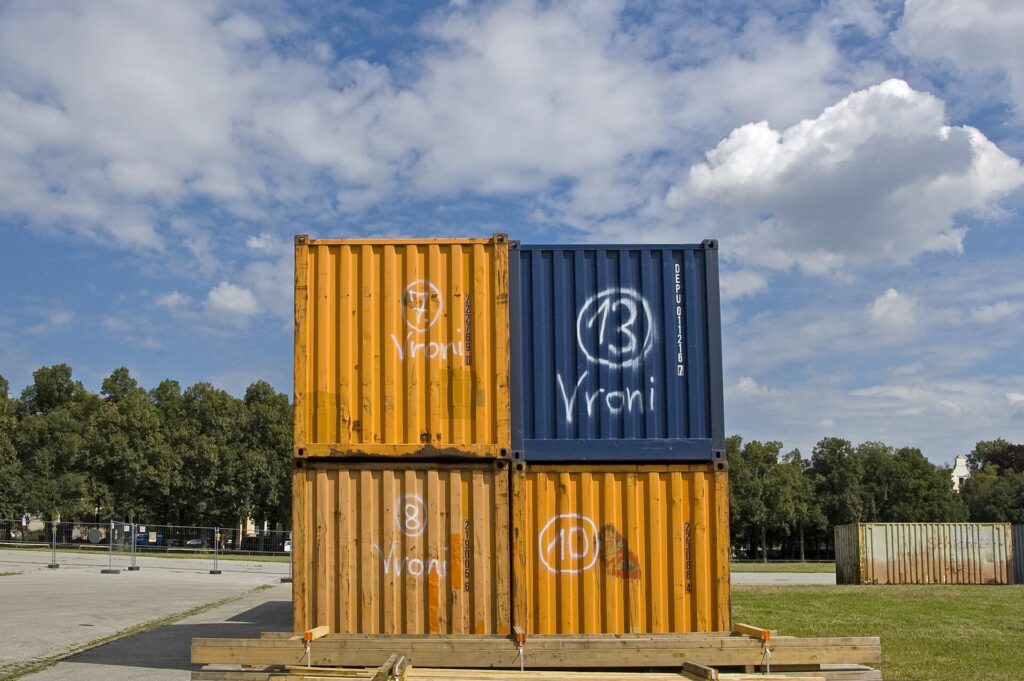
No. Entry to the festival grounds is free, and there is no official Oktoberfest ticket. What you book instead is a table reservation inside a beer tent, and those are generally free as well: the commitment is prepaid vouchers for beer and food that you redeem at the table.
Reservations run tent by tent, not through a central box office, and the biggest tents open their books months ahead. Each tent sets its own process, its own voucher requirements and its own terms, and those details change from year to year. Check the tent’s current page for the season you are travelling in rather than trusting a screenshot from a previous year.
Watch out for resellers. Some charge four-figure prices for reservations while calling them tickets, and none of them can guarantee you a seat. Multiple long-running festival guides say the same thing: there is no such thing as an Oktoberfest ticket, so do not pay as if there were one.
If you are set on a specific tent on a specific weekend, start the reservation process early and accept that you may need to be flexible about days. If you are not fussy, plenty of people walk in without a booking, especially midweek.
How do you get to the festival grounds?
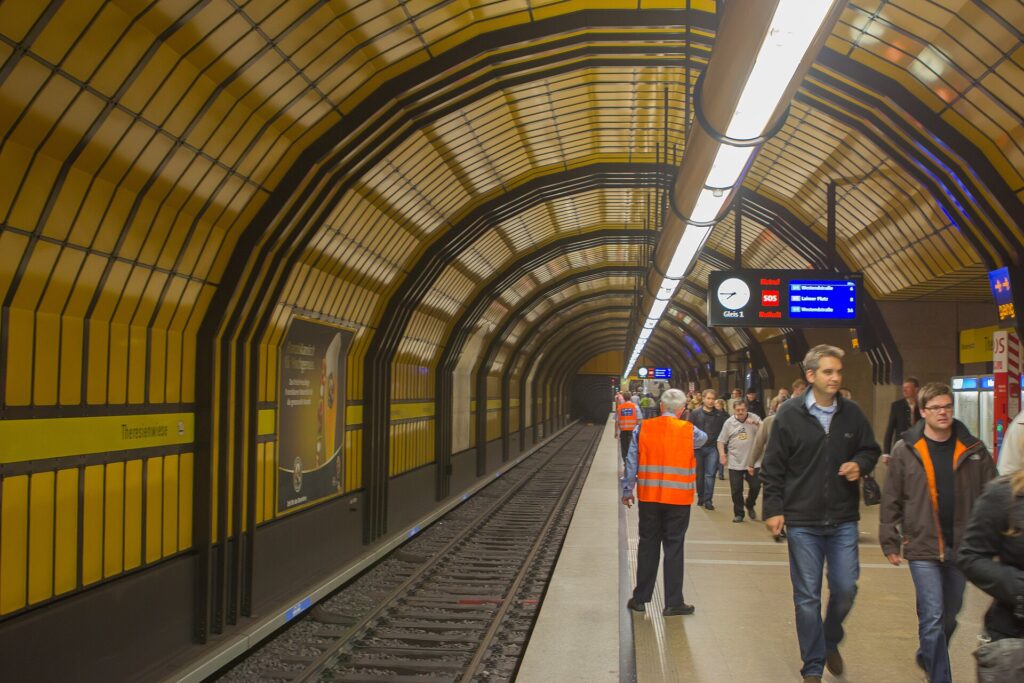
The grounds sit on the Theresienwiese in Munich, and the practical move is public transport with a backup plan. Festival management asks visitors to avoid the U4 and U5 lines and the Theresienwiese station at peak times, and to walk from the main station when the trains are jammed.
That advice is worth taking literally. Arrive before noon if you want to walk straight in, and leave before the final crush if you do not fancy a slow shuffle to the platform. Walking from the city centre is a realistic option for anyone staying centrally, and on busy evenings it is often the faster one.
Trains run late during the festival, but check the last connection on your line before you commit to a big night. Check the local transport app on the day for extra services and diversions instead of relying on the timetable you read in summer.
If you are weighing options for the rest of your trip, festival transportation options compared runs through the trade-offs between trains, coaches and driving.
Where should you stay for Oktoberfest?
Book as early as you can, and aim to stay within walking distance or a few minutes by train. Accommodation is the tightest resource in Munich during the festival: the city fills up, and late bookers pay more for worse rooms.
Rooms close to the Theresienwiese and in central Munich are the most convenient, and they sell out first. Staying a few stops further out on the U-Bahn lowers the price and adds a short commute, which is a fair trade for most budgets.
Hotels raise rates for the festival weeks. Hostel dorms get booked out just as fast, so the budget end of the market is not a fallback you can leave until August. If you find a room with free cancellation, hold it while you compare flights.
Think about what your days will look like, too. After a long session in the tents, a short trip home is worth more than a cheaper room across town. If you are weighing up room types and neighbourhoods, the guide to festival accommodations compared sets the options side by side.
What does an Oktoberfest trip cost?
Entry is free. Everything you consume inside the grounds costs money, and the daily spend adds up faster than the headline festival numbers suggest.
Beer is sold by the litre, the Maß, and the tents set their own prices each year, so check current figures instead of trusting older travel posts. Food, rides, sideshows and souvenirs are all separate purchases. Table reservation vouchers are prepaid, so part of your spending inside the tent is settled months before you arrive.
For anyone flying from Australia, the airfare is usually the single biggest line in the budget, followed by accommodation. The festival itself is not where the bulk of the money goes, unless you eat and drink your way through every session.
Carry cash. It is the most repeated piece of first-timer advice for a reason: stalls and servers move faster with it, and it saves you hunting for a working card terminal in a loud tent.
Keep two numbers in your head: a daily budget for the grounds, and a separate budget for the trip. Flights, room and outfit come out of the trip budget. Beer, food and rides come out of the daily one.
How many days do you actually need at Oktoberfest?
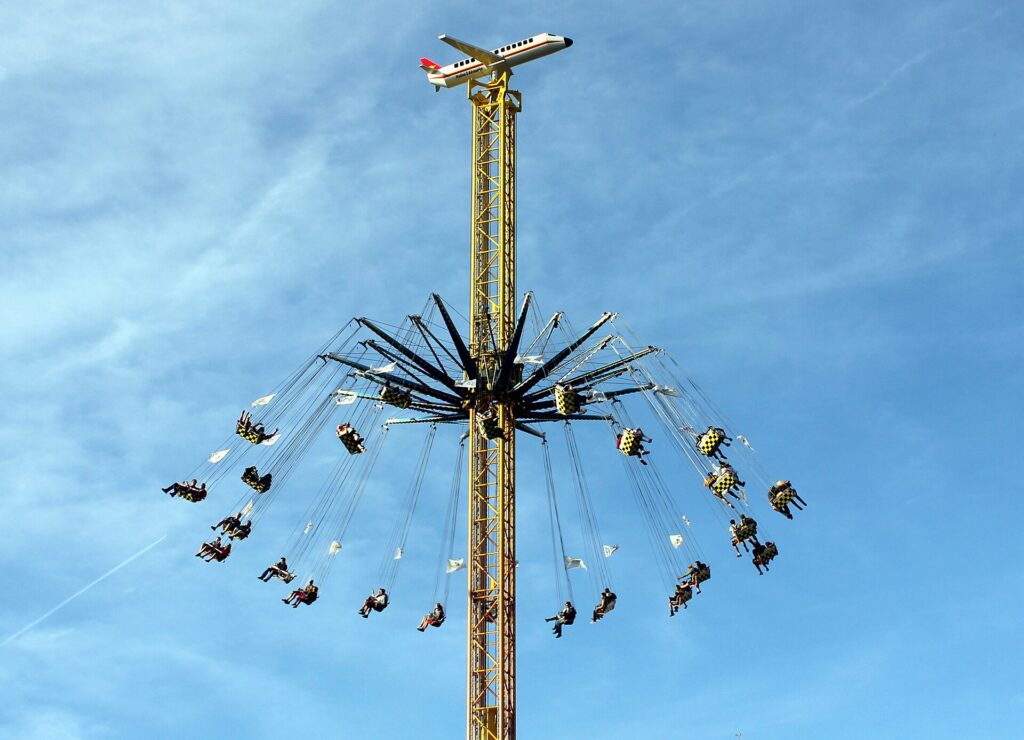
Fewer than you think. One full day inside the tents is enough for most people, and the pattern repeats: the first day is for the atmosphere, the second for the tents you missed, and by a third straight day the novelty has worn thin.
The travel writer Matt Kepnes found that most Germans treat the Wiesn as a single-day outing, while it is the tourists who stay longer, and he has been open about regretting his own five-day run. Most Germans come for a single day, and plenty of visitors would be happier copying them.
A sensible structure for a longer trip: alternate festival days with rest days and other things in Munich. Two tent days with a quiet day between them beat four days straight. If you are building that kind of schedule, day-by-day festival itinerary planning helps you pace it without overscheduling.
What should you wear to Oktoberfest?
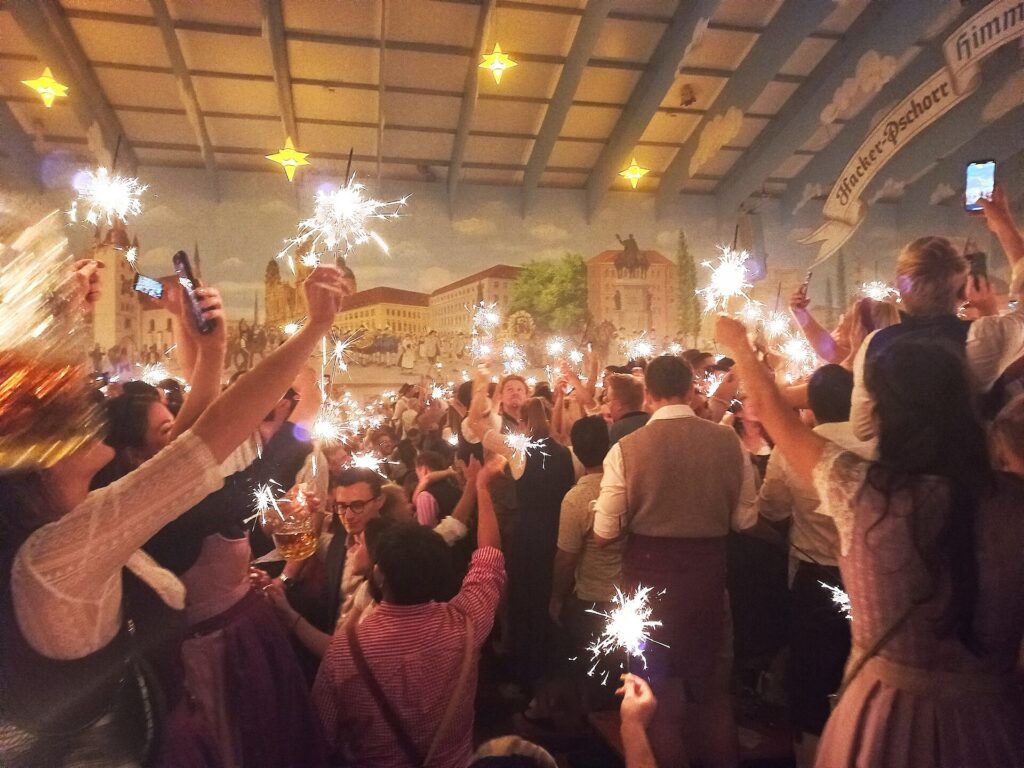
Wear Tracht if you want to fit in: lederhosen for men, a dirndl for women. Neither is compulsory, but the festival looks the way it does because most people dress the part for at least one day.
Choose your lane. Real Tracht, borrowed or bought second-hand, works well. A cheap novelty costume tends to look exactly like what it is.
If you buy, buy once and buy properly, or wear your normal clothes and enjoy the spectacle instead.
Shoes matter more than the outfit. Wear closed, comfortable shoes you have already broken in, because the floors get slick and you will stand far more than you expect. Sandals and open toes are a bad idea in a packed tent.
Halls run warm during the day, and the evenings cool off, so a light layer you can shed beats one heavy coat. Keep your bag small, for reasons the rules section below explains.
What are the rules inside the festival grounds?
The festival management publishes its own rules, and the ones that catch visitors out concern bags, glass, pushchairs and animals. Read them before you pack, because security turns people away at the gates.
The official 10 golden rules for Oktoberfest are short, and this table covers the parts that affect what you carry and when you visit.
| Item | Rule at the Wiesn | Why it matters |
|---|---|---|
| Backpacks and large bags | Not allowed. Bags must hold no more than 3 litres and measure no more than 20 cm x 15 cm x 10 cm | Security refuses oversized bags at the entrance |
| Glass | Glass bottles are banned, in any bag | They get confiscated during bag checks |
| Pushchairs | Banned all day on Saturdays and public holidays, and from 6 pm on other days | Plan family visits around the restriction |
| Bicycles and scooters | Not permitted on the festival grounds | Park them elsewhere and walk in |
| Animals | Not allowed, except assistance dogs | Leave pets at home |
| Peak arrivals | Avoid the U4 and U5 lines and Theresienwiese station at busy times | Walking from the main station is often quicker |
Expect bag checks at the entrances on busy days. Small bags clear faster, so the bag you leave at the hotel is the one that cannot slow you down.
What do the German words on signs and menus mean?
A handful of German terms cover most of what you will see and hear at the festival, and learning them makes the signage and tent chatter feel less foreign.
- Wiesn: Munich shorthand for the festival itself. The word means “meadow”, after the Theresienwiese site. When a local asks how many days you are doing at the Wiesn, this is what they mean.
- Maß: the one-litre beer, the standard pour in the tents. Order “ein Maß” and you get the big glass.
- Tracht: traditional Bavarian dress. Lederhosen and dirndl are the two forms you will see most.
- Oide Wiesn: a separate section of the festival that recreates an older, quieter version of the Wiesn.
- Prost: cheers. You will hear it before every round.
For terms like these from the wider festival and travel world, browse the Travel Glossary: A to Z of Travel Terms and keep it open while you plan the rest of the trip.
What should you sort first?
Sort the trip in this order: dates, room, reservations, budget. Confirm the festival dates on the official site, secure accommodation with free cancellation, sort tent reservations and vouchers if you want a guaranteed seat, then work out your spending money.
Everything else, from flights to outfits to sightseeing, slots in around those four decisions. The people who struggle with this festival are usually the ones who book flights first and then discover Munich has no rooms left at a sensible price.
Once the dates and the room are locked, build the money side properly. Start with the festival budget breakdown and plan from real numbers instead of guesses.
Frequently asked questions
What is Oktoberfest?
It is the largest folk festival in the world, first held in 1810 on the Theresienwiese in Munich to mark a royal wedding, and held at the same site ever since. More than six million visitors typically attend, and entry to the grounds is free.
Can you get into a beer tent without a reservation?
Yes. Tents keep some space for walk-ins, and midweek days and daytime hours give you the best chance of a seat.
Weekends and evenings are hardest, so arrive before the doors open and be ready to split your group.
Is Oktoberfest family friendly?
Yes, during the day especially. The grounds include rides, food stalls and a quieter traditional section, and families typically visit earlier rather than at night.
Pushchair limits apply on Saturdays, public holidays and after 6 pm on other days.
Do you need to speak German at Oktoberfest?
No. Ordering, seating and paying in the big tents work in English, and staff deal with international visitors all season. A few words go a long way: Prost means cheers, bitte means please, danke means thank you.
When is the least crowded time to visit?
Weekdays, and the earlier part of the day. Weekends and evenings draw the biggest crowds, and tents fill fastest then, so a midweek daytime visit is the calmest realistic option.
Image credits
- Photo: digital cat from München, Bavaria / Wikimedia Commons, CC BY 2.0. Source
- Photo: Poudou99 / Wikimedia Commons, CC BY-SA 4.0. Source
- Photo: Lesekreis / Wikimedia Commons, CC BY-SA 3.0. Source
- Photo: Cathetovar / Wikimedia Commons, CC BY-SA 4.0. Source
Works Cited
“10 Golden Rules for the Oktoberfest in Munich.” Oktoberfest.de, City of Munich, www.oktoberfest.de/en/information/service-for-visitors/10-golden-rules-for-oktoberfest. Accessed 14 Sept. 2026.
“Oktoberfest First-Timers-Guide: Everything You Need to Know.” Oktoberfest-Guide.com, www.oktoberfest-guide.com/your-visit/oktoberfest-first-timers-guide/. Accessed 14 Sept. 2026.
“15 Usual Tips for Oktoberfest.” Oktoberfest Tours, Bucket List Events, www.oktoberfesttours.com/post/15-usual-tips-for-oktoberfest. Accessed 14 Sept. 2026.
Kepnes, Matt. “A Complete Guide to Attending Oktoberfest (Updated 2026).” Nomadic Matt’s Travel Site, 2026, www.nomadicmatt.com/travel-blogs/how-to-survive-oktoberfest/.