
The short answer
Planning a stay in a highland town that runs on culture comes down to three questions: which part of town fits the way you travel, which sights earn a morning of your time, and how you will move between them. This guide answers all three. It covers the market and palace area, the forest sanctuary, the terraces within easy reach, the studios and galleries behind the town’s reputation, and the practical details nobody mentions before you arrive: traffic, footpaths and what to wear at a temple.
Where is Ubud, and how do you get there?
Ubud sits in Bali’s central highlands, about a 90-minute drive from Ngurah Rai International Airport (DPS), and almost every visitor arrives by road.
Private transfers, ride-hailing cars and hotel pickups all run the same route north out of the airport and up into the hills. Allow the full 90 minutes rather than a best-case estimate, because the final few kilometres through town can crawl.
If your hotel sits on a lane that cars cannot enter, ask the driver to stop at the nearest through-road and expect a short walk with your luggage.
The town grew along a ridge between two river valleys, and it still spills down into both. That shape explains most of the practical decisions in this guide. You can leave the palace, reach a rice-field path in the time it takes to finish a coffee, and then climb a flight of steps to reach your hotel lobby.
Nothing in the centre is far from anything else on paper. What stretches is the time. A walk that looks short can take twice as long once scooters, delivery traffic and broken footpaths are involved, so plan the day in small hops rather than one long loop.
Where should you base yourself in Ubud?
Base yourself in the town centre if you want to walk to dinner, in the lanes around Jalan Bisma for homestays and quiet nights, or in the river valleys outside town if you are booking a resort and do not mind driving for everything.
Most Ubud Bali travel guide lists start with hotel names. The better first question is which part of town fits how you travel.
| Area | Best for | Trade-off |
|---|---|---|
| Town centre (Jalan Raya Ubud, the palace and the market) | First visits, walking to dinner and shops | The busiest footpaths and the slowest traffic |
| Jalan Bisma and the lanes just west | Homestays and small hotels between the town and the rice fields | A short climb back up at the end of the day |
| South of the Monkey Forest (Nyuh Kuning and around) | Quiet nights within walking distance of the forest | A longer walk or ride to the palace end of town |
| The river valleys outside town (Sayan side and similar) | Resort stays, spa days, jungle views | You will take a car to dinner |
| North toward Tegallalang | Cheaper, quieter rooms with terraces on the doorstep | A commute south for food and culture |
At the resort end, established guides to the area name Purana Boutique Resort and Maya Ubud Resort & Spa. At the value end, the guesthouse lanes around Jalan Bisma are where most budget travellers start. If you would rather compare a shortlist built around those areas, Discover Your Ideal Ubud Stay Today sorts stays by style.
Book two nights first and extend if the town suits you. Ubud rewards slow mornings, and outside the busiest weeks there is usually room to add a night once you have found a favourite warung, the small family-run eateries that anchor most neighbourhoods.
What is there to see around the market and the palace?
The market and the palace face each other across Jalan Raya Ubud, and together they fill half a day: shopping in the morning, a lotus-pond temple a few minutes away, and a dance performance after dark.
Start with the Ubud Art Market. Stalls sell sarongs, baskets, wood carvings, bags and clothing, and the lanes between them are calmest before mid-morning. Bargaining is expected at the stalls but not in shops with marked prices.
Decide what an item is worth to you before you start, and walk away politely if the number does not move.
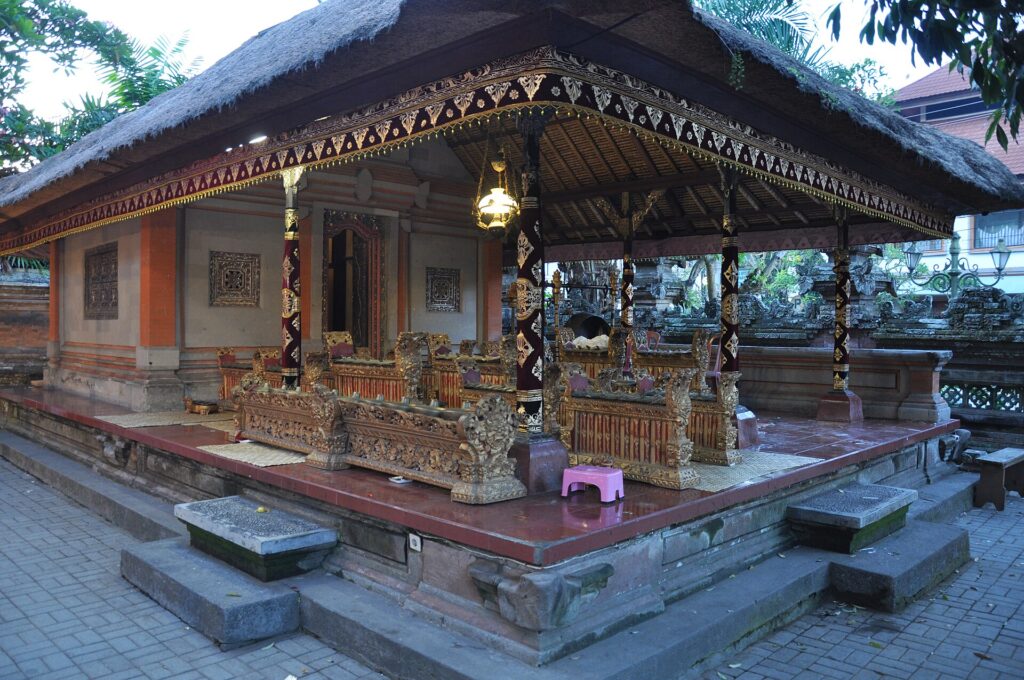
Across the road, Puri Saren Agung, known to everyone as Ubud Palace, is the ceremonial centre of the town. The courtyard is open to walk through during the day, and on most evenings it hosts the dance performances Ubud is known for. Buy tickets on the day at the venue, and arrive early if you want a seat near the front.
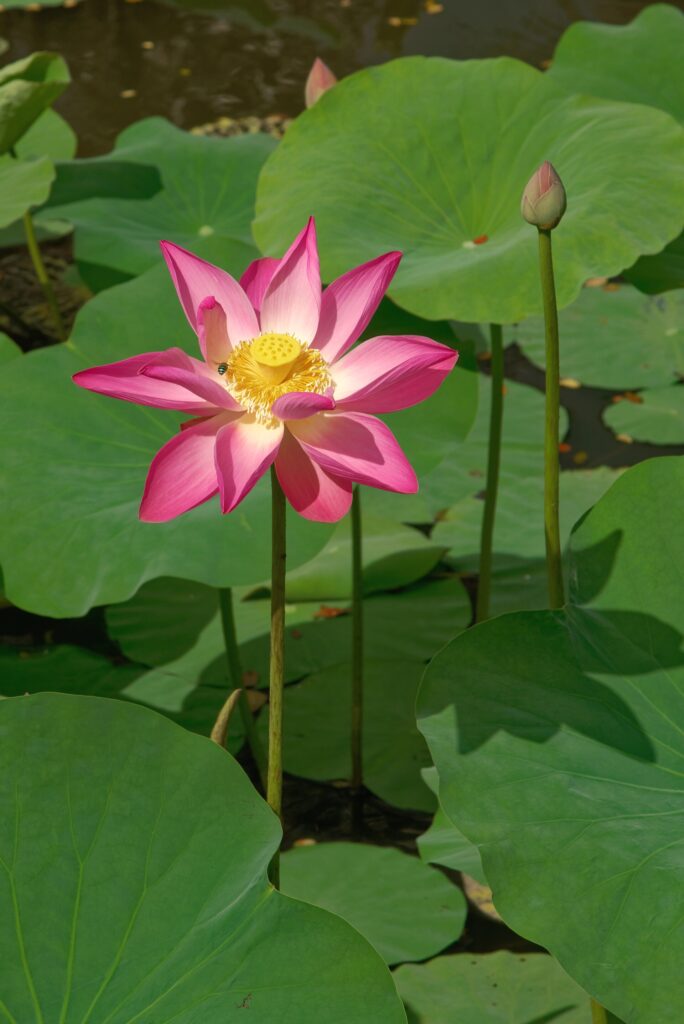
A few minutes away, Pura Taman Saraswati fronts a lotus pond and a wall of carvings, and it is a favourite photo stop in town. Treat it as the working temple it is: cover up, and check the dress notes further down this guide before you step inside.
Is the Sacred Monkey Forest worth visiting?
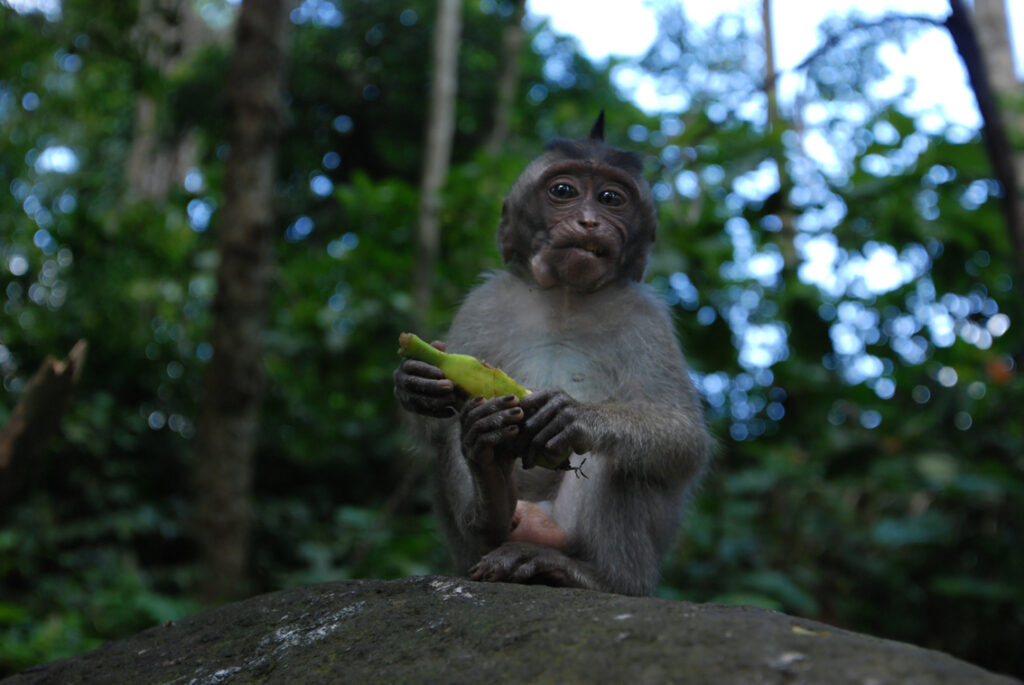
Yes, with the right expectations: the Sacred Monkey Forest Sanctuary is a temple complex, a conservation site and a forest in one, at the south end of Jalan Monkey Forest and about a 20 to 30-minute walk from the palace.
Inside you will find mossy temple gates, banyan roots and long-tailed macaques that treat the paths as their own. The monkeys are wild and quick. Keep food, water bottles and loose sunglasses out of sight, do not feed or touch them, and keep small children close.
Staff enforce the rules posted at the gates.
Go before 10am if you can. There are fewer people, cooler air and better light under the canopy. Entry is ticketed, and the fee funds the sanctuary’s conservation and research work, so check the current price and opening hours before you walk down.
The forest is a religious site as much as a wildlife one, so keep shoulders and knees covered as you would at any temple.
Which rice terraces and walks are close to Ubud?
The nearest rice fields start at the edge of town, the stepped terraces at Tegallalang sit a short drive north, and the Campuhan Ridge Walk is the easiest scenic walk to do without a guide.
The Campuhan Ridge Walk begins just west of the centre, where two rivers meet below a small temple, and follows a raised path along the ridge. The light is best early, and the route is exposed once the sun is up, so take water and start before the heat builds.
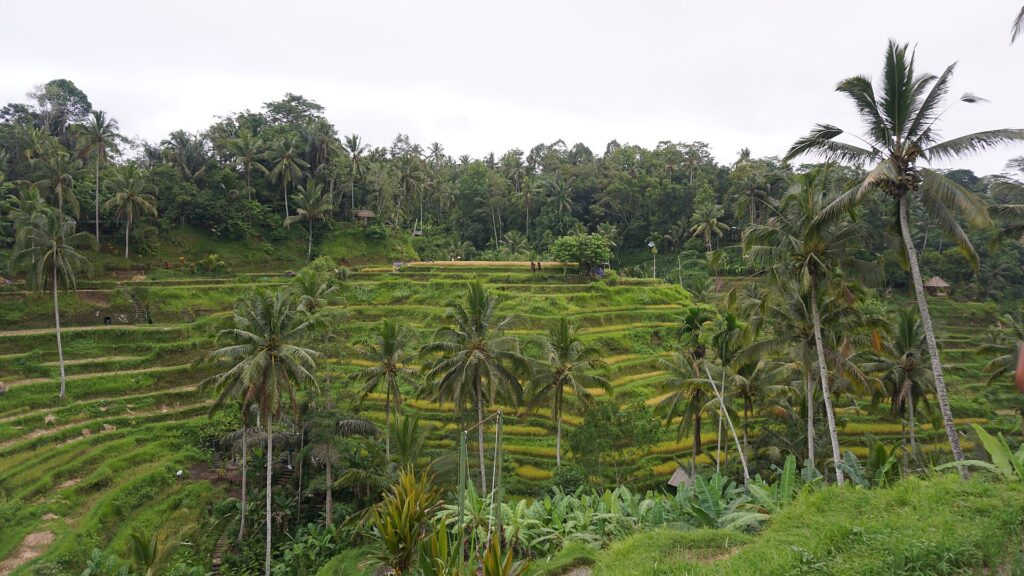
Tegallalang is the terraces in the photographs: stepped paddies in a steep valley, with cafes and photo platforms along the rim. Go early to beat the heat and the coaches. Small entry fees and donation boxes are common along the main paths, so carry small notes.
For the same green without the crowd, ask at your guesthouse about the signed field trails nearby, such as the Sweet Orange Rice Field Trail.
Stay on the ridge road north and you also reach Tirta Empul, the water temple, and the Batur caldera beyond it. That is a half-day loop by car, not a walk, so give it a morning of its own.
What is Ubud’s art and yoga scene actually like?
It is the main reason people stay a month rather than a weekend: galleries, working studios, yoga classes at every level, and spa treatments cheap enough to book weekly.
Ubud has been the island’s art town for generations, and the Agung Rai Museum of Art (ARMA) is the easiest museum to build an afternoon around, with Balinese painting in a garden setting. Smaller galleries and studios line Jalan Raya Ubud and the lanes off it. Most are free to walk into, and prices run from postcard prints to serious paintings.
Yoga is the other pillar. Classes run daily at studios across town, from drop-in sessions for beginners to teacher training, and most places provide mats. Sound healing fits the same mood; sessions such as those at Pyramids of Chi run to a fixed timetable, so book ahead in high season.
The food scene follows the pattern: plant-based kitchens and brunch spots such as Alchemy, Moksa and Zest, and long-standing cafes like Kafe and Watercress, all within a short walk of the centre.
How bad is the traffic, and can you walk everywhere?
Walking covers the centre, and everything beyond it needs wheels. Traffic is slow from mid-morning until early evening, and the footpaths are not what you are used to at home.
Ubud’s footpaths are the first surprise. Kerbs are high or missing, sections are broken, and parked scooters claim whole stretches, so you will step into the road regularly. Walk facing oncoming traffic where you can, and watch where you put your feet: the small woven offerings on the pavement are someone’s daily ritual, and you walk around them, not over them.
Ride-hailing apps work, but cars can be slow to reach the busiest streets, and some drivers will ask you to meet on the edge of the centre instead. Build in ten extra minutes and confirm the pickup point in the app.
Scooters are the local default. Rent from a shop your guesthouse recommends, wear a helmet, and check that your travel insurance covers riding before you pay. If you are comparing ways to move around the wider trip, the Travel Glossary: A to Z of Travel Terms lines up terms like transfer, excursion and stopover.
What should you know about temple dress and sarong etiquette?
A sarong, a sash and covered shoulders get you into almost every temple in and around Ubud, and you rarely need to bring your own: temples keep sarongs and sashes at the entrance for visitors, for a small donation or rental fee.
The uniform is simple. Wrap the sarong around your waist so it falls to the ankles, tie the sash over it, and keep shoulders and knees covered. Shoes come off where signs ask.
A sarong bought at the market doubles as a souvenir and your entry for the rest of the trip.
Etiquette matters more than the outfit. Keep your voice low, do not walk in front of people who are praying, and do not touch the offerings on temple steps. Temples welcome visitors, but a ceremony is not a performance: watch from the edge, or come back later.
If you plan to join the purification ritual at Tirta Empul, dress for wet clothes afterwards. For the wider picture, the Religious Festivals: Respectful Visitor Guide covers dress and behaviour at religious sites across Asia.
Should you stay in Ubud or visit on a day trip?
Stay at least two nights. A day trip from the south coast puts roughly three hours of driving into a single day, and it drops you in town during the slowest, hottest stretch of the afternoon.
Two nights gets you the market and the palace, one big morning at the forest or the terraces, and a dinner or two. Three nights lets you add a valley temple or the Campuhan walk without rushing. Staying a week changes the trip from sightseeing to living somewhere: you stop commuting between attractions and start recognising the lanes.
Ubud also works as the culture half of a split trip. Pair it with a coastal base for beach days and let the two halves run at different speeds; Discover Bali’s Ideal Stays and Hidden Gems covers the options on the island’s other side.
Before you book rooms or lock dates, run the numbers. Travel Budget Planning: Tips & Tools is the next page to read.
Frequently asked questions
Is Ubud worth visiting?
Yes, if you are choosing between culture and a beach base: the town packs temples, galleries, studios and food into a few walkable blocks, and the terraces sit a short drive out. Go knowing that the centre is busy and slow-moving.
How many days do you need in Ubud?
Three nights is the practical minimum: one day for the town, one for a terrace or forest morning, and one spare. One long-stay guide to Ubud argues that a week suits the town better still and that four days felt short.
What is Ubud famous for?
Art, yoga and a film. Ubud is billed as Bali’s cultural and spiritual capital, and Eat, Pray, Love was shot here, which put the town on the map for a generation of travellers.
The monkey forest, the market and the surrounding rice terraces do the rest.
Do you need cash in Ubud?
Yes. Carry small notes for the market, temple donations, terrace entry points and warungs.
Cards work at hotels, larger restaurants and established studios, but plenty of everyday stops are cash only.
What should you pack for Ubud?
Light clothing you can cover up with, shoes you can walk in and a sarong. Mornings are cool enough for a layer, the middle of the day is hot, and the lanes and paths are uneven, so leave the heels at home.
Image credits
- Photo: Jorge Láscar from Melbourne, Australia / Wikimedia Commons, CC BY 2.0. Source
- Photo: William Cho / Wikimedia Commons, CC BY-SA 2.0. Source
- Photo: Anggabuana / Wikimedia Commons, CC BY 4.0. Source
- Photo: Jakub Hałun / Wikimedia Commons, CC BY-SA 4.0. Source
Works Cited
We Are Global Travellers. “The Best Things To Do In Ubud, Bali.” We Are Global Travellers, 2026, https://weareglobaltravellers.com/2020/04/ubud-bali-guide/.
Maddy’s Avenue. “One Week in Ubud, Bali Guide: Everything You Need to Know.” Maddy’s Avenue, https://maddysavenue.com/one-week-in-ubud-guide/.
The Midnight Blue Elephant. “The Ultimate Ubud Travel Itinerary.” The Midnight Blue Elephant, https://www.midnightblueelephant.com/ubud-travel-itinerary/.